
DIY spray foam insulation might seem like a smart way to save money upfront, but homeowners who take this route often face costly repairs and replacements down the road. This guide is for DIY enthusiasts and budget-conscious homeowners considering spray foam installation without professional help.
You’ll discover the hidden costs that surface months or years after amateur application, from moisture problems to structural damage. We’ll also explore why professional skills make such a difference in application quality and how safety hazards can lead to expensive consequences that far exceed any initial savings.
By understanding these risks now, you can make an informed decision about whether DIY spray foam is worth the potential financial headaches later.
Hidden Costs That Emerge After DIY Application
Equipment Rental Fees That Exceed Professional Service Costs
You’ll quickly discover that renting spray foam equipment costs far more than you bargained for. Professional-grade spray foam machines rent for $300-500 per day, and most DIY projects take multiple days to complete properly. When you factor in protective gear, hoses, spray guns, and mixing equipment, your rental costs alone can reach $1,500-2,000 before you even buy the foam materials.
The equipment learning curve means you’ll likely need extra rental days. Your first attempt will move slowly as you figure out proper techniques, pressure settings, and application patterns. Many homeowners end up extending their rentals for 3-4 additional days, pushing costs well beyond what a professional installer would charge for the entire job.
Professional contractors own their equipment and factor those costs across hundreds of jobs. They complete your project in one day with industrial-grade machines cost $25,000-50,000 in. Your daily rental rate gives you access to the same equipment, but you’re paying premium prices without the expertise to use it efficiently.
Multiple Product Purchases Due to Calculation Errors
Your initial foam calculations will almost certainly fall short of actual needs. Spray foam coverage varies dramatically based on substrate conditions, temperature, humidity, and application technique. What looks like a straightforward 500 square foot job on paper often requires 30-50% more material in reality.
You’ll make multiple trips to purchase additional foam kits, each time paying retail prices that professionals avoid through bulk purchasing agreements. Two-component foam kits cost $300-600 each, learn the real spray foam insulation cost in toronto and you’ll likely need 2-3 more than originally planned. Your material costs balloon from an estimated $1,200 to $2,400 or more.
Mixing ratios present another costly challenge. Getting the perfect balance between components requires experience you don’t have. Off-ratio mixing creates foam that doesn’t cure properly, forcing you to remove failed sections and start over with fresh materials. Each mistake costs hundreds of dollars in wasted product.
Cleanup and Disposal Expenses for Failed Applications
Spray foam cleanup becomes a nightmare when applications go wrong. You can’t simply peel off failed foam like removing wallpaper. Incorrectly applied foam bonds aggressively to surfaces, requiring expensive removal methods including chemical strippers, grinding tools, and sometimes complete surface replacement.
Professional foam removal services charge $5-15 per square foot, and you’ll need them when your DIY attempt creates uneven coverage, poor adhesion, or contamination issues. A modest cleanup job easily costs $2,000-5,000, wiping out any savings from your DIY approach.
Disposal adds another expensive layer. Failed foam contains chemicals requiring special handling and disposal fees. Regular trash services won’t accept spray foam waste, forcing you to hire hazardous material disposal companies that charge $200-400 per pickup. Your garage full of foam-covered drop cloths, tools, and protective equipment becomes a costly disposal problem.
Emergency Repairs When Things Go Wrong
Spray foam mistakes create urgent repair situations that drain your bank account fast. Overspray that hits electrical fixtures, plumbing, or HVAC components requires immediate professional intervention. Electricians charge emergency rates of $150-300 per hour to clean foam off wiring and replace contaminated components.
Foam that expands into moving parts like garage door tracks or window mechanisms creates mechanical failures needing same-day repairs. You’ll pay premium rates for emergency service calls, often 50-100% above standard pricing. A simple overspray incident can trigger $1,500-3,000 in emergency repairs within hours.
Structural issues emerge when you apply foam incorrectly around load-bearing elements. Foam that pushes against framing members or infiltrates wall cavities improperly can shift structural components, requiring engineering consultations and expensive corrective work. These problems don’t appear immediately but surface weeks later when damage becomes evident and costly to fix.
Professional Skills You Cannot Replace
Proper surface preparation techniques that prevent adhesion failure
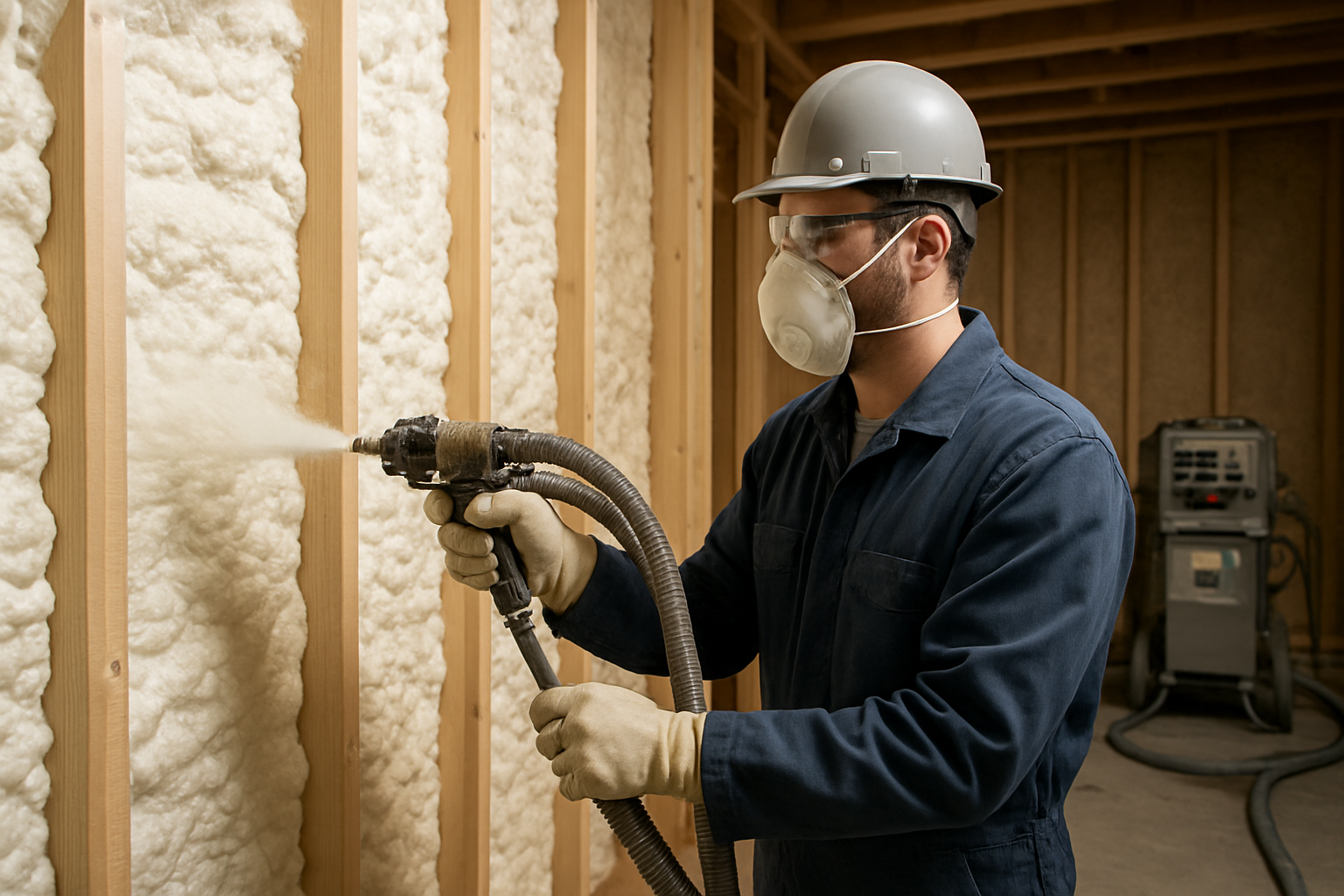
Your spray foam’s success depends entirely on the surface it’s applied to, and getting this right requires years of experience you simply don’t have. Professional installers know that different materials demand different preparation methods. Wood surfaces need specific cleaning techniques to remove oils and debris, while concrete requires moisture testing and sometimes primer application. You might think a quick wipe-down is enough, but professionals use specialized cleaning agents and abrasion techniques to create the perfect bonding surface.
The devil is in the details you can’t see. Professionals inspect for microscopic contaminants like silicone residue from previous caulking jobs, which creates invisible barriers that cause foam to fail months later. They know which surfaces need mechanical abrading and which require chemical etching. Your DIY preparation will miss these critical steps, leading to sections of foam that look fine initially but peel away when temperature changes stress the bond.
Temperature variations at the surface level affect adhesion dramatically. Professionals use infrared thermometers to ensure surface temperatures are within the narrow range required for proper bonding. They also recognize when environmental conditions make application impossible, even when you think everything looks perfect.
Temperature and humidity control expertise
Spray foam chemistry is incredibly sensitive to environmental conditions, and professionals spend years learning to read and control these variables. You need ambient temperatures between 60-90°F and relative humidity below 85%, but these numbers only tell part of the story. Professionals understand how thermal bridging affects application, why morning dew can ruin an entire job, and how air movement patterns impact foam expansion.
Your HVAC system might maintain comfortable room temperature, but professionals know that surface temperatures can vary dramatically from air temperature. They use multiple thermometers and hygrometers placed strategically throughout the work area. Cold surfaces cause foam to cure improperly, creating brittle sections that crack under normal building movement. Hot surfaces make foam expand too quickly, creating voids and uneven density.
Humidity creates the most problems for DIY installers. You might check the weather and see favorable conditions, but professionals understand that humidity pockets form in crawl spaces and basements. They know how concrete slabs release moisture for months after curing and how this affects foam application. Professional installers often delay jobs for humidity conditions that seem fine to untrained eyes.
Spray pattern mastery for even coverage
Achieving uniform foam thickness requires muscle memory developed over thousands of hours of application. Professional installers control spray guns with precise hand movements, maintaining consistent distance and speed that you cannot replicate on your first attempt. They know exactly how to overlap passes to avoid thin spots while preventing waste from excessive buildup.
Your spray pattern will create hot spots where foam is too thick, leading to shrinkage cracks as the material cures. Thin areas compromise your thermal barrier and allow air infiltration. Professionals adjust their technique constantly based on foam behavior, ambient conditions, and surface geometry. They recognize when foam starts flowing differently and adjust pressure, temperature, and movement accordingly.
The spray gun itself becomes an extension of a professional’s hand. They know how different tip sizes affect coverage patterns and when to switch tips mid-job. You’ll struggle with consistent trigger control, leading to start-stop marks that create weak points in your insulation system. Professional installers maintain steady foam flow while navigating around obstacles, ensuring complete coverage without the gaps that plague amateur installations.
Long-Term Performance Issues from Amateur Installation
Air leaks that increase energy bills permanently
When you tackle spray foam installation yourself, you’re almost guaranteed to create air leaks that will drain your wallet for decades. Professional installers use specialized equipment to achieve consistent coverage and proper sealing, but your DIY approach will likely leave gaps around windows, doors, and penetrations where pipes and wires pass through walls.
These seemingly minor gaps become major problems when your heating and cooling systems work overtime to compensate for the lost air. You might think a small crack here and there won’t matter, but those gaps add up quickly. A quarter-inch gap under a door has the same effect as leaving a window open several inches all year long.
Your energy bills will reflect these mistakes immediately and continue climbing as the gaps worsen over time. What you saved on professional installation gets eaten up within the first two years through increased utility costs. The real sting comes when you realize these leaks are often hidden behind finished walls, making repairs expensive and invasive.
Professional installers know exactly how to seal complex areas like electrical boxes, plumbing penetrations, and HVAC ducts. Without their expertise, you’re left with permanent energy drains that cost hundreds of dollars annually in wasted heating and cooling.
Moisture problems leading to mold and structural damage
Your DIY spray foam job can create a moisture nightmare that turns your home into an expensive repair project. When you don’t achieve proper coverage or thickness, moisture gets trapped in wall cavities where it has nowhere to go. This trapped moisture becomes a breeding ground for mold that can spread throughout your home’s structure.
Professional installers understand vapor barriers and how spray foam interacts with your home’s moisture management system. They know when to use open-cell versus closed-cell foam and how thick each application should be. Without this knowledge, you might inadvertently create conditions where moisture condenses against cold surfaces behind the foam.
The damage escalates quickly once moisture problems start. You’ll face expensive mold remediation that can cost tens of thousands of dollars. Structural repairs become necessary when moisture weakens wooden framing members or causes metal components to rust. Insurance companies often deny claims for gradual water damage, leaving you to cover these massive costs yourself.
Your attempt to save money on insulation can easily turn into a $30,000+ disaster when moisture issues require tearing out walls, replacing framing, and rebuilding entire sections of your home. Professional installers carry insurance specifically for these scenarios, protecting you from catastrophic losses.
Uneven insulation creating hot and cold spots
DIY spray foam installation creates frustrating comfort issues that professional work avoids entirely. When you apply foam unevenly, some areas of your home become too hot while others stay uncomfortably cold. These temperature variations happen because inconsistent foam thickness allows heat to transfer through thin spots while over-insulated areas block air circulation.
You’ll notice these problems immediately during extreme weather. Certain rooms become unbearably hot in summer despite your air conditioning running constantly, while others feel like walk-in freezers during winter heating. Your HVAC system struggles to maintain consistent temperatures, leading to higher energy bills and premature equipment failure.
Professional installers use thermal imaging and specialized techniques to ensure uniform coverage throughout your home. They understand how air flows through buildings and where insulation gaps typically occur. Without their expertise, you’re left guessing about proper thickness and coverage patterns.
The comfort issues affect your daily life in ways you might not expect. You’ll constantly adjust thermostats trying to find a comfortable setting that works for the whole house. Family members will complain about temperature differences between rooms. Your home’s resale value drops because potential buyers notice these obvious comfort problems during walkthroughs.
Spray Foam Insulation Services we offer:
Spray Foam Kings provides professional spray foam insulation services for residential and commercial properties throughout Scarborough, Toronto.
If you’re planning an insulation upgrade, explore our full range of services designed to improve energy efficiency, comfort, and moisture protection.
- Spray Foam Insulation in Scarborough
- Attic Insulation Services
- Basement Insulation Services
- Commercial Spray Foam Insulation
- Fireproofing Services
- Waterproofing
- Attic Removal
Premature deterioration requiring complete replacement
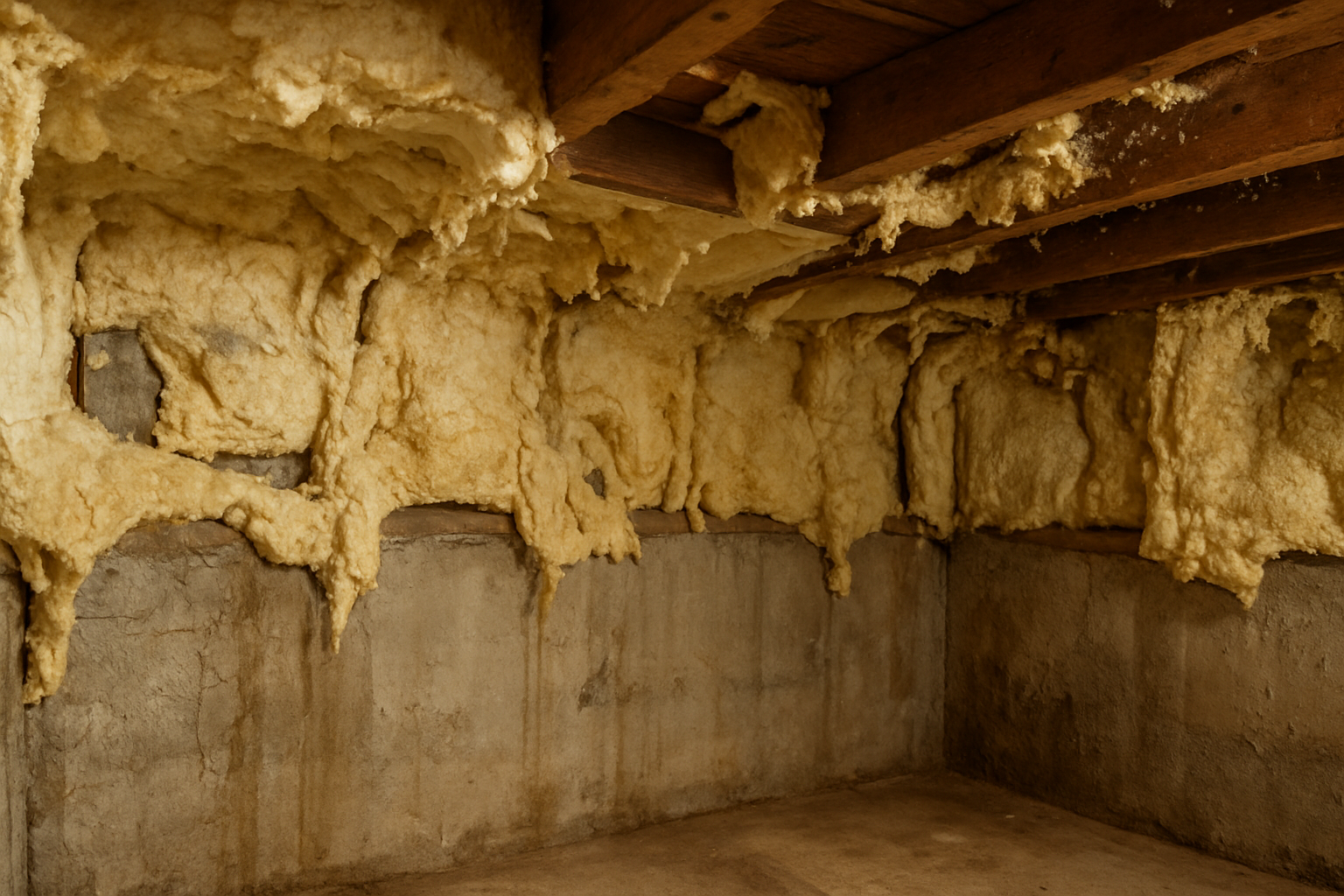
Your DIY spray foam installation will likely fail years before professional work would need replacement. When you don’t mix the foam components properly or apply them under incorrect conditions, the foam degrades rapidly. Temperature extremes, UV exposure, and moisture infiltration accelerate this deterioration when the installation lacks proper technique.
You’ll start noticing problems within five to ten years instead of the 20-30 year lifespan properly installed foam provides. The foam begins shrinking away from surfaces, cracking along stress points, and losing its insulating properties. These failures happen gradually, so you might not realize your insulation is failing until your energy bills spike dramatically.
Professional installers guarantee their work and use high-quality materials with proven track records. They apply foam at optimal temperatures and humidity levels, ensuring proper chemical reactions that create durable insulation. Your amateur approach can’t replicate these controlled conditions, leading to premature failure.
When your DIY foam fails, you face complete replacement costs that far exceed what professional installation would have cost initially. You’ll need to remove all the deteriorated foam, repair any damage it caused to your home’s structure, and start over with proper installation. This process often costs three to four times more than hiring professionals from the beginning.
Safety Hazards That Lead to Expensive Consequences
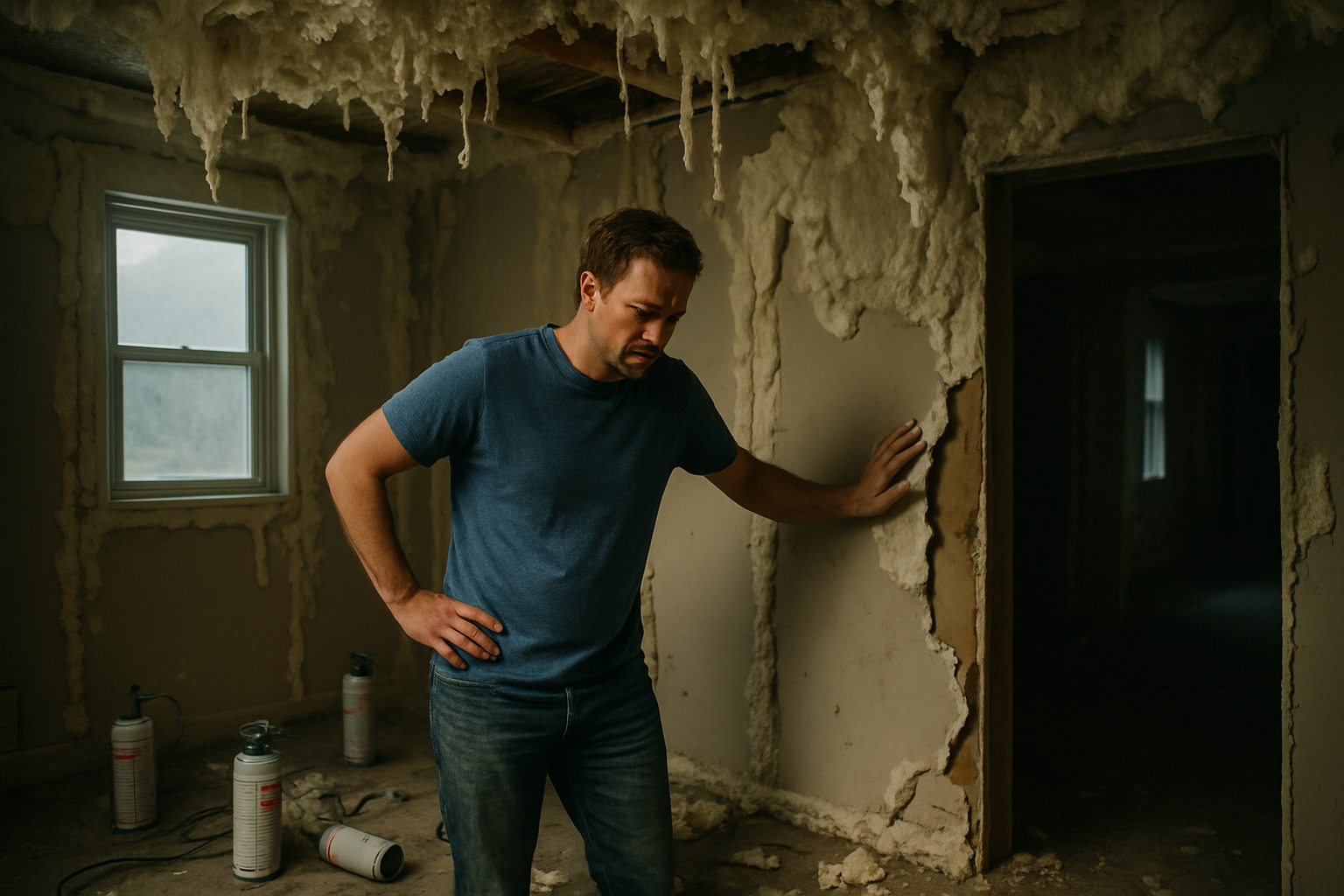
Chemical Exposure Risks Without Proper Protective Equipment
You’re handling serious chemicals when you work with spray foam, and many DIYers don’t realize just how dangerous these substances can be. The two-component system contains isocyanates and polyols that create toxic fumes during application. Without professional-grade respiratory protection, you’re breathing in chemicals that can cause permanent lung damage, asthma, and chemical sensitivity that lasts for life.
Your basic hardware store mask won’t cut it. You need supplied-air respirators or specialized cartridge filters designed specifically for isocyanates. Professional installers invest thousands in proper breathing equipment because they understand the stakes. When you skip this protection, you’re risking medical bills that can easily reach tens of thousands of dollars for respiratory treatment alone.
Skin contact creates another expensive problem. These chemicals cause severe burns and allergic reactions that require immediate medical attention. You might think gloves and coveralls from the home improvement store offer adequate protection, but spray foam chemicals can penetrate many materials. Professional applicators use chemical-resistant suits and gloves specifically tested against these substances.
Eye exposure represents perhaps the most serious immediate threat. Spray foam chemicals can cause permanent vision damage within seconds of contact. Emergency room visits for chemical burns often result in bills exceeding $5,000, and that’s before considering potential long-term complications requiring ongoing specialist care.
Fire Hazards From Improper Application Near Electrical Systems
Your electrical systems become serious fire risks when spray foam is applied incorrectly around them. Many homeowners don’t realize that spray foam generates heat as it cures, and applying too much near electrical boxes, outlets, or wiring creates dangerous hot spots. This heat can melt wire insulation, creating short circuits that spark house fires.
You’re also creating code violations that insurance companies love to use as reasons to deny claims. Most building codes require specific clearances around electrical components, and amateur installations regularly violate these standards. When fire investigators find improperly installed foam near the source of a fire, your insurance company will likely refuse to pay, leaving you with total losses that can exceed $200,000 for a typical home.
Professional installers know which areas require special techniques and materials. They understand that certain electrical components generate their own heat and need foam with specific thermal properties. You probably don’t know that standard spray foam can actually trap heat around recessed lights, creating fire hazards that won’t show up until months or years later.
The expanding nature of spray foam creates another electrical hazard you might not anticipate. Over-expansion can push against electrical connections, loosening them and creating arc faults. These loose connections generate heat and sparks that frequently cause fires, often starting inside walls where they go undetected until substantial damage occurs.
Structural Damage From Overspray on Sensitive Surfaces
You can cause thousands of dollars in damage within minutes if your spray foam lands where it shouldn’t. This material bonds permanently to almost everything it touches, and removing it from finished surfaces often means replacing entire sections of drywall, trim, flooring, or fixtures. What seems like a small mishap during application can quickly turn into major renovation costs.
Your HVAC system faces particular risk from overspray. Foam that gets into ductwork, vents, or mechanical components can completely destroy expensive equipment. Air conditioning units contaminated with spray foam typically require total replacement, not just cleaning. You’re looking at bills ranging from $3,000 to $15,000 depending on your system size and complexity.
Windows and doors present another expensive target. Spray foam that contacts these elements often makes them inoperable, requiring complete replacement. You might think you can scrape off excess foam, but the chemical bond usually damages the underlying surface permanently. Professional installers use extensive masking and containment systems to prevent these costly accidents.
Your home’s exterior siding and roofing materials can suffer permanent damage from even small amounts of overspray. Removing spray foam from vinyl siding, brick, or roofing materials often proves impossible without replacing the entire affected section. These repair costs add up quickly, especially when they involve hard-to-match materials or require scaffolding for safe access.
Warranty and Insurance Problems

Voided Home Insurance Claims Due to Improper Installation
Your insurance company expects professional standards when it comes to structural modifications like spray foam insulation. When you install it yourself and something goes wrong, you’re essentially waving goodbye to coverage. Insurance adjusters know the difference between professional and amateur work, and they’ll use improper DIY installation as grounds to deny your claim.
Fire damage from overheated spray foam? Claim denied. Water damage from improper air sealing that created condensation issues? You’re on your own. Mold growth because you didn’t understand vapor barriers? Your insurance company will point directly to your DIY work as the cause. These aren’t minor repairs either – fire damage can easily reach $50,000 to $100,000, while mold remediation often costs $15,000 to $30,000.
Your policy likely requires work to meet building codes and industry standards. DIY spray foam rarely meets these requirements, giving insurers the perfect excuse to walk away when you need them most.
No Manufacturer Warranty Protection on DIY Applications
Spray foam manufacturers design their warranties around professional installation for good reason. When you buy those DIY kits, you’re getting the same chemical components but none of the protection that comes with professional application.
Professional installers receive specific training on mixing ratios, temperature requirements, and application techniques. They use calibrated equipment that ensures proper chemical reactions. Your DIY kit comes with basic instructions, but manufacturers know this isn’t enough to guarantee proper installation.
Without warranty coverage, you absorb 100% of the risk when your spray foam fails. Professional installations typically come with 10 to 20-year warranties covering adhesion failure, settling, or performance issues. DIY applications leave you responsible for complete removal and reinstallation – costs that easily exceed $8,000 to $15,000 for an average home.
Manufacturers also void warranties when they discover amateur mixing, incorrect ratios, or improper curing conditions. You might think you followed the directions perfectly, but chemical reactions are unforgiving when conditions aren’t precisely controlled.
Liability Issues When Selling Your Home
Future buyers and their inspectors will scrutinize your DIY spray foam installation with skepticism. Home inspectors flag amateur insulation work as potential red flags, often recommending professional evaluation before purchase. This immediately puts your home at a disadvantage in competitive markets.
Buyers’ insurance companies may refuse coverage or demand professional reinstallation before issuing policies. You’ll face three expensive options: reduce your asking price to compensate buyers for future replacement costs, pay for professional removal and reinstallation yourself, or watch qualified buyers walk away.
Legal liability extends beyond the sale too. If structural issues, moisture problems, or indoor air quality problems emerge from your DIY work after closing, previous owners can face lawsuits from new homeowners. Some states allow buyers to pursue sellers for undisclosed defects for several years after purchase.
Real estate attorneys recommend full disclosure of all DIY work, but this transparency often reduces property values by thousands of dollars as buyers factor in replacement costs and potential problems.
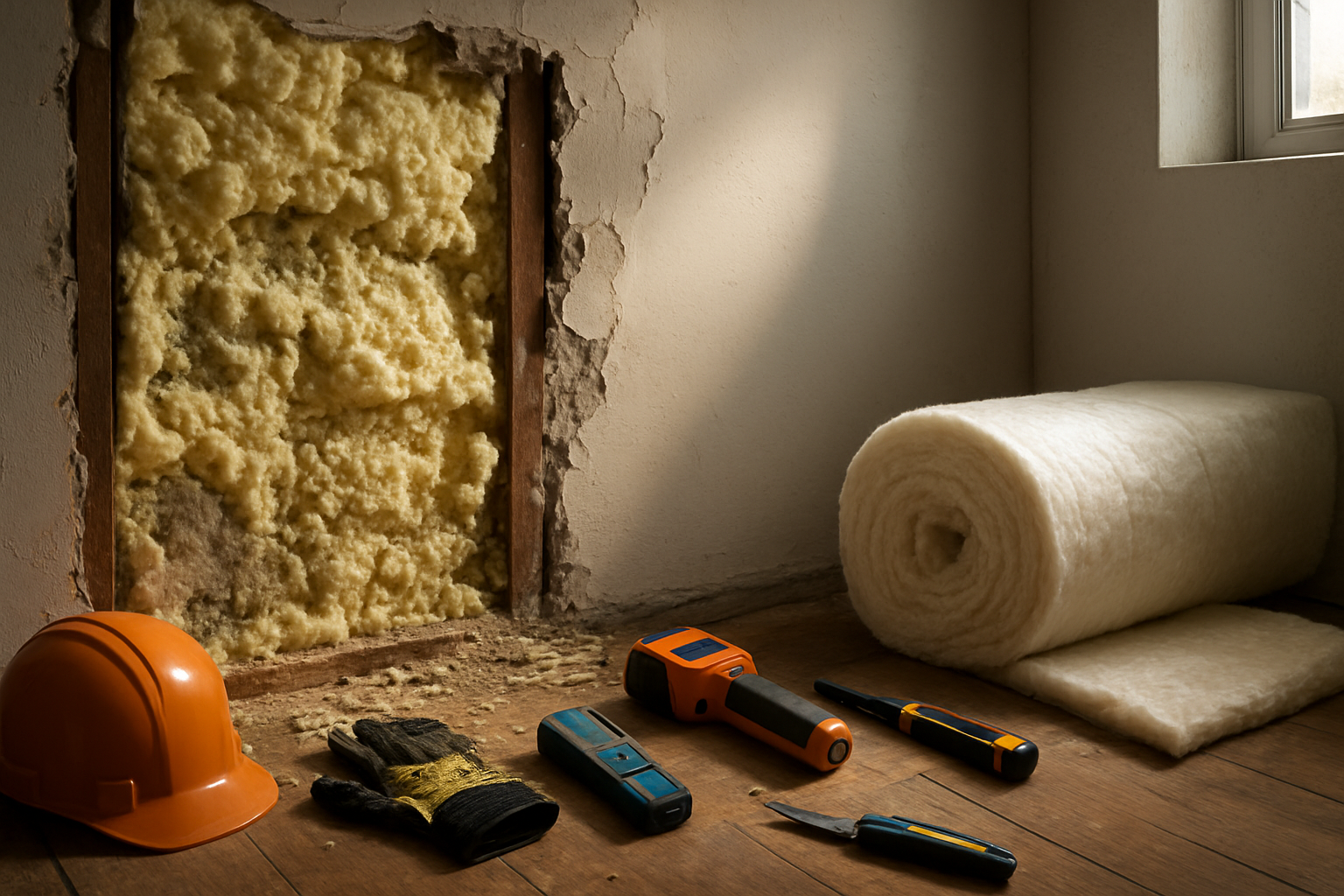
The financial burden of DIY spray foam doesn’t end with your initial purchase – it’s just the beginning. You’ll face hidden costs from inadequate coverage, air gaps, and moisture problems that require expensive fixes down the road. Your lack of professional training means you can’t achieve the proper chemical ratios, application techniques, or safety standards that prevent costly damage to your home’s structure and your family’s health.
The real kicker comes when you discover your homeowner’s insurance won’t cover damage from improper installation, and you’ve voided any manufacturer warranties by doing the work yourself. Professional installers bring specialized equipment, years of experience, and insurance coverage that protects your investment. Skip the DIY route and hire certified professionals who can guarantee long-term performance and stand behind their work. Your wallet will thank you later when you’re not dealing with thousands in repair bills and potential health hazards.