
Understanding ULC Certified Fireproofing Contractors in Ontario: A Comprehensive Guide
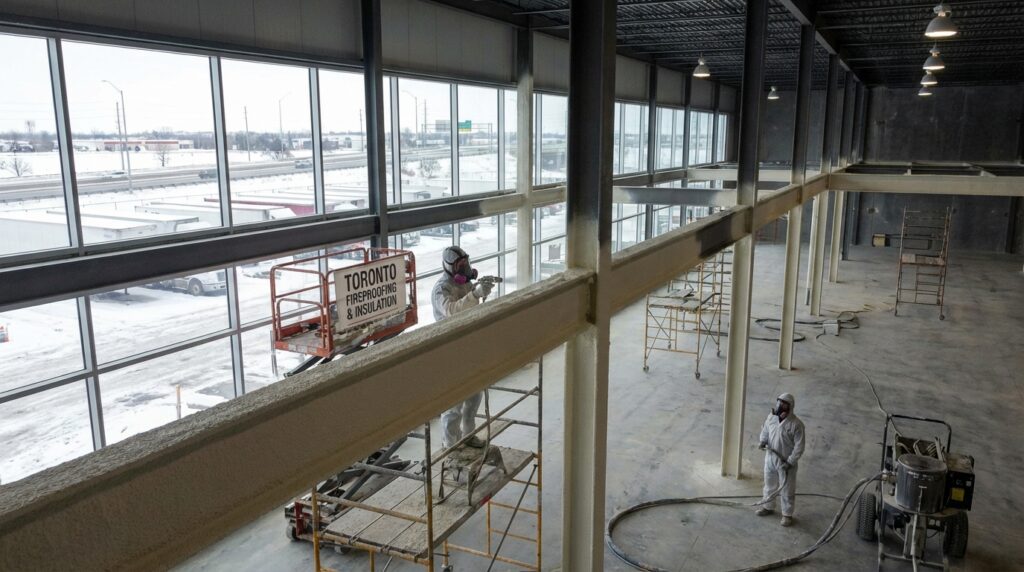
Fireproofing is a critical aspect of building safety, especially in commercial and industrial structures. In Ontario, ensuring fire resistance goes beyond simply applying any fire-resistant material. It requires adherence to stringent codes, proper installation, and, crucially, the involvement of ULC (Underwriters Laboratories of Canada) certified contractors. This guide unpacks the intricacies of ULC certification for fireproofing contractors in Ontario, covering building code requirements, cost considerations, and best practices to help you make informed decisions for your project.
The Short Answer
In Ontario, hiring a ULC certified fireproofing contractor is essential for ensuring compliance with the Ontario Building Code and achieving the required fire-resistance ratings for your building’s structural elements. ULC certification demonstrates a contractor’s expertise in applying fireproofing materials according to rigorous standards, providing assurance of proper installation and performance in the event of a fire. Proper fireproofing can significantly improve the safety of occupants and protect your investment. Learn more about our commercial insulation services.
Fireproofing Standards and the ULC Certification
What is ULC Certification and Why Does It Matter?
ULC certification signifies that a product or service has been tested and evaluated by Underwriters Laboratories of Canada to meet specific safety and performance standards. For fireproofing contractors, ULC certification means they have demonstrated the knowledge, skills, and equipment necessary to correctly install ULC-listed fireproofing materials. This is not just a “nice-to-have”; it’s often a mandatory requirement for building code compliance in Ontario.
The importance of ULC certification stems from the critical role fireproofing plays in protecting a building’s structural integrity during a fire. Without proper fireproofing, steel beams, columns, and concrete structures can quickly lose their load-bearing capacity, leading to collapse. ULC-certified contractors ensure that fireproofing materials are applied at the correct thickness and density to provide the necessary fire-resistance rating, measured in hours (e.g., 1-hour, 2-hour, 3-hour fire rating).
For example, in a high-rise building in downtown Toronto, the steel columns supporting the upper floors might require a 3-hour fire rating. A ULC-certified contractor will be able to select the appropriate fireproofing material (e.g., cementitious fireproofing, intumescent coating), calculate the required thickness based on the steel member’s size and shape, and apply the material according to the ULC listing to achieve that 3-hour rating.
Ontario Building Code and Fireproofing Requirements
The Ontario Building Code (OBC) outlines specific requirements for fire-resistance ratings based on building occupancy, height, and construction type. Division B, Part 3 of the OBC is dedicated to fire protection, and it references ULC standards for fire-resistance tests and assembly design.
The OBC mandates that certain structural elements, such as load-bearing walls, columns, beams, and floor assemblies, must have a specified fire-resistance rating. This rating determines how long the element can withstand exposure to fire before losing its structural integrity. The required rating varies depending on factors like the building’s use (e.g., residential, commercial, industrial), its height, and the presence of fire suppression systems (e.g., sprinklers).
For instance, a commercial building in Mississauga might require a 2-hour fire-resistance rating for its load-bearing walls separating tenant spaces. A ULC-certified contractor would need to apply fireproofing materials to these walls according to a ULC-listed assembly that provides a 2-hour fire rating. This ensures that a fire originating in one tenant space does not quickly spread to adjacent spaces, allowing occupants time to evacuate safely.
The OBC also specifies requirements for firestopping, which prevents the spread of fire and smoke through penetrations in walls and floors. ULC-certified contractors are often involved in installing firestopping materials, ensuring that they are properly sealed to maintain the fire-resistance rating of the assembly. Learn more about our attic insulation services that can contribute to overall building fire safety.
Types of Fireproofing Materials and Their Application
Cementitious Fireproofing: The Workhorse
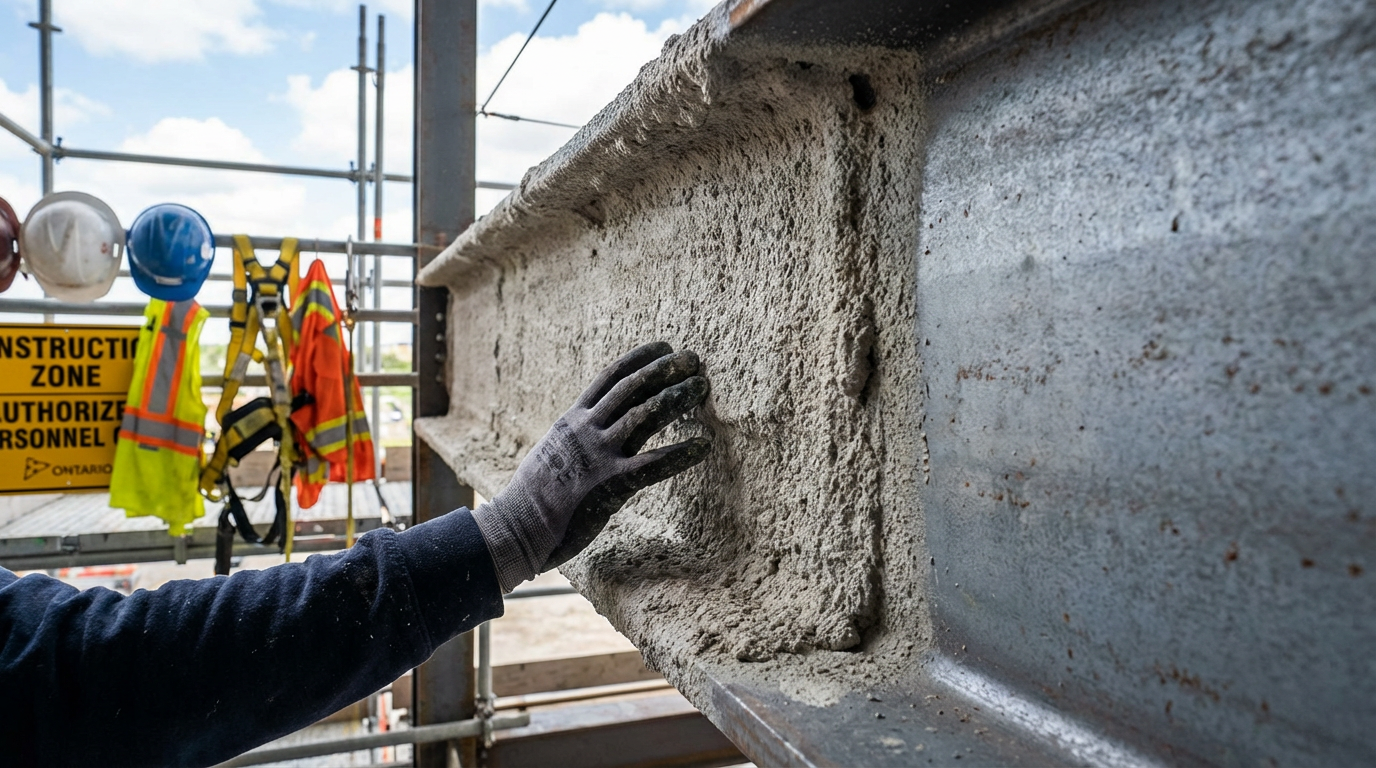
Cementitious fireproofing is one of the most common and cost-effective fireproofing materials. It is a spray-applied mixture of cement, gypsum, and other additives that forms a thick, insulating layer on steel or concrete. Cementitious fireproofing is suitable for a wide range of applications, including structural steel, concrete walls, and floors.
Advantages of cementitious fireproofing include its durability, fire resistance, and relatively low cost. However, it can be messy to apply, and it may require a primer to ensure proper adhesion to the substrate. The cost of cementitious fireproofing typically ranges from $3 to $6 per square foot, depending on the thickness required and the complexity of the application. This price excludes any surface prep or access equipment required.
For example, a warehouse in Brampton might use cementitious fireproofing on its steel columns and beams to achieve a 2-hour fire rating. The contractor would spray the material onto the steel at the required thickness (e.g., 1 inch) to provide the necessary insulation. Proper surface preparation, such as sandblasting to remove mill scale and rust, is critical for long-term performance.
Intumescent Coatings: A Sleek Solution
Intumescent coatings are thin-film fireproofing materials that expand when exposed to heat, forming a char layer that insulates the substrate. These coatings are often used in applications where aesthetics are important, as they provide a smoother, more visually appealing finish than cementitious fireproofing.
Intumescent coatings are more expensive than cementitious fireproofing, typically ranging from $8 to $15 per square foot, depending on the required fire rating and the type of coating. They are also more sensitive to environmental conditions during application, requiring specific temperature and humidity levels. The cost is increased due to specialized installation and the cost of the product itself.
For instance, an office building in Markham might use intumescent coatings on its exposed steel columns to achieve a 1-hour fire rating. The coating would be applied in thin layers, providing a sleek, modern look while still meeting the fire safety requirements. Intumescent coatings are often preferred in areas where the fireproofing is visible and aesthetics are a concern.
Other Fireproofing Methods: Boards and Blankets
In addition to cementitious fireproofing and intumescent coatings, other fireproofing methods include fire-resistant boards and blankets. These materials are typically used for specific applications, such as protecting ductwork or electrical conduits. They are available in various thicknesses and fire-resistance ratings.
Fire-resistant boards are rigid panels made from materials like calcium silicate or mineral wool. They are often used to enclose structural elements or create fire-rated walls. Fire-resistant blankets are flexible materials made from fiberglass or ceramic fibers. They are used to wrap pipes, ducts, and other equipment that require fire protection.
The cost of fire-resistant boards and blankets varies depending on the material, thickness, and fire-resistance rating. They are generally more expensive than cementitious fireproofing but can be a cost-effective solution for specific applications. Consider our crawl space insulation options for additional fire safety measures in those areas.
Cost Factors and Budgeting for Fireproofing Projects
Material Costs and Labor Rates
The cost of fireproofing projects is influenced by several factors, including the type of fireproofing material, the required fire-resistance rating, the size and complexity of the project, and the labor rates of the contractor. Material costs can vary significantly depending on the type of fireproofing material, with intumescent coatings being generally more expensive than cementitious fireproofing.
Labor rates for ULC-certified fireproofing contractors in Ontario typically range from $80 to $120 per hour per person, depending on their experience and the complexity of the project. Projects that require specialized equipment or access (e.g., scaffolding, aerial lifts) will also incur additional costs.
For example, a fireproofing project in a Toronto office tower might require the use of suspended scaffolding to access the steel beams on the upper floors. The cost of renting and installing the scaffolding could add several thousand dollars to the overall project cost. Careful planning and coordination are essential to minimize these additional expenses.
Project Size and Complexity
The size and complexity of the project also play a significant role in the overall cost. Larger projects will generally have lower per-square-foot costs due to economies of scale. However, complex projects that involve intricate detailing or difficult access will typically have higher costs.
For instance, fireproofing a large warehouse with simple, open steel framing will be less expensive per square foot than fireproofing a complex office building with numerous columns, beams, and penetrations. The complexity of the project will also affect the time required to complete the work, which will impact labor costs.
Hidden Costs and Budget Contingencies
When budgeting for fireproofing projects, it’s essential to account for potential hidden costs and unexpected expenses. These can include costs for surface preparation, such as sandblasting or priming, costs for temporary shoring or bracing, and costs for environmental protection measures.
It’s also wise to include a contingency in your budget to cover unforeseen issues, such as unexpected delays, changes in scope, or the discovery of hazardous materials. A contingency of 5% to 10% of the total project cost is generally recommended. Proper pre-construction surveys and assessments can help identify potential risks and minimize the need for contingencies.
For example, during a fireproofing project in a historic building in Hamilton, the contractor might discover asbestos-containing materials that need to be removed before the fireproofing can be applied. The cost of asbestos abatement could add significantly to the overall project cost. Having a contingency in place will help mitigate the financial impact of such unforeseen issues. Consider adding soundproofing during the same project to maximize value.
Finding and Vetting ULC Certified Fireproofing Contractors
Checking Credentials and Certifications
The first step in finding a ULC certified fireproofing contractor is to verify their credentials and certifications. Ask the contractor to provide proof of their ULC certification, as well as any other relevant certifications or licenses. You can also contact ULC directly to verify the contractor’s certification status.
In addition to ULC certification, look for contractors who have experience with similar projects and who are members of relevant industry associations. Membership in associations like the Firestop Contractors Association (FCIA) or the National Fire Protection Association (NFPA) can indicate a commitment to professionalism and best practices.
Reviewing Project History and References
Before hiring a fireproofing contractor, it’s essential to review their project history and references. Ask the contractor to provide a list of past projects that are similar to your project, and contact the clients to get feedback on the contractor’s performance. Ask about the contractor’s quality of work, adherence to schedule, and communication skills.
Also, check online reviews and ratings for the contractor. Websites like Google Reviews and Yelp can provide valuable insights into the contractor’s reputation and customer satisfaction. Be sure to read both positive and negative reviews to get a balanced perspective.
Insurance and Liability Coverage
Ensure that the fireproofing contractor has adequate insurance coverage to protect you from liability in the event of an accident or injury on the job site. The contractor should have general liability insurance, workers’ compensation insurance, and professional liability insurance (also known as errors and omissions insurance).
Ask the contractor to provide certificates of insurance showing the coverage limits and expiration dates. Review the insurance policies carefully to ensure that they provide adequate protection for your project. Consider our company’s qualifications and experience when making your decision.
For example, a fireproofing contractor working in a commercial building in Oakville should have adequate insurance coverage to protect the building owner from liability in the event that a worker is injured while applying the fireproofing material. The insurance policy should also cover any damage to the building caused by the contractor’s work.
FAQ: ULC Certified Fireproofing Contractors in Ontario
Q: Is ULC certification mandatory for fireproofing contractors in Ontario?
A: While not explicitly stated in every instance, the Ontario Building Code references ULC standards for fire-resistance and assembly designs. Therefore, hiring a ULC certified contractor is often necessary to ensure compliance and achieve the required fire-resistance ratings.
Q: How can I verify a contractor’s ULC certification?
A: Ask the contractor to provide proof of their ULC certification and contact ULC directly to verify their status. You can also check the ULC website for a list of certified contractors in your area.
Q: What is the difference between cementitious fireproofing and intumescent coatings?
A: Cementitious fireproofing is a spray-applied mixture of cement, gypsum, and other additives, while intumescent coatings are thin-film coatings that expand when exposed to heat. Cementitious fireproofing is generally more cost-effective, while intumescent coatings offer a more aesthetically pleasing finish.
Q: How much does fireproofing typically cost in Ontario?
A: The cost of fireproofing varies depending on the type of material, the required fire-resistance rating, and the complexity of the project. Cementitious fireproofing typically ranges from $3 to $6 per square foot, while intumescent coatings range from $8 to $15 per square foot.
Q: What are some hidden costs to consider when budgeting for fireproofing projects?
A: Hidden costs can include surface preparation, temporary shoring, environmental protection measures, and unforeseen delays. It’s wise to include a contingency of 5% to 10% of the total project cost to cover these expenses.
Ready to Protect Your Investment? Contact Us Today!
Ensuring the fire safety of your building is paramount. Don’t compromise on quality – choose a ULC certified fireproofing contractor you can trust. Contact Spray Foam Kings today for a consultation and a free quote. We’re here to help you navigate the complexities of fireproofing and ensure your building meets all necessary safety standards.
Call us now at 647-641-6881 to discuss your project and schedule a consultation.
Author: Shaun Falls, Owner & Founder