
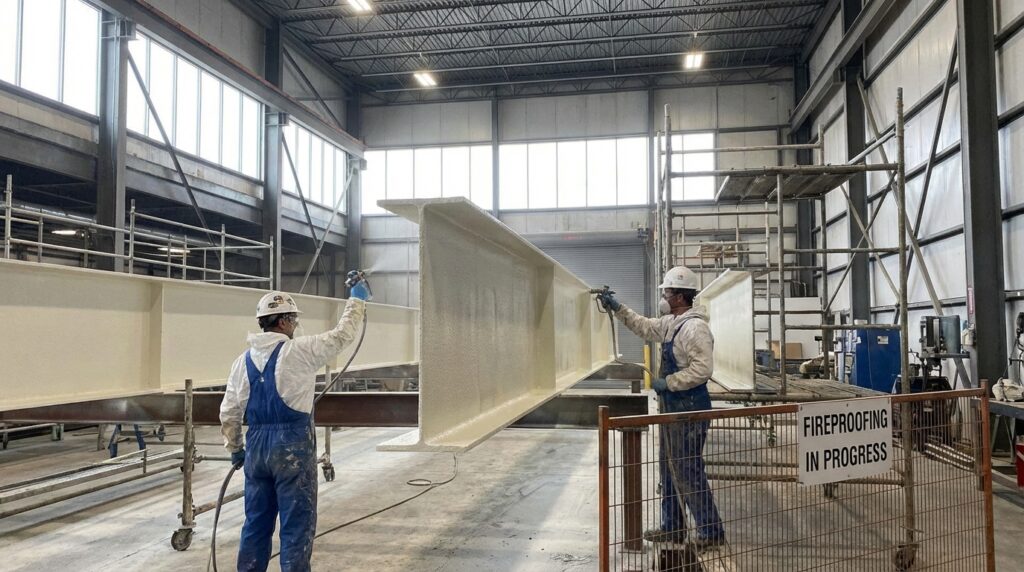
Warehouses, with their vast open spaces and storage of valuable goods, represent a significant investment. Protecting these structures from fire is paramount, not only for the safety of personnel but also for the preservation of assets and business continuity. Steel, a common material in warehouse construction, while strong, loses its structural integrity rapidly in high temperatures. This blog post, written with my contractor-level experience, will detail how to effectively fireproof steel structures in warehouses, focusing on techniques and materials relevant to Ontario.
The Short Answer
Fireproofing steel in Ontario warehouses is achieved primarily through the application of fire-resistant materials like spray-applied fire-resistive materials (SFRM) or intumescent coatings. Compliance with the Ontario Building Code is crucial, and costs can range from $5 – $15 CAD per square foot depending on the required fire-resistance rating and chosen material. These measures are critical to ensure adequate time for evacuation and fire suppression efforts.
Understanding Fireproofing and Steel
Why Fireproofing Steel is Essential
Steel, while incredibly strong at ambient temperatures, experiences a significant reduction in yield strength when exposed to elevated temperatures. At around 550°C (1022°F), steel can lose up to 50% of its load-bearing capacity. This rapid weakening can lead to structural collapse in the event of a fire, endangering lives and causing extensive damage. Fireproofing aims to insulate the steel, delaying the time it takes for the steel to reach these critical temperatures, providing valuable time for evacuation and fire suppression.
Fire-Resistance Ratings and the Ontario Building Code
The Ontario Building Code (OBC) mandates specific fire-resistance ratings for structural elements in buildings, including warehouses. These ratings, typically expressed in hours (e.g., 1-hour, 2-hour, 3-hour), dictate how long a structural element can withstand a standard fire test before failing. The required rating depends on factors such as the building’s size, occupancy, and its proximity to other structures. As a building owner, you’ll need to consult with a qualified fire protection engineer or architect to determine the specific fire-resistance requirements for your warehouse based on the OBC. You can find more information related to commercial construction requirements through commercial spray foam insulation services.
Key Considerations for Warehouse Fireproofing
When planning warehouse fireproofing, several factors must be considered:
- Building Design: The size and layout of the warehouse, including the height of the ceilings and the presence of mezzanines, will influence the choice of fireproofing materials and application methods.
- Occupancy: The type of materials stored within the warehouse will affect the fire hazard and the required fire-resistance rating. Warehouses storing flammable materials will require a higher level of fire protection.
- Fire Suppression Systems: The presence and effectiveness of fire suppression systems, such as sprinklers, will influence the overall fire safety strategy. While fireproofing is a passive measure, it works in tandem with active fire suppression to provide comprehensive protection.
- Cost: Fireproofing can represent a significant upfront investment. Balancing cost-effectiveness with the required level of protection is crucial.
- Durability and Maintenance: The chosen fireproofing material should be durable and resistant to damage from daily warehouse operations. Regular inspections and maintenance are essential to ensure its continued effectiveness.
Fireproofing Materials and Methods
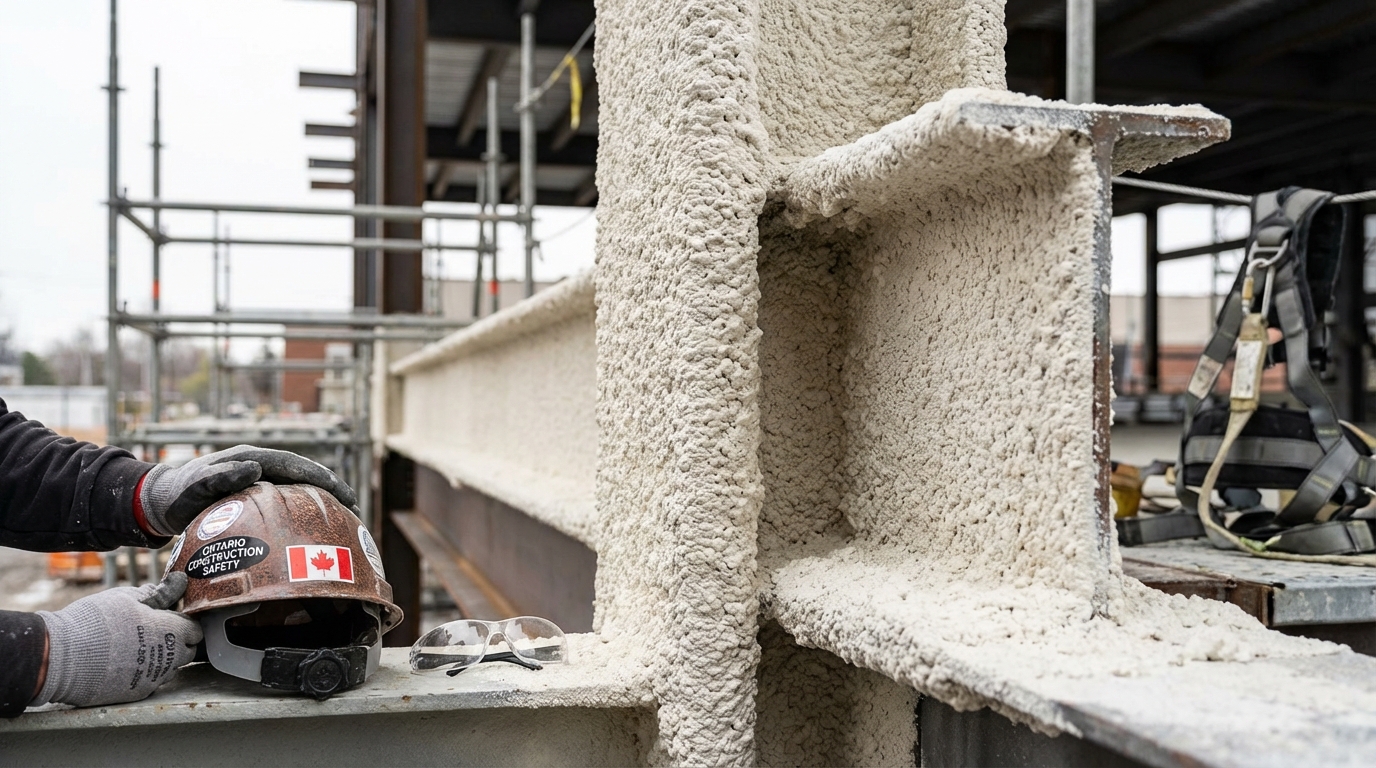
Spray-Applied Fire-Resistive Materials (SFRM)
SFRMs are among the most common and cost-effective fireproofing solutions for steel structures. These materials, typically cementitious or gypsum-based, are sprayed onto the steel surface, forming a thick, insulating layer. SFRMs provide excellent fire resistance and are suitable for a wide range of applications. They are available in various densities and thicknesses to achieve different fire-resistance ratings. Cementitious SFRMs are generally more durable and resistant to impact damage than gypsum-based SFRMs. The typical cost for SFRM application in Ontario ranges from $6 – $12 CAD per square foot, depending on the required thickness and material type. This cost includes both materials and labor. Remember to factor in the potential for Ontario insulation rebates when planning your budget. You can explore different insulation options for your building though Spray Foam Kings.
Intumescent Coatings
Intumescent coatings are thin-film coatings that expand significantly when exposed to heat, forming a char layer that insulates the steel. These coatings offer a more aesthetically pleasing alternative to SFRMs, as they can be applied in a variety of colors and finishes. However, intumescent coatings are generally more expensive than SFRMs and may require more frequent maintenance. They are often used in situations where aesthetics are a primary concern, such as exposed steel in office areas within the warehouse. Intumescent coatings typically cost between $8 – $15 CAD per square foot installed. For residential applications, you may also want to consider residential spray foam insulation.
Concrete Encasement
While less common in modern warehouse construction, concrete encasement provides excellent fire protection. This method involves completely surrounding the steel member with concrete, providing a robust thermal barrier. Concrete encasement is highly durable and requires minimal maintenance. However, it can be more expensive and time-consuming to install than other fireproofing methods. It also adds significant weight to the structure, which may require additional structural support. Often used in older buildings or special applications where extreme fire resistance is required.
Application and Installation Best Practices
Surface Preparation
Proper surface preparation is crucial for the effective application of any fireproofing material. The steel surface must be clean, dry, and free from rust, scale, oil, and other contaminants. Sandblasting or power washing are commonly used to prepare the steel surface. A primer may also be required to ensure proper adhesion of the fireproofing material. Skipping this step can lead to delamination and failure of the fireproofing system.
Application Techniques
SFRMs are typically applied using specialized spraying equipment. The applicator must be properly trained and experienced to ensure uniform coverage and the correct thickness. Intumescent coatings are applied in multiple thin coats, allowing each coat to dry before applying the next. Proper application techniques are essential to achieve the desired fire-resistance rating and ensure the long-term performance of the fireproofing system. The application process should adhere to the manufacturer’s specifications and relevant industry standards.
Quality Control and Inspection
Regular quality control checks should be performed during the application process to ensure that the fireproofing material is being applied correctly and in accordance with specifications. This includes verifying the thickness of the applied material, checking for voids or inconsistencies, and ensuring proper adhesion to the steel surface. After the application is complete, a final inspection should be conducted to verify compliance with the fire-resistance requirements. Third-party inspections are often recommended to provide an independent assessment of the fireproofing system.
Maintaining Fireproofing Systems
Regular Inspections
Fireproofing systems should be inspected regularly for damage, deterioration, or missing material. Inspections should be conducted at least annually, or more frequently in areas subject to high traffic or potential impact damage. Any damage should be repaired promptly to maintain the integrity of the fireproofing system. Look for signs of cracking, spalling, or delamination. Document all inspections and repairs.
Repair and Maintenance
Damaged or deteriorated fireproofing should be repaired promptly to maintain its effectiveness. Repairs should be performed by qualified professionals using appropriate materials and techniques. Minor damage can often be repaired with patching compounds, while more extensive damage may require complete replacement of the affected area. Ensure that the repair material is compatible with the existing fireproofing system. You can use our free spray foam cost calculator to get an idea of potential maintenance costs. For fireproofing services in Toronto, consider fireproofing services.
Documentation
Maintain accurate records of all fireproofing inspections, repairs, and maintenance activities. These records should include the date of the inspection or repair, the location of the affected area, the type of damage or deterioration, the materials and methods used for repair, and the name of the person or company performing the work. This documentation will be valuable for future inspections and for demonstrating compliance with building codes and insurance requirements.
Frequently Asked Questions
What is the difference between fireproofing and fire resistance?
Fire resistance is the ability of a material or assembly to withstand fire for a specific period. Fireproofing is the process of applying materials to structural elements to increase their fire resistance.
How do I know what fire-resistance rating my warehouse needs?
Consult the Ontario Building Code (OBC) or a qualified fire protection engineer or architect. They will assess your building’s size, occupancy, and other factors to determine the required fire-resistance ratings for structural elements.
Can I apply fireproofing myself?
While some minor repairs may be possible for a knowledgeable building owner, it’s generally recommended to hire qualified professionals for fireproofing application. Proper application techniques and specialized equipment are essential to ensure the effectiveness of the fireproofing system.
How long does fireproofing last?
The lifespan of fireproofing depends on the type of material, the environment, and the level of maintenance. With proper maintenance, SFRMs can last for decades. Intumescent coatings may require more frequent maintenance or reapplication.
Does spray foam insulation provide fireproofing?
While some spray foam insulation products offer a degree of fire resistance, they are not typically considered fireproofing materials. Fireproofing materials are specifically designed to provide a high level of fire protection to structural elements. However, certain closed-cell spray foams can contribute to overall fire safety by slowing down the spread of flames. Consult with a fire protection specialist to determine the best fire safety solution for your building.
Get a Free Spray Foam Insulation Quote in Ontario
Ready to upgrade your insulation? Spray Foam Kings serves Toronto, the GTA, and all of Ontario with licensed, bonded, and insured spray foam insulation and fireproofing services.
📞 Call or text us: (647) 641-6881
📍 Find us on Google Maps: Spray Foam Kings on Google
💻 Or use our free spray foam cost calculator for an instant estimate.
We offer free quotes with no obligation. Most projects in the GTA are booked within 5–7 business days.