
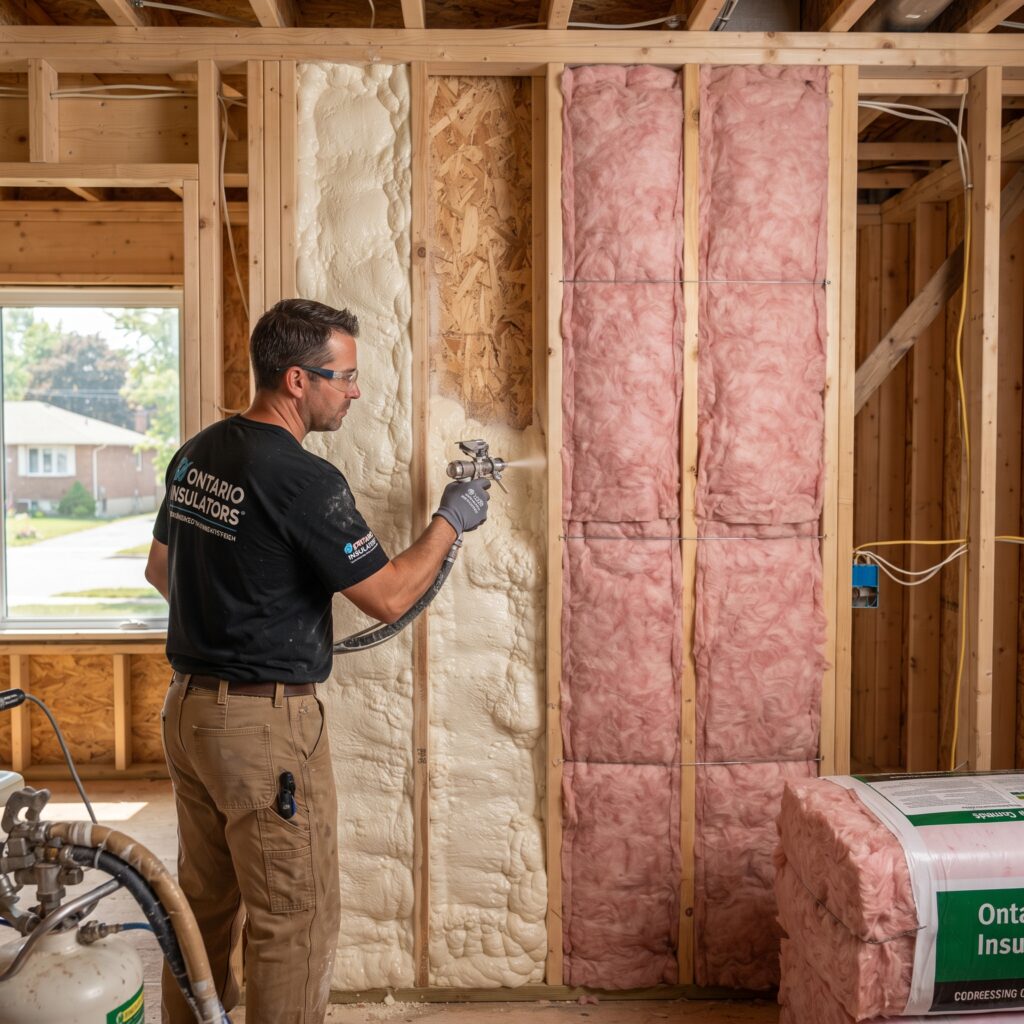
What’s the difference?
Toronto homeowners in 2026 face a critical choice: spray foam or fiberglass. Both insulate, but they work differently, cost differently, and carry different long-term trade-offs. Spray foam expands to fill cavities and air gaps, sealing leaks and resisting moisture. Fiberglass sits in batts or rolls, cheaper upfront but less airtight. The decision hinges on budget, home age, climate goals, and whether you’re retrofitting an older Victorian or new build. This guide cuts through marketing and gives you the numbers Toronto contractors actually quote in 2026—so you can decide what makes sense for your walls, attic, or basement.
Side-by-side comparison
| Scenario | Cost (CAD) | Installation Time | Permit Required | When to Choose | Risk if Wrong |
|---|---|---|---|---|---|
| Attic retrofit (1,500 sq ft) | Spray: $4,500–$6,500 | Fiberglass: $1,200–$1,800 | Spray: 1–2 days | Fiberglass: 4–6 hours | Spray: Often yes | Fiberglass: Rarely | Air sealing critical, older home, energy audit needed | Inadequate ventilation, moisture trapped, mold risk |
| Basement rim joist (200 lin ft) | Spray: $1,500–$2,500 | Fiberglass: $400–$700 | Spray: 4–8 hours | Fiberglass: 2–3 hours | Spray: Maybe | Fiberglass: No | Moisture present, air gaps common, freeze-thaw cycle | Water intrusion, ice damming, condensation buildup |
| Cathedral ceiling (800 sq ft) | Spray: $2,800–$4,200 | Fiberglass: $600–$1,000 | Spray: 1 day | Fiberglass: 3–4 hours | Spray: Yes (structural) | Fiberglass: Varies | Tight envelope needed, venting difficult, high ceilings | Condensation on interior, rot in rafters, poor R-value |
| New construction cavity walls (2,000 sq ft) | Spray: $6,000–$8,500 | Fiberglass: $1,500–$2,200 | Spray: 1–2 days | Fiberglass: 6–8 hours | Spray: Often yes | Fiberglass: Usually no | Building code compliance, OBC blower door test target | Code violation, failed final inspection, resale impact |
| Crawlspace perimeter (600 lin ft) | Spray: $1,200–$2,000 | Fiberglass: $300–$600 | Spray: 4–6 hours | Fiberglass: 2 hours | Spray: Depends on code | Fiberglass: No | Damp environment, vapor control critical, energy goal | Rot, mold, thermal bridging, ice dams in winter |
| Metal stud cavity (1,200 sq ft) | Spray: $3,500–$5,000 | Fiberglass: $900–$1,400 | Spray: 1 day | Fiberglass: 4 hours | Spray: Yes | Fiberglass: Varies | Thermal bridging unacceptable, airtight seal needed | Cold studs conduct heat, condensation, higher heating bills |
Spray foam insulation — when it’s the right call
Spray foam dominates when air sealing matters as much as R-value. In Toronto’s freeze-thaw cycles, thermal bridging and air leaks drive heat loss and condensation problems that fiberglass cannot stop. Older homes with settling, irregular framing, or existing moisture issues benefit from foam’s expansion and vapor-barrier properties. Cathedral ceilings, rim joists, and foundation walls—areas where fiberglass batts leave voids—are spray foam’s stronghold. Open-cell foam (around $2–$3 per board-foot) is cheaper and allows drying; closed-cell (around $3–$5 per board-foot) resists water and provides higher R-value, critical for basements and crawlspaces in the Greater Toronto Area’s damp springs. You’ll also qualify for energy rebates from Enbridge or Canada’s Home Energy Retrofit Incentive, which can offset 15–25% of costs. The downside: upfront price shock, mandatory ventilation design if you seal too tight, and the need for a certified installer. Choose spray foam if your energy audit flags air leakage as the top energy loss, your home is over 40 years old, or you’re retrofitting a basement where moisture is an active threat.
Fiberglass cost — when it’s the right call
Fiberglass works when your envelope is already tight, framing is regular, and your goal is basic thermal resistance at lowest cost. New construction, post-reno homes with sealed cavities, and dry spaces (upper-floor bedrooms, finished basements away from foundations) all tolerate fiberglass well. Toronto contractors routinely quote fiberglass batts at $0.60–$1.20 per square foot installed—roughly one-quarter the cost of spray foam. R-value per dollar is unbeatable: R-3.6 per inch for fiberglass versus R-6–$7 per inch for foam. If your home doesn’t have a moisture or settlement problem, and you don’t qualify for energy rebates, fiberglass makes budget sense. It’s also faster to install, requires fewer permits, and simpler to retrofit in walls if you’re patching drywall anyway. The risk is modest air leakage (roughly 15–20% less efficient than foam) and vulnerability to compression, settling, and water damage. Fiberglass also demands deliberate ventilation—an attic needs soffit and ridge vents—or moisture accumulates and R-value degrades. Choose fiberglass if you’re on a tight timeline, your home is post-2000, air sealing has already been addressed, or you’re insulating new construction with sealed cavities and proper ventilation design.
Edge cases and Toronto-specific factors
Toronto bylaw and insurance details shift the calculus. The Ontario Building Code (OBC) mandates minimum R-values and airtightness targets; newer homes (2020+) need blower-door testing post-retrofit, which spray foam simplifies but fiberglass complicates if gaps remain. Some Toronto neighbourhoods (Rosedale, the Annex) have heritage or zoning restrictions—permit delays are common, and spray foam’s longer timeline can eat contingency budgets. Insurance premiums also differ: closed-cell foam reduces water damage claims and may net a 5–10% discount; fiberglass in damp basements can void coverage if mold develops. Property tax reassessment is unlikely either way, but resale appeal favors spray foam in older Victorians (buyers perceive higher energy efficiency) and fiberglass in new condos (cost-conscious renovators expect baseline insulation). Toronto’s humidity (summer and spring) makes vapor control critical—closed-cell foam in crawlspaces and basements is gold; fiberglass alone is risky. Winter freeze-thaw cycles also favor foam at rim joists and band boards, where fiberglass’s moisture sensitivity causes ice dams. Check your home’s age, current insulation level, and whether an energy audit has already identified air leakage as a priority—these three factors override price alone in Toronto’s climate.
Frequently asked questions
1. Will spray foam void my warranty or insurance?
No, provided it’s installed by a certified contractor and complies with OBC. Most home insurers (Intact, TD, Wawanesa) require documentation but don’t penalize you. Closed-cell foam actually improves water-damage claims outcomes and can lower premiums. Always notify your insurer post-install.
2. How long does spray foam last versus fiberglass?
Spray foam lasts 80+ years if undisturbed; fiberglass degrades in 15–20 years if wet or compressed. In Toronto’s moisture-prone basements, foam outlasts fiberglass by decades. Neither needs replacement if installed correctly, but foam is more forgiving of imperfect conditions.
3. Can I install fiberglass myself to save money?
Yes—DIY fiberglass is safe and cost-effective for attics and walls if you wear proper PPE (mask, gloves, suit). Spray foam requires industrial equipment and certification, so DIY is not viable. Budget $500–$800 in tools and materials for a typical attic if you go the fiberglass route.
4. Do I need a permit for spray foam in Toronto?
Typically yes if you’re encapsulating a crawlspace, spraying foundation walls, or adding insulation to structural elements like rim joists. Attic-only retrofits sometimes don’t require permits, but your contractor should check with Toronto Building Services first. Fiberglass rarely needs permits unless part of a major renovation.
5. Which insulation works best with Toronto’s humidity?
Closed-cell spray foam is superior in damp conditions because it blocks moisture and dries out quickly. Open-cell foam and fiberglass both absorb water; in a basement or crawlspace with spring seepage, closed-cell is non-negotiable. Pair fiberglass with a vapor barrier and active drainage if humidity is a factor.
6. What rebates can I claim in Toronto in 2026?
Enbridge Gas rebates up to $500 for insulation upgrades, Canada Greener Homes Grant (up to $5,250 for energy retrofits including insulation), and some municipal tax credits still apply. Spray foam typically qualifies for more rebates due to air-sealing impact on EnerGuide scores. Keep receipts and get your contractor to flag rebate-eligible work.
Bottom line
Choose spray foam if: Your home is over 35 years old, an energy audit flagged air leakage, you have a basement or crawlspace with moisture, or a cathedral ceiling needing airtight insulation. The higher cost (3–5× fiberglass) pays back in 12–18 years through reduced heating bills and qualifies for rebates that offset 20–25% of price. Retrofit scenarios, metal studs, and rim-joist work also favor foam.
Choose fiberglass if: Your home is newer (post-2005), already has sealed cavities and proper ventilation, your budget is tight, or you’re on a fast timeline. Fiberglass excels in dry spaces and new construction where air sealing has been designed in. DIY installation is also viable, saving labor costs.
If you’re uncertain, get a free energy audit and blower-door test—they cost $150–$300 and reveal whether air leakage or thermal resistance is your real problem. For spray foam specifics and Toronto-area quotes, contact spray foam services or visit sprayfoamkings.ca for a free assessment. You can also explore basement insulation solutions, crawlspace encapsulation, rim-joist work, and new-construction packages to see what fits your project scope.