
Spray Foam Insulation vs Foam Board: Which is Right for Your Toronto Home in 2026?
Published: January 2026 | Updated for Toronto market conditions
What’s the difference?
Toronto homeowners face a critical choice when upgrading insulation: spray foam or foam board. Both seal gaps and reduce heat loss, but they work differently and suit different homes. Spray foam expands on contact, conforming to irregular spaces and creating an air-seal barrier that can improve your envelope performance by 15–20% in older homes. Foam board sits flat, rigid, and predictable—ideal for new construction or finished walls where you need exact R-values without mess. The decision hinges on your home’s age, budget, timeline, and whether you’re dealing with existing walls or starting fresh. In Toronto’s climate, where winters drop to −15°C and heating costs run $1,500–$2,500 annually, the right choice can save hundreds in the long term. This guide walks you through real scenarios so you can decide which material matches your project, your wallet, and your home’s needs.
Side-by-side comparison
| Scenario | Cost Range (CAD) | Timeline | Permit Needed? | When to Choose | Risk If Wrong |
|---|---|---|---|---|---|
| Spray Foam (Open Cell) Basement rim joist, 500 sq ft |
$2,000–$3,500 | 1–2 days | No (most cases) | Air sealing + insulation in tight spaces; older homes with gaps | Overspray on fixtures; requires protective coverings |
| Spray Foam (Closed Cell) Attic, 1,000 sq ft |
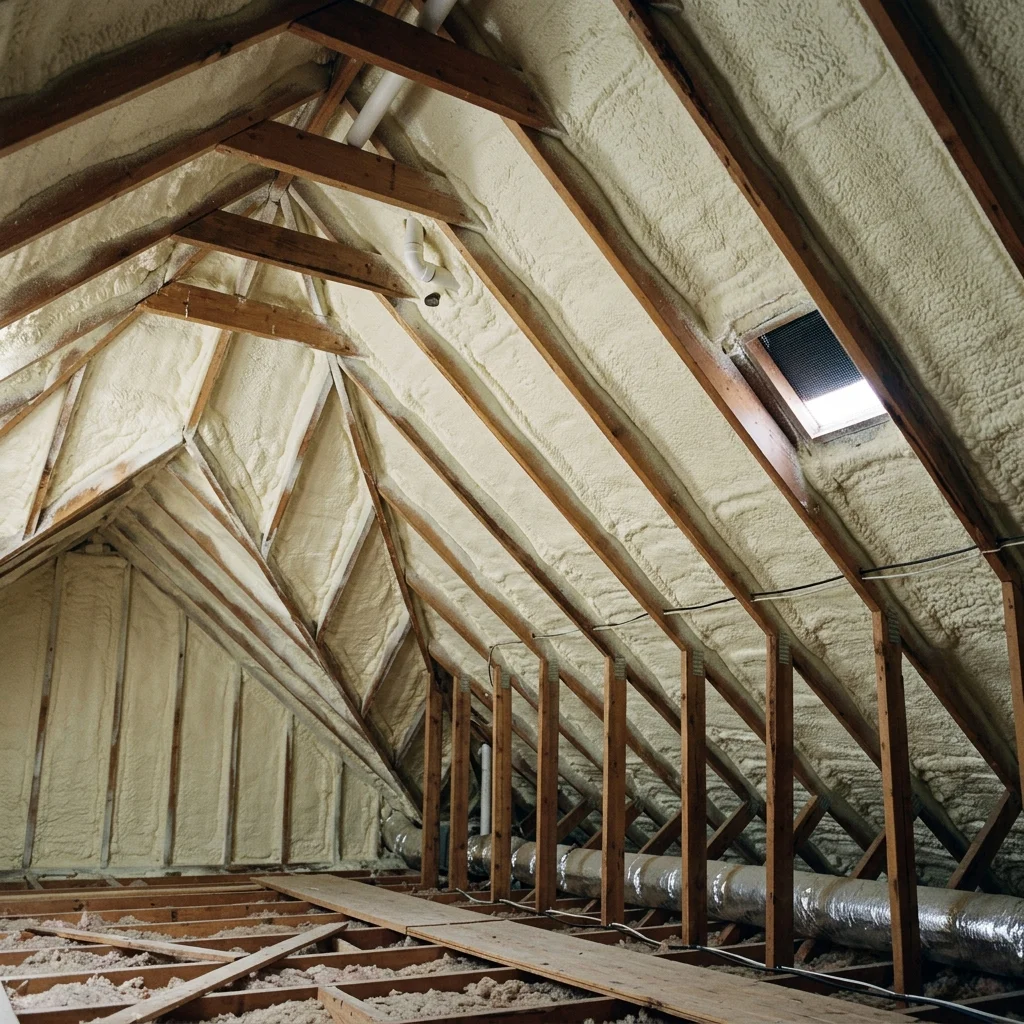
$4,500–$7,000 | 1–2 days | No (most cases) | Maximum R-value, moisture barrier; cold attics, cathedral ceilings | High cost; harder to remove if future work needed |
| Foam Board (Rigid) Basement wall, 400 sq ft |
$1,200–$2,000 | 3–5 days | Yes (if >10% of wall) | DIY-friendly; finished basement foundation; straightforward install | Air gaps around seams reduce effectiveness; labor-intensive |
| Foam Board (Exterior) Wall sheathing retrofit, 800 sq ft |
$1,600–$2,800 | 5–7 days | Yes (always) | New siding project; exterior envelope upgrade; municipal coordination | Weatherization delays; cladding issues if not sealed properly |
| Spray Foam (Closed Cell) Walls + attic, full home (3,000 sq ft) |
$12,000–$18,000 | 3–5 days | Depends on scope | Deep retrofit; premium performance; homes with severe drafts | Highest upfront cost; long payback window (8–12 years) |
| Foam Board Crawl space, 600 sq ft |
$900–$1,500 | 2–3 days | No (typically) | Budget-conscious; stable, dry crawlspace; minimal air-sealing needs | Gaps remain unless sealed with caulk; lower air-seal rating |
Spray foam insulation — when it’s the right call
Spray foam shines when precision and air-sealing matter most. If your Toronto home was built before 1980, gaps between rim joists, around penetrations, and along band boards are energy drains. Spray foam expands to fill every void, cutting air leakage by up to 50% in those zones. Open-cell spray foam (R-3.5 per inch) works well in basement rim joists and interior walls where moisture control is secondary; closed-cell foam (R-6 per inch) is the premium choice for attics, exterior walls, and spaces exposed to weather or bulk water risk. Contractors typically apply it in a day or two, and you avoid the permit hassle in most cases. For cathedral ceilings—common in Toronto’s older Victorian and Edwardian homes—spray foam conforms to sloped rafters without creating dead airspace. The air-seal benefit also reduces HVAC strain, often lowering your heating bill by 10–15%. Cost runs higher upfront ($2,000–$7,000 depending on scope), but the payback in comfort and utility savings justifies it for homes with severe drafts, energy audits flagging air leakage, or major renovations. Spray foam also adds structural rigidity and can help control moisture in damp basements. If your budget allows and your home shows signs of air infiltration, spray foam delivers the fastest, most comprehensive fix. Visit basement insulation services or attic insulation for detailed assessments.
Foam board — when it’s the right call
Foam board excels when you want predictability, cost control, and a DIY-friendly option. If you’re finishing a basement, adding insulation to a crawlspace, or planning an exterior retrofit as part of a siding replacement, foam board delivers consistent R-value in a flat, rigid form. It’s easier to handle than spray foam, requires no special equipment, and produces no fumes or overspray—ideal for occupied homes or sensitive environments. Toronto homeowners tackling a finished basement often choose foam board because installation is straightforward: cut to fit, secure with fasteners, and seal seams with caulk or tape. Cost per square foot runs 30–50% lower than spray foam, making it attractive for large areas. R-values range from R-4 to R-6.5 per inch depending on type (polystyrene, polyisocyanurate, or extruded polystyrene), which you can specify to match your project needs. Foam board also works well in new construction, where walls are open and you can place boards before drywall. The main tradeoff: it doesn’t seal air leaks as aggressively as spray foam. Gaps around seams and penetrations require meticulous caulking, and it can’t adapt to irregular spaces. If your home has straight walls, a stable foundation, and no major air-leakage concerns, foam board is the economical, low-hassle choice. Exterior retrofit projects typically need permits, so budget 5–7 extra days for approvals. Learn more at exterior insulation.
Edge cases and Toronto-specific factors
Toronto’s Building Code and permit requirements shape your decision. Foam board installations covering more than 10% of a basement wall usually require a permit; spray foam often avoids this in smaller projects, though full-home retrofits may need sign-off. The City of Toronto also mandates specific fire ratings for foam products—both must meet ASTM E84 standards, but closed-cell spray foam is often already compliant, while some foam boards need a thermal barrier (drywall layer) underneath. Insurance companies occasionally ask questions about spray foam—ensure your installer is licensed and the product is approved by your insurer before proceeding. In neighborhoods with heritage designations (common in Toronto’s Annex, Leslieville, or Distillery District), exterior work like foam board sheathing may face heritage review. Additionally, Toronto’s high property values mean resale perception matters: spray foam’s air-seal and energy-efficiency story appeals to eco-conscious buyers, while foam board’s lower cost-per-square-foot suits budget-conscious renovators. Humidity is another factor: Toronto’s basements are prone to dampness. Closed-cell spray foam resists moisture ingress better than foam board, making it preferable below grade in wet conditions. For attics in the GTA’s freeze-thaw climate, closed-cell foam’s vapor barrier property prevents moisture from migrating into the attic space. Finally, consider contractor availability: spray foam requires specialized equipment and training, so labor can be harder to find and more expensive. Foam board installation is simpler, so more trades can handle it, potentially lowering costs and shortening wait times.
Frequently asked questions
1. How much will spray foam actually reduce my heating bill in Toronto?
Air sealing with spray foam typically cuts heating costs by 10–15% for older homes with significant drafts, translating to $150–$375 per year on an average $2,500 heating bill. Payback on a $3,000–$4,000 spray foam job takes 8–11 years, but comfort and durability extend that value. Energy audits before and after installation can confirm savings.
2. Do I need a permit for spray foam in Toronto?
Most spray foam jobs (rim joists, attics, interior walls) don’t require permits if you’re not changing the building’s classification or exterior envelope significantly. However, if your spray foam work is part of a larger renovation (e.g., adding a bedroom or changing electrical), a permit applies. Always confirm with your local Toronto building department before starting.
3. Is foam board a good DIY project?
Yes, foam board is more DIY-friendly than spray foam—you need a utility knife, fasteners, caulk, and a helper. For crawlspaces or basement walls, a handy homeowner can save $1,000–$2,000 in labor. However, permit work (exterior, structural) should involve licensed contractors to avoid fines or insurance issues.
4. Which is better for a wet basement?
Closed-cell spray foam is superior in damp basements because it provides a vapor barrier and resists moisture absorption. Foam board can absorb water over time, leading to mold. If your basement is actively wet, install a sump pump and dehumidifier first, then choose closed-cell spray foam or use foam board only above a moisture-resistant membrane.
5. How long do spray foam and foam board last?
Both can last 50+ years if installed correctly and protected from UV damage. Spray foam is more durable against settling or shifting; foam board can degrade if exposed to weather, sunlight, or moisture. In Toronto’s climate, properly sealed and covered foam products will perform reliably for decades.
6. Can I use spray foam on my exterior walls?
Yes, but closed-cell spray foam on exterior walls requires a thermal barrier (drywall) for fire safety under Toronto Building Code. This adds cost and complexity. Exterior foam board is often simpler and cheaper for retrofit projects, though both need proper air-sealing at seams and integration with cladding systems.
Bottom line
Choose spray foam if: Your home is older with visible drafts, rim joist gaps, or uneven settling; you’re tackling an attic with cathedral ceilings or significant air-leakage areas; you want maximum air-sealing with minimal material footprint; you can absorb higher upfront costs ($2,000–$7,000) for long-term comfort and utility savings; or an energy audit has flagged infiltration as your primary problem. Spray foam delivers the fastest, most comprehensive fix and works best for irregular spaces.
Choose foam board if: You’re on a tighter budget; your basement or crawlspace has straight, accessible walls; you’re comfortable with a DIY installation or prefer simpler contractor coordination; your project is part of new construction or a planned exterior retrofit; you’re tackling a large, uniform area where consistent R-value matters more than air-sealing; or you need to avoid permits and want a straightforward installation process. Foam board is economical, predictable, and easier to handle.
For most Toronto homes, the best choice combines both: spray foam on rim joists and critical air-sealing zones, foam board on basement walls or crawlspaces. Get a free energy audit and quote from professionals who understand Toronto’s climate and building codes. Visit energy efficiency services or crawl space insulation to compare options for your specific project, and reach out to sprayfoamkings.ca for a no-obligation consultation tailored to your home’s needs.