
The Short Answer
Commercial fireproofing services in Ontario industrial buildings typically cost between $8-$25 CAD per square foot depending on the fireproofing method, with intumescent coatings ranging from $12-$25/sq ft and cementitious spray applications from $8-$15/sq ft. Ontario Building Code (OBC) Division B Section 3.1.5 mandates fire resistance ratings of 1-4 hours for structural steel in industrial facilities based on building height, occupancy load, and hazard classification. Professional fireproofing contractors must comply with ULC (Underwriters Laboratories of Canada) standards and NFPA guidelines to ensure structural steel protection meets provincial fire safety requirements for warehouses, manufacturing plants, and processing facilities across Ontario.
Understanding Commercial Fireproofing Types for Ontario Industrial Facilities
Industrial building owners and facility managers across Ontario face critical decisions when selecting fireproofing systems for structural steel protection. The two primary fireproofing technologies—intumescent coatings and cementitious spray-applied fireproofing (SFRM)—offer distinct advantages depending on your facility’s specific requirements, budget constraints, and aesthetic considerations.
Intumescent Fireproofing Coatings
Intumescent coatings represent the premium option for commercial fireproofing in Ontario industrial settings. These advanced paint-like materials undergo a dramatic chemical transformation when exposed to fire temperatures above 200°C. The coating expands to form a thick, insulating char layer—often expanding to 50 times its original thickness—that protects structural steel from heat penetration and maintains load-bearing capacity during fire events.
Ontario manufacturing facilities, food processing plants, and pharmaceutical production buildings frequently specify intumescent systems because they provide clean, finished aesthetics while meeting stringent fire resistance ratings. The thin-film application (typically 1-5mm dry film thickness for 1-2 hour ratings) preserves architectural details and allows for easy inspection of structural elements. Advanced formulations available through professional fireproofing contractors can achieve up to 4-hour fire ratings while maintaining a smooth, paintable surface suitable for exposed structural steel in high-visibility industrial environments.
Key advantages of intumescent fireproofing for Ontario industrial buildings include superior durability in climate-controlled environments, minimal maintenance requirements, resistance to mechanical damage, and compatibility with architectural specifications requiring exposed structural steel. The premium cost reflects advanced chemistry, specialized application techniques, and superior long-term performance in indoor industrial settings across Toronto, Mississauga, Hamilton, and throughout Southern Ontario’s industrial corridors.
Cementitious Spray-Applied Fireproofing (SFRM)
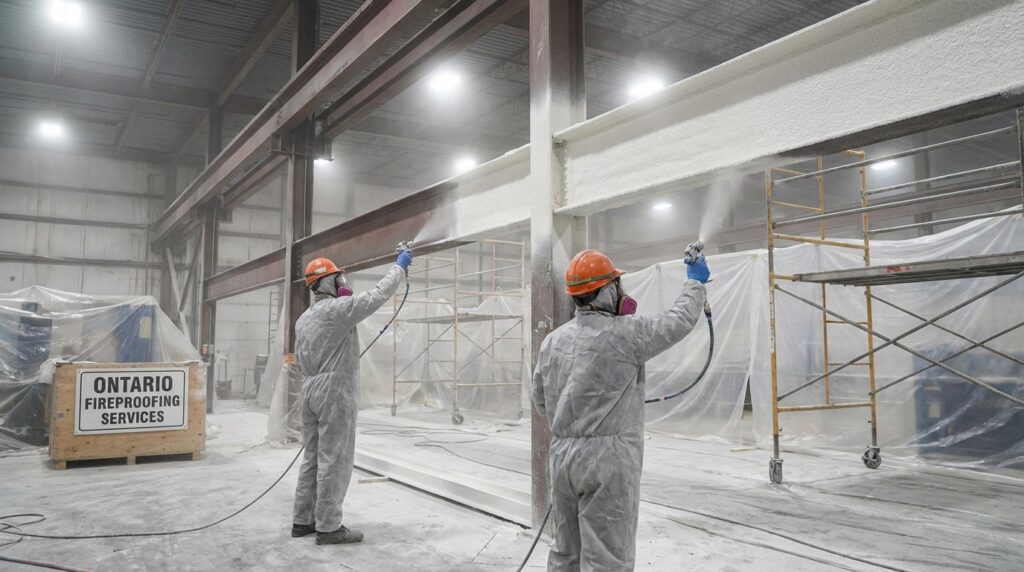
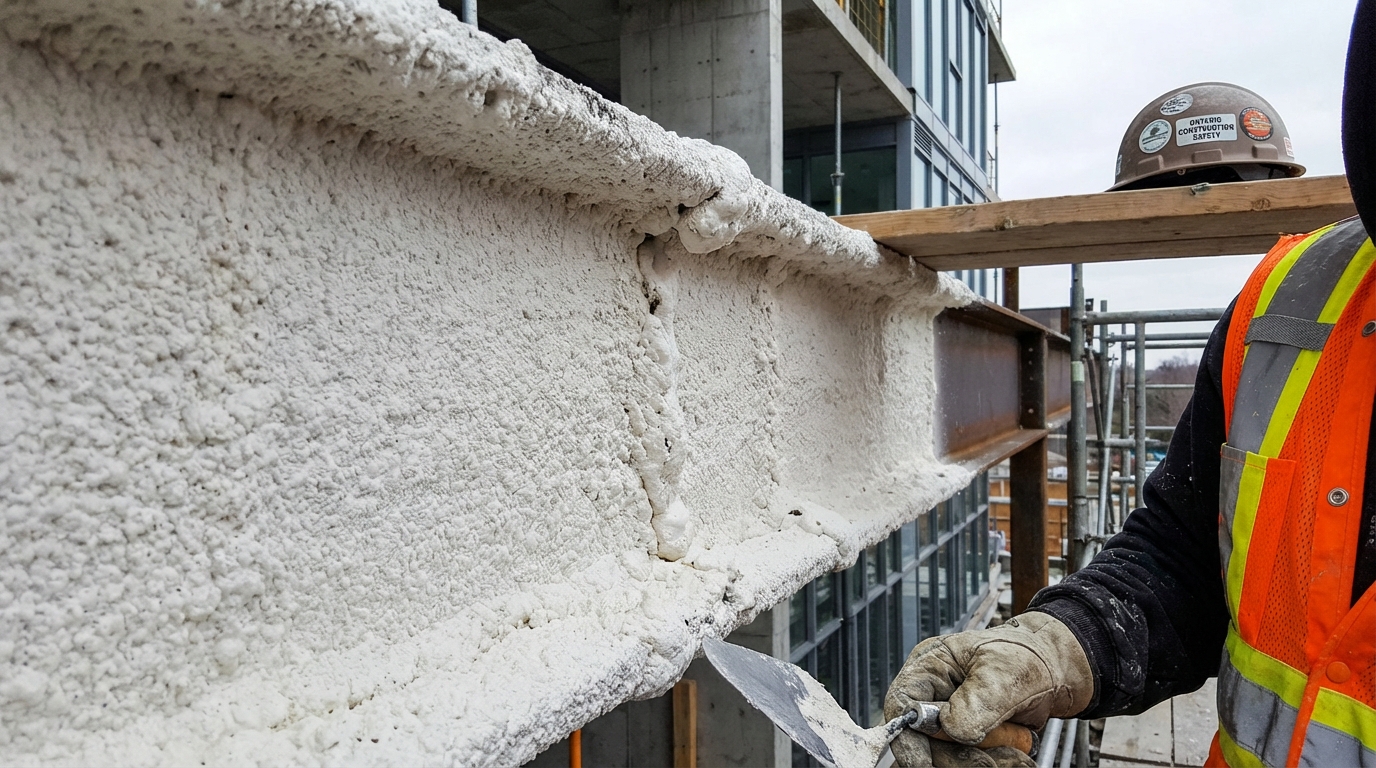
Cementitious fireproofing materials—composed of Portland cement, gypsum, vermiculite, perlite, and proprietary mineral fibers—represent the cost-effective workhorse solution for large-scale industrial fireproofing projects throughout Ontario. These spray-applied systems create thick, insulating layers (typically 15-50mm) that provide excellent thermal protection for structural steel columns, beams, decking, and trusses in warehouses, distribution centers, steel mills, and heavy industrial facilities.
The application process involves specialized equipment that pneumatically sprays wet cementitious mixture onto prepared steel surfaces, where it bonds and cures to form a monolithic fire-resistant barrier. Ontario industrial facilities benefit from rapid installation rates—experienced crews can apply 2,000-5,000 square feet per day depending on project complexity—making cementitious systems ideal for new construction schedules and large-scale retrofit projects across the province.
Modern cementitious formulations available through commercial insulation specialists offer improved adhesion, reduced shrinkage, enhanced durability, and better resistance to humidity and mechanical damage compared to legacy formulations. These advances address historical concerns about friability and maintenance requirements in Ontario’s demanding industrial environments.
Cementitious fireproofing excels in concealed applications—above suspended ceilings, in mechanical rooms, behind wall assemblies—where aesthetics matter less than cost-effectiveness and fire performance. The material’s inherent non-combustibility, excellent acoustic properties, and proven track record in Canadian industrial settings make it the default choice for budget-conscious projects requiring ULC-listed fire resistance ratings.
Ontario Commercial Fireproofing Costs: 2026 Pricing Analysis
Understanding fireproofing costs represents a critical component of industrial construction budgeting and retrofit planning for Ontario facility owners. Pricing varies significantly based on fireproofing type, fire rating requirements, project scale, site accessibility, and regional labor rates across Ontario’s diverse industrial markets.
Intumescent Coating Cost Breakdown
Intumescent fireproofing systems in Ontario industrial buildings typically range from $12-$25 CAD per square foot of steel surface area, with costs varying based on the following factors:
- Fire Rating Requirements: 1-hour ratings: $12-$16/sq ft | 2-hour ratings: $16-$20/sq ft | 3-4 hour ratings: $20-$25/sq ft
- Steel Configuration: Simple wide-flange beams cost less per square foot than complex column assemblies, hollow structural sections, or intricate connection details requiring multiple coats and careful application
- Surface Preparation: Proper surface preparation—including abrasive blasting, primer application, and contamination removal—adds $2-$5/sq ft to base coating costs but ensures long-term adhesion and performance
- Environmental Conditions: Climate-controlled application environments, temporary enclosures, and winter heating requirements can increase project costs by 15-30% in Ontario’s variable climate
Large-scale industrial projects exceeding 50,000 square feet of steel surface area typically receive volume discounts of 10-20% compared to smaller retrofit applications. Ontario facility owners should budget additional costs for engineering calculations, third-party inspection, and ULC certification documentation required for building permit approval.
Cementitious Fireproofing Cost Analysis
Cementitious spray-applied fireproofing offers more economical pricing for Ontario industrial buildings, typically ranging from $8-$15 CAD per square foot depending on:
- Fire Rating Requirements: 1-hour ratings: $8-$10/sq ft | 2-hour ratings: $10-$12/sq ft | 3-4 hour ratings: $12-$15/sq ft
- Thickness Requirements: 1-hour protection typically requires 25-35mm thickness | 2-hour protection requires 35-45mm | 3-4 hour ratings require 45-60mm applications
- Project Scale: Large warehouse projects with 100,000+ sq ft of steel achieve economies of scale reducing unit costs by 15-25% compared to smaller 10,000-20,000 sq ft retrofits
- Site Conditions: Outdoor or partially exposed applications require weather protection measures, temporary enclosures, and extended curing times adding 20-35% to material and labor costs
The spray foam insulation cost calculator for Ontario can help facility owners estimate project expenses based on specific building configurations and requirements. Labor represents 40-60% of total cementitious fireproofing costs, with experienced Ontario contractors commanding premium rates due to specialized certification requirements and proven track records on complex industrial projects.
Ontario Building Code Requirements for Industrial Fireproofing
Commercial fireproofing in Ontario industrial buildings must comply with the Ontario Building Code (OBC), which references National Fire Code standards and ULC performance requirements. Understanding these regulatory mandates ensures your facility meets legal obligations and maintains insurance coverage eligibility.
Fire Resistance Ratings and Building Classifications
OBC Division B Section 3.1.5 establishes fire resistance rating requirements based on building height, area, occupancy classification, and hazard level. Industrial buildings housing manufacturing operations, chemical processing, or high-volume storage typically fall into Group D occupancy classification, which mandates:
- Buildings 0-3 stories: Minimum 1-hour fire resistance rating for structural steel members
- Buildings 4-6 stories: Minimum 2-hour fire resistance rating for columns and primary load-bearing members
- Buildings 7+ stories: Minimum 3-hour fire resistance rating with additional requirements for compartmentalization and smoke control
Facility owners should note that OBC requirements supersede insurance company recommendations—minimum code compliance is essential but many insurers require enhanced protection. A professional fireproofing assessment determines specific requirements based on your facility’s actual configuration, occupancy density, and hazard classification.
ULC Listing and Certification
All fireproofing systems must be ULC-listed through Underwriters Laboratories of Canada, which maintains Canada’s premier fire protection material database. ULC listing confirms that specific fireproofing products, application procedures, and thickness requirements meet stringent performance testing standards including:
- Fire resistance rating testing per ASTM E119 standards
- Adhesion and bond strength verification
- Compressive strength testing for structural integrity
- Durability assessment under thermal cycling and humidity exposure
Professional contractors specify only ULC-listed products and ensure application follows manufacturer specifications exactly—deviations from approved procedures invalidate the fire rating. Building permits in Ontario require ULC-listed system documentation and third-party inspection certification confirming proper installation.
Industrial Building-Specific Fireproofing Considerations
Ontario industrial facilities present unique fireproofing challenges distinct from office buildings or retail spaces. Manufacturing operations, chemical storage, food processing plants, and distribution warehouses require specialized fireproofing strategies addressing operational demands, environmental exposures, and safety critical systems.
Manufacturing and Processing Operations
Industrial manufacturing environments generate heat, dust, moisture, and chemical vapors that affect fireproofing durability and performance. Proper fireproofing system selection requires consideration of:
- Thermal Exposure: Facilities with ambient operating temperatures above 40°C require specialized high-temperature formulations
- Chemical Resistance: Oil mist, solvents, and processing chemicals demand intumescent or advanced cementitious systems resistant to degradation
- Mechanical Damage: Production areas with mobile equipment, overhead cranes, and material handling require impact-resistant fireproofing
- Moisture Control: Water-based processes require hydrophobic fireproofing materials maintaining performance in high-humidity conditions
Warehouse and Storage Facilities
Distribution warehouses and bulk storage facilities require fireproofing systems balancing cost-effectiveness with fire performance. Large column-supported structures spanning 50,000+ square feet benefit from cementitious spray application efficiency, while strategic intumescent protection of critical structural connections ensures redundant safety.
Storage material classification—particularly high-value inventory or hazardous materials—influences fireproofing specifications. Facilities storing combustible materials, compressed gases, or flammable liquids often require enhanced fire ratings and automatic suppression system integration, making comprehensive fireproofing strategies essential for insurance compliance and operational continuity.
Fireproofing Application Methods and Installation Processes
Professional installation quality directly impacts fireproofing effectiveness and long-term performance. Understanding application methods, surface preparation requirements, and quality control procedures ensures optimal protection for your industrial facility’s structural steel.
Surface Preparation and Steel Conditioning
Proper surface preparation represents the critical foundation for fireproofing adhesion and durability. Ontario contractors employ standardized SSPC (Society for Protective Coatings) standards requiring:
- SSPC-SP6 Commercial Blast Cleaning: Removes mill scale, rust, and contaminants creating clean steel surface for coating adhesion
- SSPC-SP10 Near-White Blast Cleaning: Premium preparation for critical structural connections and exposed structural steel
- Contamination Removal: Silica, dirt, moisture, and oil removal through compressed air cleaning and solvent wiping
- Primer Application: Rust-inhibiting primers improve adhesion and protect freshly prepared steel before fireproofing application
Spray Application Techniques
Experienced contractors employ specialized spray equipment and techniques ensuring uniform coverage, proper thickness, and excellent adhesion. Cementitious fireproofing application involves pneumatic spraying equipment applying pressurized material mixtures at controlled flow rates. Intumescent coatings require HVLP (high-volume, low-pressure) spray application or roller methods ensuring smooth, uniform film thickness without bridging, sags, or coverage gaps.
Ontario industrial projects often require weather protection and temperature control during application and curing. Temporary enclosures maintain proper application temperatures (typically 10-25°C), prevent premature drying, and allow adequate curing time for maximum performance. Experienced crews coordinate application schedules with construction activities, ensuring fireproofing work progresses efficiently without disrupting other trades.
Fireproofing Maintenance and Inspection Requirements
Long-term fireproofing effectiveness requires ongoing maintenance and periodic inspection. Ontario facility managers should implement comprehensive maintenance programs addressing identified deficiencies and documenting system condition for insurance and regulatory compliance purposes.
Routine Inspection Protocols
Professional inspections should occur annually or following any significant facility modifications. Inspectors assess:
- Adhesion integrity and bond failures
- Impact damage, cracks, or spalling requiring repair
- Water damage, efflorescence, or deterioration indicators
- Mechanical damage from equipment contact or vibration
- Coverage completeness particularly around connections and welds
Documentation of inspection results provides essential records for building permit compliance and insurance verification. Professional technical resources and Ontario insulation information provide guidance on inspection standards and maintenance best practices.
Repair and Maintenance
Minor damage—cracks, spalling, or small areas of adhesion loss—should be repaired promptly using manufacturer-approved patching materials matching the original system. Proper repair procedures ensure fire rating continuity and prevent progressive deterioration. Large-scale damage or areas exceeding 5% of protected surface may require system reapplication consulting with the original contractor and fireproofing manufacturer for specification compliance.
Frequently Asked Questions About Commercial Fireproofing in Ontario
How long does fireproofing last in Ontario industrial buildings?
High-quality intumescent fireproofing systems typically maintain effectiveness for 15-20+ years in climate-controlled industrial environments, while cementitious materials provide comparable durability with proper maintenance. Durability depends on environmental conditions, mechanical stress, and maintenance protocols. Annual inspections ensure timely identification of damage requiring repair.
Can existing fireproofing be tested to verify fire ratings?
Yes. Adhesion testing, thickness verification, and material sampling can confirm system integrity without destructive testing. Pull-off adhesion tests measure bond strength, ultrasonic thickness gauges verify coverage adequacy, and core sampling enables laboratory analysis. However, full fire resistance rating verification requires ASTM E119 furnace testing of actual assemblies—very costly and typically performed during initial system approval only.
Is fireproofing removal and replacement necessary when renovating industrial facilities?
Not always. If existing fireproofing is in good condition and meets current Ontario Building Code requirements, retention may be acceptable. However, major structural modifications, code updates requiring enhanced fire ratings, or identification of system deficiencies typically necessitate selective removal and reapplication. Professional assessment determines cost-benefit of retention versus replacement strategies.
What insurance implications exist for unprotected or inadequately protected structural steel?
Commercial property insurance policies typically require OBC-compliant fireproofing meeting minimum fire resistance ratings. Inadequate or missing protection may result in coverage denial, increased premiums, or loss coverage limitations. Facility owners should confirm fireproofing specifications comply with insurance underwriting requirements and maintain documentation proving system compliance.
How does fireproofing interact with spray foam insulation systems in Ontario industrial buildings?
Fireproofing and insulation represent distinct, complementary systems. Spray foam insulation provides thermal efficiency and air sealing benefits, while fireproofing protects structural steel fire ratings. Modern industrial facilities often combine both—foam insulation for energy efficiency, fireproofing for code compliance and structural protection. Proper sequencing ensures optimal performance of both systems without interference or degradation.
Choosing the Right Fireproofing Contractor for Ontario Industrial Projects
Successful fireproofing projects require experienced contractors with demonstrated expertise in Ontario industrial applications. Leading contractors maintain current ULC certifications, employ trained applicators, carry comprehensive insurance, and provide engineering documentation supporting fire rating compliance.
Request detailed specifications, reference projects of similar scope and complexity, and verify contractor insurance and licensing. Professional contractors provide detailed proposals including material selections, thickness specifications, application procedures, inspection protocols, and warranty provisions ensuring clarity and accountability throughout project execution.
Ready to Protect Your Ontario Industrial Facility?
Commercial fireproofing represents a critical investment in structural safety, code compliance, and business continuity for Ontario industrial facilities. Whether you’re constructing new manufacturing capacity, retrofitting an existing warehouse, or addressing identified fireproofing deficiencies, professional guidance ensures optimal protection.
Contact our team of Ontario fireproofing specialists today for a complimentary facility assessment:
Phone: (647) 641-6881
Visit Our Location on Google Maps
Our experienced team delivers ULC-certified fireproofing solutions meeting Ontario Building Code requirements for warehouses, manufacturing plants, distribution centers, and heavy industrial facilities throughout the Greater Toronto Area and across Ontario. We provide detailed specifications, professional installation, third-party inspection documentation, and comprehensive warranties protecting your structural investment. Schedule your facility assessment and receive a customized fireproofing proposal addressing your specific requirements and budget considerations.
Don’t leave your industrial facility’s structural protection to chance. Partner with Ontario’s trusted fireproofing specialists delivering proven results across diverse industrial sectors. Contact us today and discover why leading facility managers choose professional fireproofing solutions for superior fire protection and long-term peace of mind.