
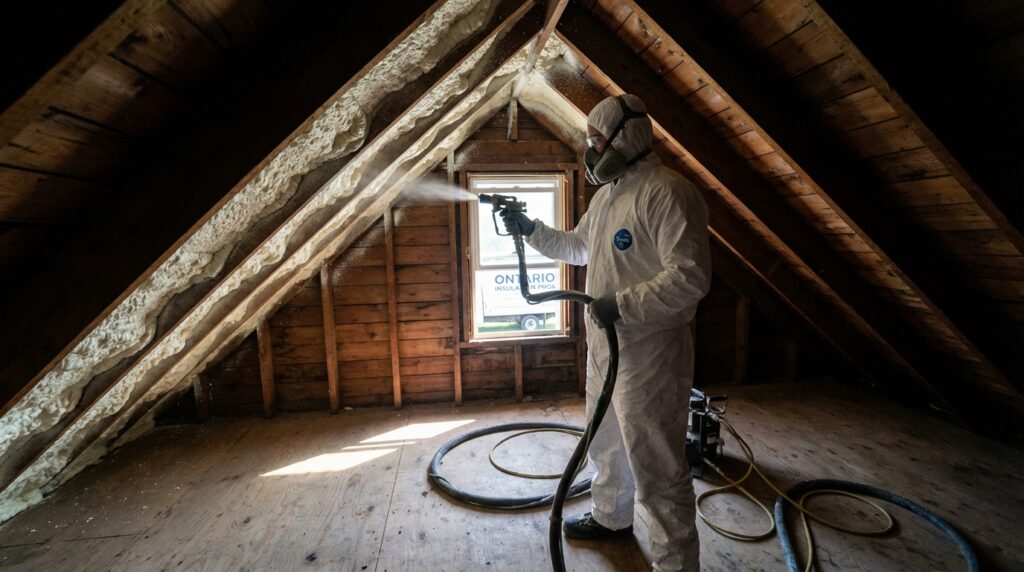
Cottage Insulation in Northern Ontario: Why Spray Foam is Your Best Bet
Owning a cottage in Northern Ontario is a dream come true for many. The pristine lakes, the towering pines, and the escape from the hustle and bustle of city life offer unparalleled tranquility. However, that tranquility can quickly turn into discomfort – and high energy bills – if your cottage isn’t properly insulated. Given the harsh winters and variable summers in Northern Ontario, effective insulation is not just a comfort issue; it’s a necessity. This article delves into why spray foam insulation is often the optimal choice for Northern Ontario cottages, exploring its benefits, costs, and how it aligns with Ontario building codes.
The Short Answer
Spray foam insulation offers superior air sealing and high R-value per inch, making it ideal for battling Northern Ontario’s extreme temperatures. Ontario’s building code mandates minimum R-values for insulation, and spray foam often helps achieve these requirements with less material than traditional options. Specifically, in climate zones 5 and 6, common in Northern Ontario, spray foam can significantly reduce heating costs and improve cottage comfort.
Understanding the Challenge: Northern Ontario’s Climate
Northern Ontario presents a unique set of challenges for cottage insulation:
Harsh Winters and Significant Temperature Swings
Temperatures can plummet to -30°C (-22°F) or lower during the winter months, requiring robust insulation to minimize heat loss. Furthermore, the temperature fluctuations between seasons, and even between day and night, can cause materials to expand and contract, potentially leading to cracks and air leaks in less flexible insulation systems.
High Humidity and Moisture Intrusion
Proximity to lakes and rivers contributes to high humidity levels, increasing the risk of moisture intrusion into the cottage structure. This moisture can lead to mold growth, wood rot, and reduced insulation effectiveness if not properly managed. Traditional insulation like fiberglass batts can absorb moisture, losing R-value and promoting these issues. Spray foam, especially closed-cell, acts as a vapor barrier, mitigating this risk.
Pest Infestation
The remote locations of many Northern Ontario cottages make them susceptible to pest infestations, including rodents and insects. These pests can nest in and damage traditional insulation materials, compromising their performance and creating unsanitary conditions.
Why Spray Foam Excels: Key Benefits
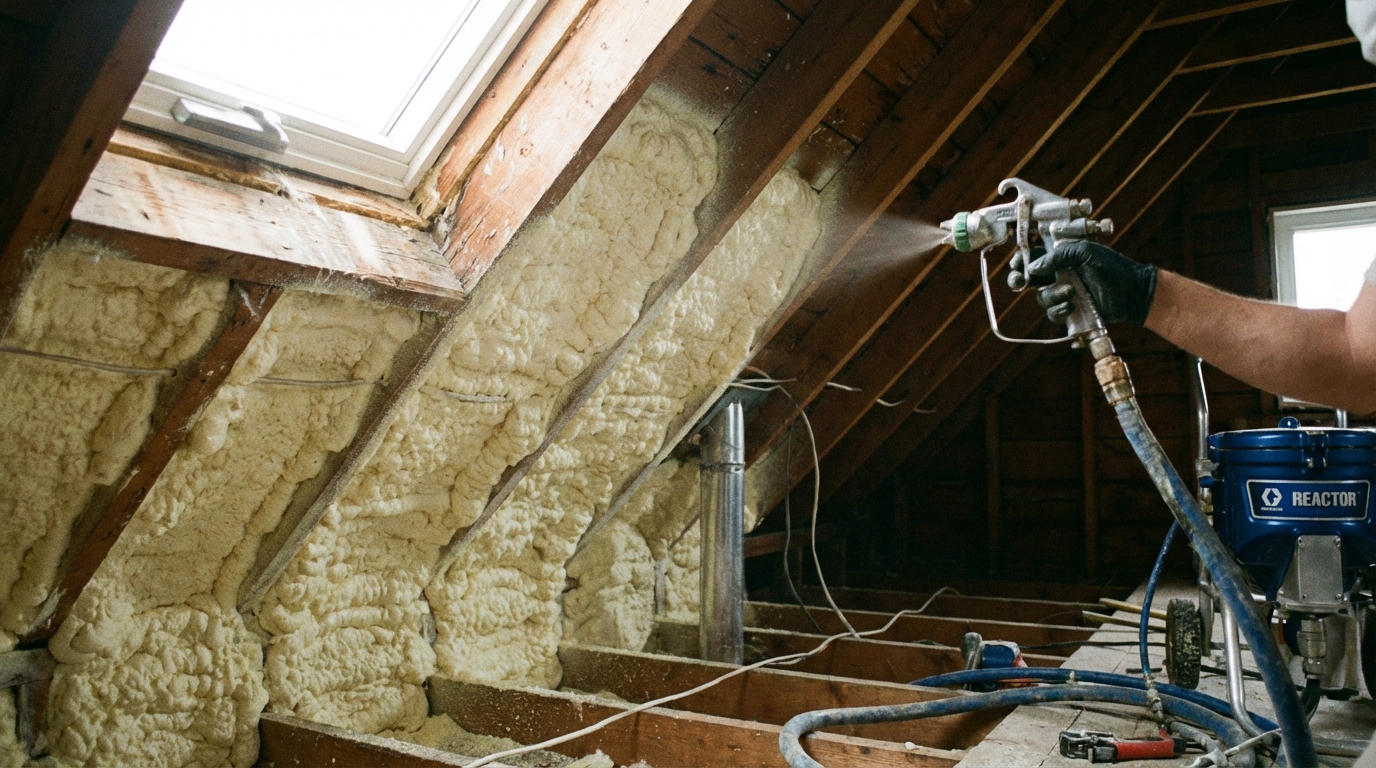
Spray foam insulation addresses these challenges head-on, offering a range of benefits that make it a superior choice for Northern Ontario cottages:
Superior Air Sealing
One of the most significant advantages of spray foam is its ability to create an airtight seal. Unlike traditional insulation, which is often installed with gaps and voids, spray foam expands to fill every nook and cranny, effectively blocking air leakage. This airtight seal reduces drafts, minimizes heat loss, and prevents moisture from entering the building envelope. Studies have shown that air leaks can account for up to 40% of energy loss in a home. Spray foam eliminates this problem, leading to significant energy savings. Consider that a properly sealed cottage using spray foam, compared to one with traditional insulation and numerous air leaks, could see a 20-40% reduction in heating bills. Learn more about air sealing benefits on our website.
High R-Value per Inch
R-value is a measure of thermal resistance – the higher the R-value, the better the insulation’s ability to resist heat flow. Spray foam boasts a high R-value per inch compared to other insulation materials. Closed-cell spray foam typically has an R-value of around R-6 to R-7 per inch, while open-cell spray foam offers around R-3.5 to R-4 per inch. This means you can achieve the required insulation levels with less material, which is especially beneficial in cottages with limited wall or roof cavity space. The Ontario Building Code dictates minimum R-values depending on the climate zone. For example, in Zone 6 (common in many parts of Northern Ontario), the code requires a minimum R-value of R-28 for above-grade walls and R-60 for attic insulation. Spray foam allows you to meet or exceed these requirements efficiently. See our R-value guide to understand more.
Moisture Resistance
Closed-cell spray foam is particularly effective at resisting moisture. Its closed-cell structure prevents water absorption, acting as a vapor barrier and reducing the risk of mold growth and wood rot. This is crucial in Northern Ontario’s humid environment. While open-cell spray foam is more breathable, it still offers some moisture resistance and can be a suitable option in conjunction with proper vapor barrier installation. We always recommend a thorough assessment of the cottage’s specific needs before recommending a particular type of spray foam. For areas prone to condensation, like crawl spaces or basements, closed-cell spray foam is almost always the preferred choice.
Pest Deterrent
Spray foam is less attractive to pests than traditional insulation materials. Its dense structure makes it difficult for rodents and insects to nest in or damage. While it’s not entirely pest-proof, it provides a significant deterrent compared to fiberglass or cellulose insulation. We often see cottages with rodent infestations in their fiberglass insulation. Replacing it with spray foam not only improves insulation but also reduces the likelihood of future pest problems. Consider this an investment in both your cottage’s comfort and its structural integrity. You can learn more about crawl space insulation here.
Structural Integrity
Closed-cell spray foam adds structural integrity to walls and roofs. Its rigid nature helps to reinforce the building envelope, making it more resistant to wind and other external forces. This is particularly important in areas prone to severe weather conditions. During a recent project in Muskoka, we reinforced the roof of an older cottage with closed-cell spray foam. The homeowner reported a noticeable improvement in the roof’s stability and reduced wind noise during storms.
Costs and Considerations
While spray foam offers numerous advantages, it’s essential to consider the costs and other factors before making a decision:
Material and Installation Costs
Spray foam insulation is generally more expensive than traditional insulation materials like fiberglass or cellulose. However, the long-term energy savings and other benefits often outweigh the initial investment. The cost of spray foam installation varies depending on the type of foam (open-cell vs. closed-cell), the thickness required, and the size of the area being insulated. As a rough estimate, expect to pay between $3.00 and $5.00 per square foot for closed-cell spray foam at a thickness of 2 inches, and between $1.50 and $3.00 per square foot for open-cell spray foam at a thickness of 3 inches. These prices are estimates and can vary based on project complexity and location. Always get a free quote for your specific project. Request a quote today!
Professional Installation is Crucial
Proper installation is critical to the performance of spray foam insulation. It’s essential to hire a qualified and experienced contractor who understands the proper techniques and safety precautions. Incorrect installation can lead to problems such as off-gassing, inadequate insulation, and even structural damage. Ensure your contractor is certified and insured. We, at Spray Foam Kings, pride ourselves on our experienced and certified technicians who adhere to the highest industry standards.
Ontario Building Code Compliance
Ensure that your insulation project complies with the Ontario Building Code. The code specifies minimum R-values for different parts of the building envelope, depending on the climate zone. As mentioned earlier, Zone 6 is common in Northern Ontario. Your contractor should be familiar with the code requirements and able to recommend the appropriate type and thickness of insulation to meet these standards. The Ontario Building Code (OBC) specifically Section 9.36 addresses insulation requirements. Always consult the latest version of the OBC for the most up-to-date information. You can find more information on the Ontario government website. We handle all permits and inspections to ensure full compliance.
Ventilation Considerations
While spray foam creates an airtight seal, it’s important to ensure proper ventilation in the cottage. Adequate ventilation is necessary to remove moisture and pollutants from the indoor environment. This can be achieved through natural ventilation (e.g., opening windows) or mechanical ventilation systems (e.g., heat recovery ventilators). We often recommend installing HRV systems in conjunction with spray foam insulation to ensure optimal air quality and energy efficiency. Contact us to learn more about ventilation options.
Real-World Example: Cottage Renovation in Sudbury
We recently completed a cottage renovation project in Sudbury, Ontario. The existing cottage had minimal insulation and suffered from significant air leaks, resulting in high heating bills and uncomfortable living conditions. We removed the old fiberglass insulation and installed closed-cell spray foam in the walls and roof, achieving an R-value of R-28 in the walls and R-60 in the roof. The homeowner reported a dramatic improvement in comfort and a significant reduction in heating costs – approximately 40% lower than the previous year. They also noticed a reduction in drafts and a more consistent temperature throughout the cottage.
FAQ: Frequently Asked Questions About Spray Foam Insulation
What is the difference between open-cell and closed-cell spray foam?
Is spray foam insulation safe?
How long does spray foam insulation last?
Can I install spray foam insulation myself?
Does spray foam insulation help with soundproofing?
Ready to Upgrade Your Northern Ontario Cottage Insulation?
Don’t let another winter pass with high heating bills and an uncomfortable cottage. Contact Spray Foam Kings today for a free consultation and estimate. We’ll assess your cottage’s specific needs and recommend the best insulation solution to maximize energy efficiency, comfort, and long-term value.
Call us now at 647-641-6881 to schedule your consultation!
Author: Shaun Falls, Owner & Founder