
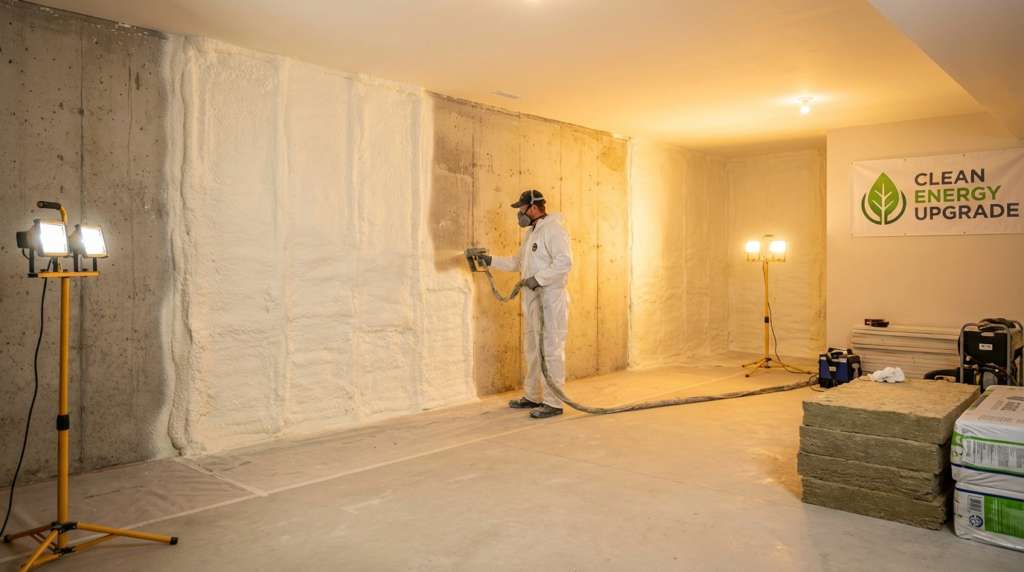
If you’re considering spray foam insulation for your Toronto, Ottawa, or Hamilton home, you may be wondering about vapor barriers. Ontario’s variable climate—with humid summers and freezing winters—makes moisture control a critical consideration for any insulation project. Understanding whether your spray foam installation requires an additional vapor barrier can save you from costly mistakes and ensure your home meets Ontario Building Code requirements.
What Is a Vapor Barrier and Why Does It Matter in Ontario?
A vapor barrier is a material that prevents moisture from passing through walls, ceilings, and floors. In Ontario, where temperature swings can exceed 50°C between summer and winter, vapor barriers play a crucial role in preventing condensation buildup within wall assemblies. Without proper moisture control, homeowners risk mold growth, wood rot, and reduced insulation effectiveness—all serious concerns given Toronto’s average humidity levels of 70-80% during summer months.
The Ontario Building Code specifies vapor barrier requirements to protect the building envelope from moisture damage. These requirements vary depending on the type of insulation used and the specific application area, whether it’s your attic, basement, or exterior walls.
Does Closed-Cell Spray Foam Need a Vapor Barrier?
No—closed-cell spray foam does not require an additional vapor barrier. This is one of its biggest advantages for Ontario homeowners. Closed-cell spray foam has a density of approximately 2.0 lbs/ft³ and contains closed air pockets that block moisture transmission effectively. At thicknesses of 2 inches or more, closed-cell spray foam qualifies as both an insulation material and a vapor barrier under the Ontario Building Code.
Closed-cell spray foam achieves an R-value of approximately R-6 to R-7 per inch, meaning just 3 inches provides R-18 to R-21—exceeding the minimum R-20 requirement for basement walls in Southern Ontario. This dual functionality makes closed-cell spray foam an excellent choice for basements, crawl spaces, and areas prone to moisture exposure.
Additionally, closed-cell spray foam adds structural rigidity to walls and can actually strengthen your building’s framework—a significant benefit during Ontario’s severe winter storms and temperature fluctuations.
Does Open-Cell Spray Foam Need a Vapor Barrier?
Yes—open-cell spray foam absolutely requires a separate vapor barrier. Unlike its closed-cell counterpart, open-cell spray foam has a density of approximately 0.5 lbs/ft³ and features interconnected air pockets that allow water vapor to pass through. While this breathability can be advantageous in certain climates, Ontario’s extreme temperature differentials make a dedicated vapor barrier essential.
According to the Ontario Building Code and professional installation standards, open-cell spray foam installations must be covered with a vapor barrier of at least 6-mil polyethylene sheeting. This is typically installed on the warm side of the insulation (interior face in Ontario’s climate) before drywall installation.
Open-cell spray foam provides approximately R-3.5 to R-4 per inch, so achieving Ontario’s required R-values may require thicker applications compared to closed-cell foam. However, open-cell’s superior sound-dampening properties make it popular for interior applications and attic insulation where moisture concerns are properly managed.
What Are the Ontario Building Code Requirements?
The Ontario Building Code addresses spray foam insulation and vapor barriers through several key sections:
Section 9.25.4 – Vapor Barriers: Requires vapor barriers on the warm side of insulation in exterior walls, ceilings, and floors separating heated space from unheated space or exterior air.
Section 9.10.17.10 – Protection of Foamed Plastics: Spray foam must be protected with an approved thermal barrier, typically ½-inch drywall, when installed in living spaces. This applies regardless of whether open-cell or closed-cell foam is used.
SB-12 Energy Efficiency Requirements: For basement walls, Ontario requires a minimum of R-12 continuous insulation or R-20 effective insulation. Spray foam is one of the most effective ways to achieve these values while eliminating thermal bridging.
It’s important to note that while closed-cell spray foam functions as a vapor barrier, it still requires thermal barrier protection (drywall) when installed in occupied spaces—unconditioned attics and crawl spaces may have different requirements depending on specific conditions.
When Should You Choose Each Type?
Choose Closed-Cell Spray Foam When:
- Insulating basements or areas below grade
- Working in crawl spaces with ground moisture exposure
- Maximum R-value per inch is needed in constrained spaces
- Structural reinforcement is desired
- You want to eliminate the separate vapor barrier installation step
Choose Open-Cell Spray Foam When:
- Sound dampening is a priority (interior walls, media rooms)
- Budget is a primary concern (open-cell costs 20-30% less)
- You’re insulating attics with proper ventilation systems
- The installation area has minimal moisture exposure
How to Ensure Code Compliance
Working with a certified spray foam contractor is essential for ensuring your installation meets all Ontario Building Code requirements. Professional installers understand the nuances of vapor barrier placement, thermal barrier requirements, and the specific challenges posed by Ontario’s climate zones.
When hiring a contractor, ask about:
- Their certification under CAN/ULC S705.1 (Canadian spray foam standard)
- Experience with Ontario Building Code compliance
- Whether they provide documentation for permit applications
- Warranty coverage for both materials and installation
Ready to Insulate Your Ontario Home?
Understanding vapor barrier requirements is just one piece of creating an energy-efficient, comfortable home in Toronto, Ottawa, or Hamilton. Whether you’re insulating a new build or upgrading an existing property, spray foam offers exceptional performance when properly installed.
Contact Spray Foam Kings today at 647-641-6881 for a free consultation. Our certified technicians serve homeowners throughout the Greater Toronto Area with code-compliant spray foam installations that stand up to Ontario’s toughest weather conditions.
Find us on Google Maps to see reviews from satisfied customers across Ontario, or explore our available rebates that can reduce your insulation costs by thousands of dollars.
Don’t let moisture concerns hold you back from the comfort and savings spray foam insulation provides. Call today and discover why we’re Ontario’s trusted choice for professional insulation services. Check out more tips on our blog.