
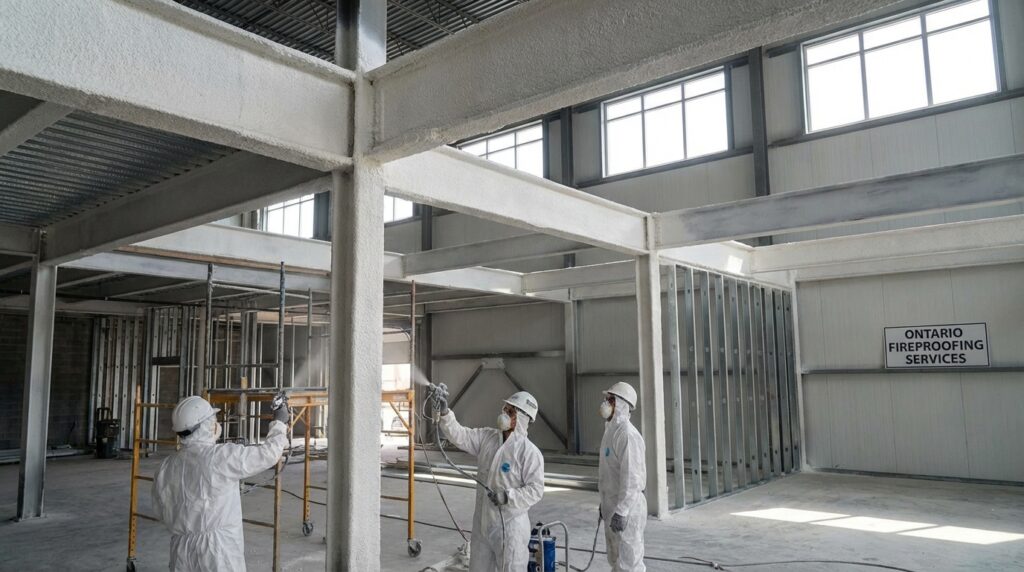
High-Rise Fireproofing: Navigating Toronto’s Complex Code Compliance
A Deep Dive into Protecting Toronto’s Skyline
Toronto’s iconic skyline is a testament to architectural innovation and urban density. But behind the gleaming glass and steel lies a critical component often overlooked: fireproofing. Ensuring high-rise buildings can withstand fire is paramount, and it’s governed by a stringent set of regulations outlined in the Ontario Building Code (OBC). This post will break down the complexities of high-rise fireproofing in Toronto, focusing on the relevant codes, materials, costs, and best practices to keep residents and structures safe.
The Short Answer
High-rise fireproofing in Toronto demands strict adherence to the Ontario Building Code (OBC) Section 3.2.2, focusing on fire-resistance ratings (FRR) for structural components. These ratings, measured in hours, dictate how long a building element can withstand fire exposure. In Ontario, SFRM (Spray-Applied Fire-Resistive Material) is a common and code-compliant solution, and you can learn more about fireproofing applications here.
Understanding the Ontario Building Code (OBC) and Fire Resistance
OBC Section 3.2.2: Fire Resistance Ratings
The cornerstone of high-rise fire safety in Toronto is Section 3.2.2 of the OBC, which dictates the required Fire Resistance Ratings (FRR) for various structural elements. The FRR is the duration, expressed in hours, for which a material or assembly maintains its structural integrity and ability to prevent the spread of fire when exposed to a standardized fire test (typically CAN/ULC-S101). Different building components have different FRR requirements, depending on the building’s height, occupancy, and construction type. For example, load-bearing columns in a high-rise office building (Group D occupancy) might require a 3-hour FRR, while floor assemblies might need a 2-hour FRR.
It’s crucial to consult the OBC directly and engage with qualified fire protection engineers to determine the precise FRR requirements for your specific project. Incorrectly specified fireproofing can have devastating consequences and lead to significant legal liabilities.
Types of Fire-Resistive Materials
Several materials can be used to achieve the required FRR, each with its own advantages and disadvantages. In Toronto, the most common method is using SFRM (Spray-Applied Fire-Resistive Material). Here’s a breakdown:
- SFRM (Spray-Applied Fire-Resistive Material): This is a cementitious or gypsum-based material sprayed onto steel or concrete structures. SFRM is cost-effective, relatively easy to apply, and provides excellent fire resistance. The thickness of the SFRM determines the FRR. Common brands include Monokote and Cafco. Our services include professional SFRM application.
- Intumescent Coatings: These coatings expand when exposed to heat, forming a char layer that insulates the steel. Intumescent coatings are often used for exposed steel structures where aesthetics are important, as they can be painted. However, they are generally more expensive than SFRM.
- Concrete Encasement: Encasing steel columns and beams in concrete provides excellent fire protection. While effective, this method adds significant weight and can be less practical for complex geometries.
- Fire-Resistant Boards: These boards, typically made of gypsum or calcium silicate, can be used to clad steel or concrete structures. They are often used in areas where SFRM application is difficult or where a specific aesthetic is desired.
The choice of material depends on factors such as cost, aesthetics, ease of application, and the required FRR. SFRM is often the preferred choice for its cost-effectiveness and versatility, particularly in concealed structural elements.
Cost Considerations
The cost of fireproofing in Toronto varies significantly depending on the material used, the complexity of the project, and the contractor. Here’s a rough estimate for SFRM application:
- Material Cost: $2.00 – $4.00 per square foot (depending on the type and thickness of SFRM)
- Labor Cost: $3.00 – $6.00 per square foot (depending on the complexity of the application)
- Total Cost (SFRM): $5.00 – $10.00 per square foot
For intumescent coatings, expect to pay significantly more, typically in the range of $15.00 – $30.00 per square foot. Concrete encasement is also a more expensive option due to the material and labor involved. These are just estimates, and the actual cost can vary widely. Obtaining multiple quotes from reputable fireproofing contractors is essential. Always factor in engineering and inspection costs, which can add another 5-10% to the overall budget.
For an accurate estimate for your project, contact us today.
Specific Applications and Challenges in Toronto High-Rises
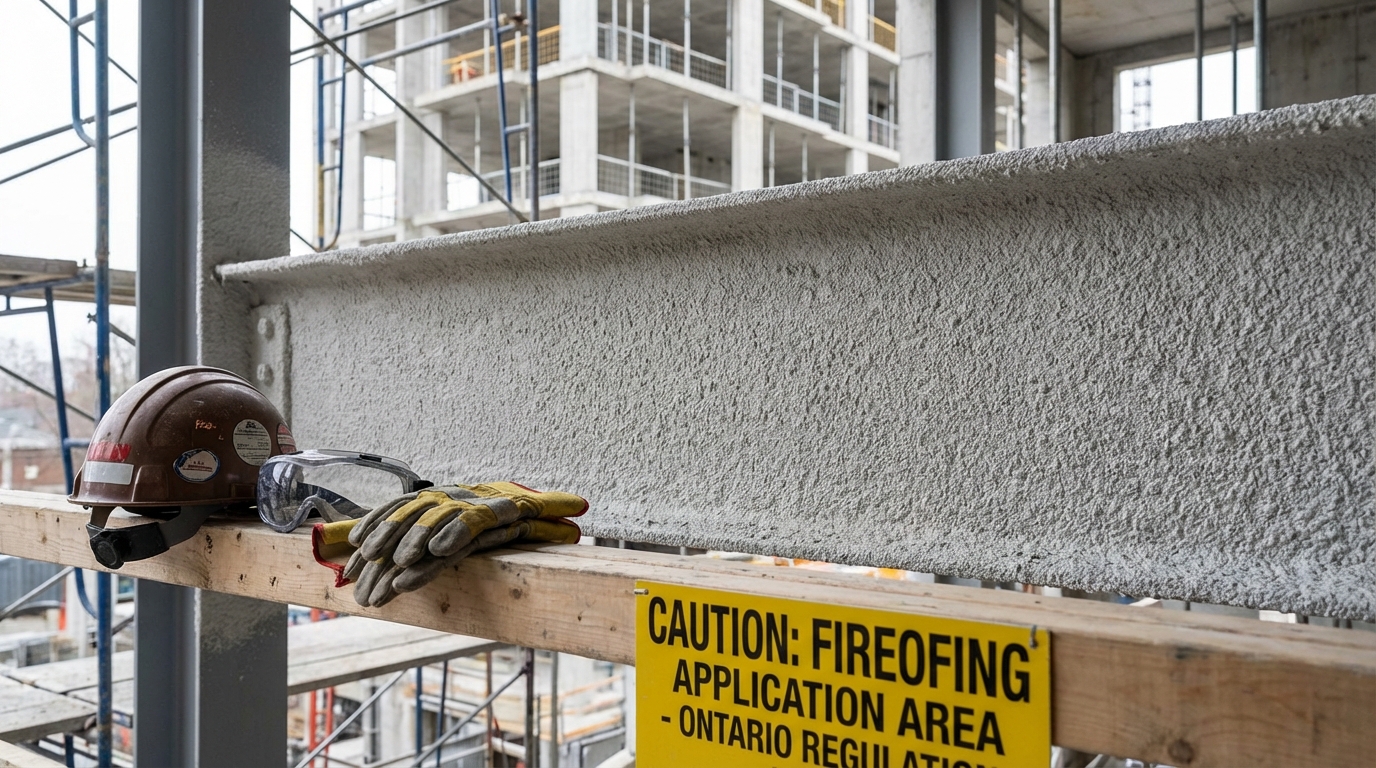
Steel Frame Fireproofing
Steel loses its strength rapidly when exposed to high temperatures, making it crucial to protect steel frames in high-rise buildings. SFRM is the most common and cost-effective solution for steel frame fireproofing in Toronto. The required thickness of the SFRM is determined by the steel member’s “Hp/A” ratio (heated perimeter divided by cross-sectional area) and the desired FRR. Smaller steel members with higher Hp/A ratios require thicker SFRM applications. For example, a W14x90 column might require a 2-inch thick application of SFRM to achieve a 3-hour FRR, while a larger W14x257 column might only need 1.5 inches.
Proper surface preparation is critical for SFRM adhesion. Steel surfaces must be free of rust, oil, and other contaminants. A primer is often applied to improve adhesion and prevent corrosion. Regular inspections are also essential to ensure the SFRM remains intact and provides the required fire protection.
Concrete Structure Fireproofing
While concrete is inherently more fire-resistant than steel, high-strength concrete can be susceptible to spalling (surface degradation) when exposed to high temperatures. In Toronto high-rises, concrete columns and beams may still require additional fireproofing, especially if they are load-bearing elements. The OBC specifies minimum concrete cover requirements for reinforcing steel to provide adequate fire protection. However, in some cases, SFRM or other fire-resistant materials may be required to achieve the desired FRR.
For example, a concrete column with inadequate cover might require a thin layer of SFRM to prevent spalling and maintain its structural integrity during a fire. The choice of fireproofing material depends on the specific concrete mix design, the column’s dimensions, and the required FRR.
Challenges in Existing Buildings
Retrofitting fireproofing in existing high-rise buildings in Toronto presents unique challenges. Access can be difficult, especially in older buildings with limited space. Asbestos abatement may be required before applying new fireproofing. Coordination with existing tenants and building operations is also crucial to minimize disruption. When dealing with older structures, it’s vital to conduct a thorough fire risk assessment to identify areas where fire protection upgrades are needed. Our team has extensive experience in retrofitting fireproofing in existing buildings throughout the GTA.
Compliance and Inspection Procedures
Required Documentation
Compliance with the OBC requires comprehensive documentation throughout the fireproofing process. This includes:
- Fire Protection Design Report: Prepared by a qualified fire protection engineer, this report outlines the required FRRs for all structural elements and specifies the fireproofing materials to be used.
- Material Data Sheets: These sheets provide information on the fire-resistance performance of the chosen materials.
- Application Specifications: Detailed instructions on how the fireproofing materials should be applied, including surface preparation, mixing ratios, and application thickness.
- Inspection Reports: Reports documenting the inspections conducted during and after the fireproofing application.
All documentation must be readily available for review by building officials and fire inspectors. Failure to provide adequate documentation can result in delays and costly rework.
Inspection Process
The fireproofing application process is typically subject to multiple inspections. These inspections ensure that the materials are installed correctly and meet the requirements of the OBC and the fire protection design report. Common inspection points include:
- Pre-Application Inspection: Verifies that the surfaces are properly prepared and that the correct materials are on-site.
- In-Progress Inspection: Checks the application thickness and uniformity of the fireproofing material.
- Final Inspection: Confirms that the fireproofing has been applied according to the specifications and that all required documentation is complete.
Third-party inspections are often required for high-rise buildings to provide an independent verification of compliance. These inspections are typically conducted by qualified fire protection consultants or testing laboratories. If you need assistance with inspections, contact us for a referral to a trusted partner.
Consequences of Non-Compliance
Failure to comply with the OBC regarding fireproofing can have severe consequences, including:
- Stop-Work Orders: Building officials can issue stop-work orders if fireproofing is not installed correctly or if documentation is incomplete.
- Fines and Penalties: Significant fines can be levied for non-compliance with the OBC.
- Legal Liability: Building owners and contractors can be held liable for damages and injuries resulting from a fire in a non-compliant building.
- Increased Insurance Premiums: Insurance companies may charge higher premiums for buildings that do not meet fire safety standards.
Prioritizing code compliance is not just a legal obligation; it’s a moral imperative to protect the lives and safety of building occupants.
Emerging Technologies and Future Trends
Advanced Materials
The fireproofing industry is constantly evolving, with new and improved materials being developed. These advanced materials offer enhanced fire resistance, improved durability, and reduced environmental impact. Examples include:
- Thinner SFRM Applications: New SFRM formulations allow for thinner applications while still achieving the required FRR, reducing material costs and installation time.
- Bio-Based Fireproofing Materials: Sustainable fireproofing materials made from renewable resources are gaining popularity as building owners seek to reduce their carbon footprint.
- Nanotechnology-Enhanced Materials: Nanoparticles can be added to fireproofing materials to improve their fire resistance and durability.
Staying informed about these emerging technologies can help building owners and contractors make informed decisions about fireproofing solutions.
Digitalization and BIM
Building Information Modeling (BIM) is transforming the construction industry, including fireproofing. BIM allows for the creation of a digital representation of a building, which can be used to simulate fire scenarios and optimize fire protection design. BIM can also be used to track the installation of fireproofing materials and ensure compliance with the OBC.
Digitalization is also improving the efficiency of fireproofing inspections. Drones and other technologies can be used to remotely inspect fireproofing applications, reducing the need for manual inspections and improving accuracy.
Focus on Sustainability
Sustainability is becoming an increasingly important consideration in the fireproofing industry. Building owners are seeking fireproofing solutions that are environmentally friendly and have a low carbon footprint. This includes using recycled materials, reducing waste, and minimizing the use of volatile organic compounds (VOCs).
As environmental regulations become stricter, the demand for sustainable fireproofing solutions will continue to grow. Spray Foam Kings is committed to offering environmentally responsible fireproofing options.
Frequently Asked Questions (FAQ)
Q: How often does fireproofing need to be inspected in a Toronto high-rise?
A: The Ontario Building Code doesn’t specify mandatory periodic inspections for existing fireproofing. However, it is highly recommended to conduct inspections every 3-5 years, or after any significant building renovations or alterations, to ensure the fireproofing remains intact and effective. Regular inspections can identify potential issues early on, preventing costly repairs and ensuring continued compliance.
Q: What are the most common causes of fireproofing failure in high-rise buildings?
A: Common causes of fireproofing failure include physical damage (impacts, abrasion), moisture exposure, poor initial application (inadequate thickness, improper surface preparation), and aging of the material. Regular inspections can help identify and address these issues before they compromise the fireproofing’s effectiveness.
Q: Can I apply fireproofing myself?
A: While technically possible, it is strongly discouraged and likely illegal for commercial buildings. Proper fireproofing application requires specialized equipment, expertise, and adherence to strict application standards. Improper application can compromise the fireproofing’s effectiveness and create a significant safety hazard. Always hire a qualified and experienced fireproofing contractor.
Q: What is the difference between fireproofing and fire stopping?
A: Fireproofing protects structural elements (steel, concrete) from the effects of fire, allowing them to maintain their load-bearing capacity. Fire stopping, on the other hand, seals penetrations (pipes, cables, ducts) through fire-rated walls and floors to prevent the spread of fire and smoke. Both are essential components of a comprehensive fire protection strategy.
Q: Does spray foam offer fire protection for steel structures?
A: While some spray foam products can contribute to fire resistance when used as part of a tested and approved assembly, spray foam *alone* is generally not sufficient as a fireproofing material for steel structures in high-rise buildings. It needs to be used in conjunction with other fire-resistive materials to meet the required FRRs. Always consult with a fire protection engineer to determine the appropriate fireproofing system for your specific application. We also provide spray foam insulation services.
Protect Your Investment and Ensure Safety
Navigating the complexities of high-rise fireproofing in Toronto requires expertise and meticulous attention to detail. Don’t compromise on safety and compliance. Contact Spray Foam Kings today for a consultation and ensure your building is protected to the highest standards.
Call us now: 647-641-6881
Author: Shaun Falls, Owner & Founder