
Basement Insulation in Toronto & Ontario
Improve comfort and energy efficiency with professional basement insulation designed for Toronto homes. Proper basement insulation helps reduce heat loss, minimize moisture issues, and keep lower levels warmer and more comfortable year-round. Read our full guide : basement insulation Toronto
- Helps reduce cold floors and drafts from below
- Improves comfort in finished and unfinished basements
- Supports moisture control and condensation reduction
- Ideal for older homes and basement renovations
- Installed by licensed professionals serving Toronto and Ontario
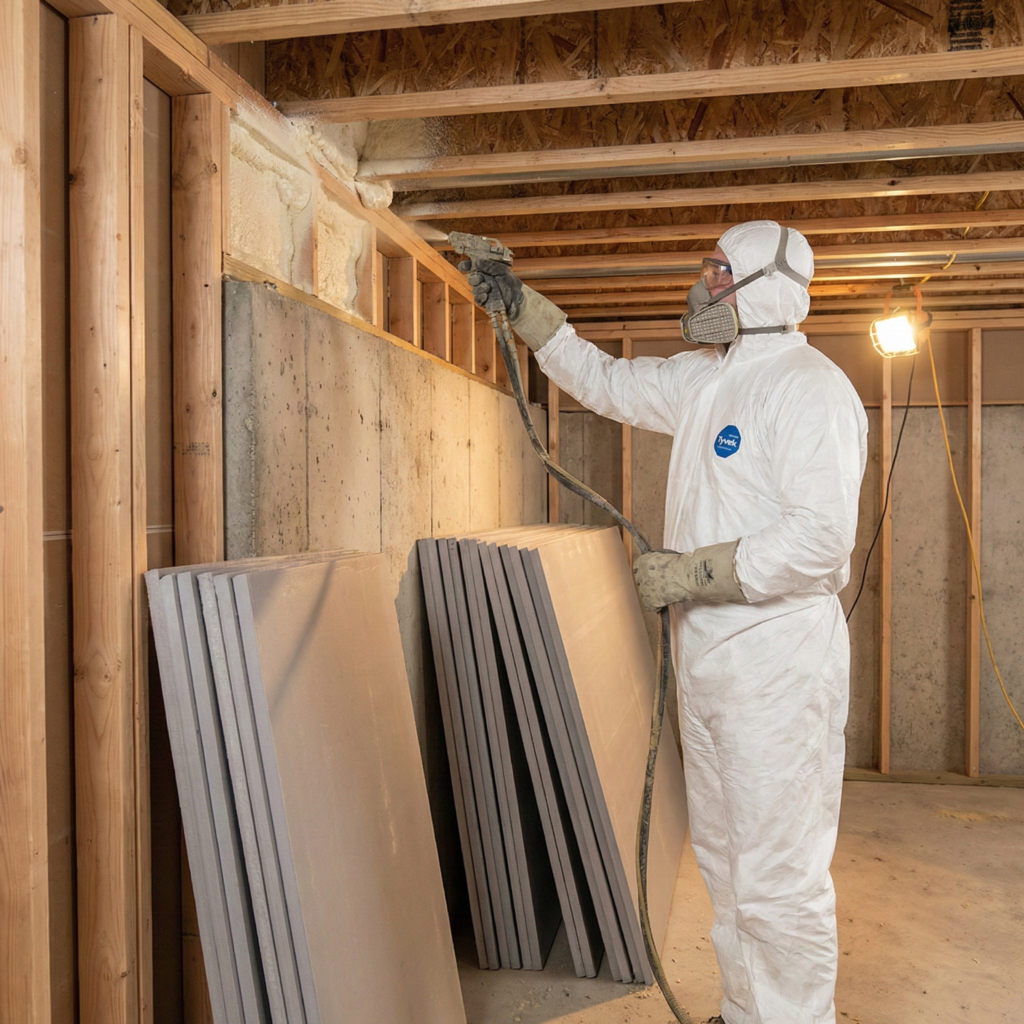
Code-Compliant Basement Insulation in Ontario
Basement insulation must address both thermal performance and moisture considerations, especially in below-grade spaces common in Ontario homes. Our basement insulation installations are completed in accordance with applicable Ontario Building Code requirements and manufacturer guidelines to help ensure proper insulation coverage, durability, and compatibility with foundation assemblies.
Whether insulating unfinished basements, upgrading older homes, or preparing a space for finishing, we assess basement conditions carefully to ensure insulation solutions support comfort, energy efficiency, and long-term performance.
Why Choose Basement Insulation in Toronto?
Basements are one of the largest sources of heat loss in Toronto homes, especially in older properties with uninsulated or poorly insulated foundation walls. Proper basement insulation helps keep lower levels warmer, reduces cold floors above, and improves overall comfort throughout the home.
Because basements are below grade, insulation also plays an important role in managing moisture and condensation, helping protect finished spaces and reduce long-term issues.
- Helps reduce cold floors and heat loss from below
- Improves comfort in finished and unfinished basements
- Supports moisture control and condensation reduction
- Ideal for older homes and basement renovations
- Installed efficiently with minimal disruption
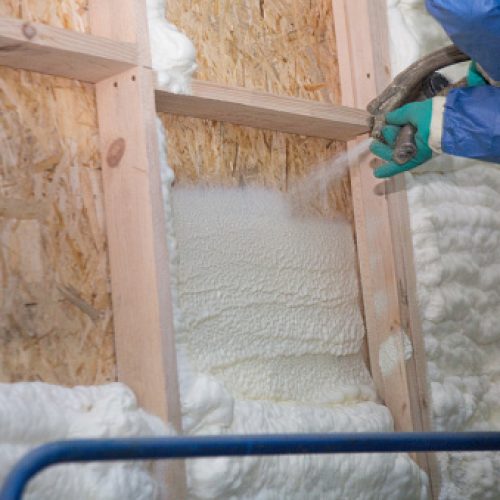
How Basement Insulation Works
Basement insulation works by slowing heat transfer through below-grade foundation walls and reducing air leakage in areas where cold air commonly enters the home. Properly insulated basements help maintain warmer indoor temperatures, improve comfort on upper floors, and support overall energy efficiency.
Because basements are more prone to moisture, insulation solutions are selected and installed to perform reliably in below-grade conditions.
1. Basement Inspection & Assessment
We begin by evaluating foundation walls, rim joists, existing insulation, and moisture conditions to determine the most effective insulation approach for the space.
2. Preparation & Air Sealing
Before insulation is installed, gaps, penetrations, and rim joist areas are addressed to help reduce drafts and improve performance. In many basements, this work is completed using spray foam insulation services for targeted air sealing.
3. Insulation Installation
Insulation is installed on basement walls, rim joists, or ceilings as required to achieve consistent coverage and proper thermal resistance.
4. Final Check
Once installation is complete, insulation coverage and placement are reviewed to ensure performance goals are met.
Ready to Upgrade Your Insulation?
Get professional basement insulation services installed by licensed experts serving Toronto and communities across Ontario.
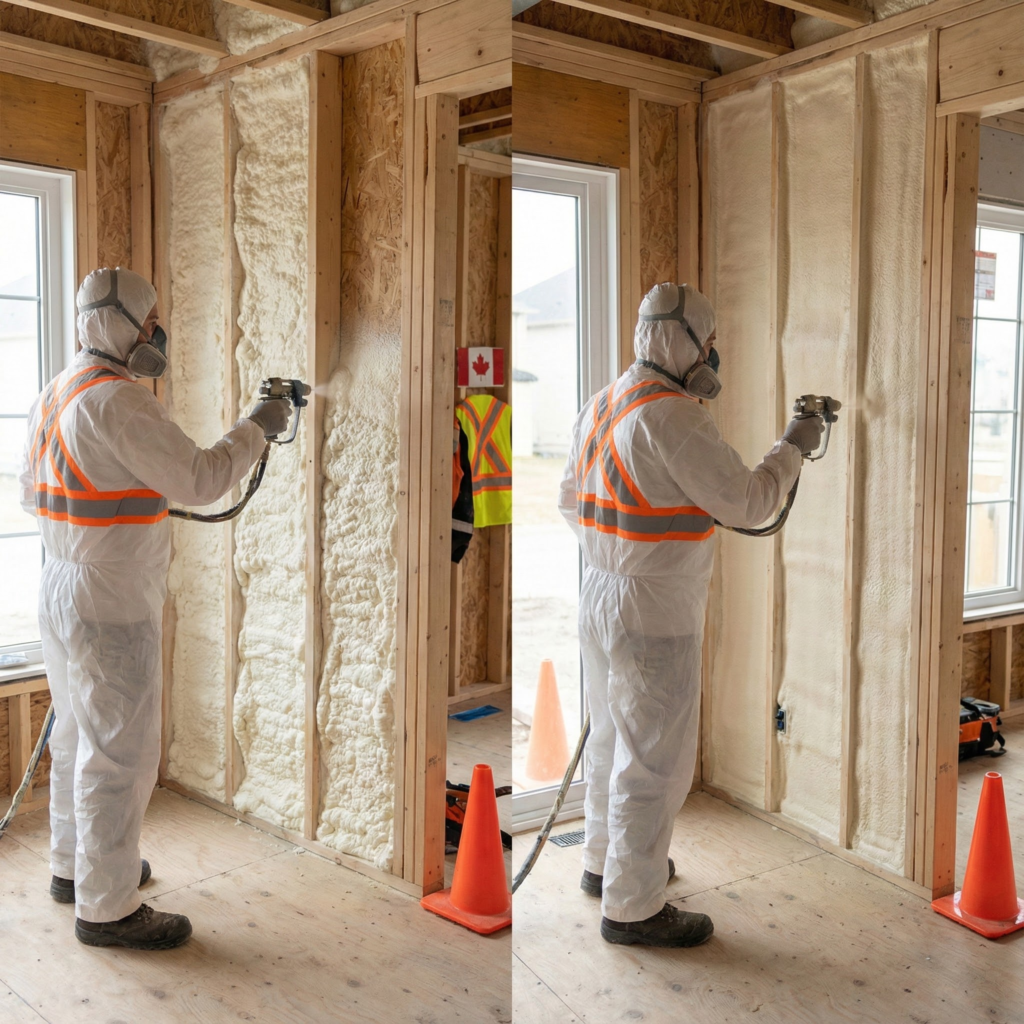
Open-Cell vs Closed-Cell Spray Foam
In basement insulation projects, spray foam is commonly used in areas where air sealing, moisture resistance, and thermal performance are important, particularly along foundation walls and rim joists.
Open-Cell Spray Foam
Open-cell spray foam is a lighter, more flexible insulation that expands to fill wall cavities and irregular spaces. It provides excellent air sealing and sound reduction, making it a popular choice for interior walls, attics, and residential applications where breathability is important.
- Expands easily into wall cavities
- Excellent air sealing and sound reduction
- More flexible and breathable material
- Commonly used in attics and interior walls
Closed-Cell Spray Foam
Closed-cell spray foam is a dense, rigid insulation with a higher R-value per inch. It adds structural strength, resists moisture, and creates a strong vapour barrier, making it ideal for basements, crawl spaces, rim joists, and commercial or industrial buildings.
- Higher R-value per inch
- Acts as a moisture and vapour barrier
- Adds strength to walls and structures
- Ideal for basements, rim joists, and commercial buildings
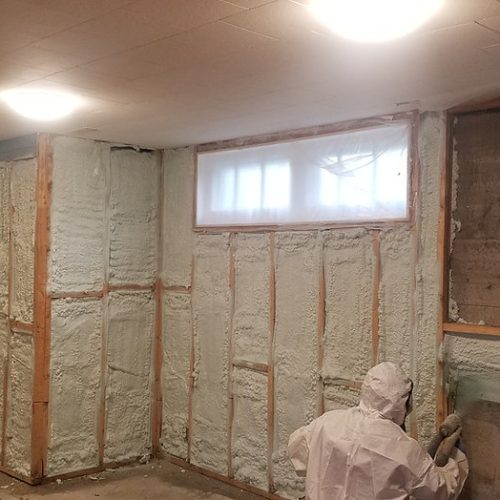
Where We Install Spray Foam Insulation
In basement insulation projects, spray foam is commonly installed along foundation walls, rim joists, and other below-grade areas to help reduce heat loss and improve moisture control.
Ideal for reducing heat loss, improving comfort, and increasing energy efficiency in homes.
Helps control moisture, air leaks, and temperature fluctuations in below-grade spaces.
Seals one of the most common sources of air leakage in residential homes.
Improves comfort and insulation performance in attached garages and home additions.
Designed for offices, retail spaces, warehouses, and commercial buildings.
Custom spray foam solutions for specialized and industrial insulation needs.
Spray Foam Insulation Pricing Factors
Basement insulation pricing depends on factors such as basement size, foundation type, moisture conditions, access, and the insulation method required to achieve proper performance.
Spray foam insulation pricing can vary depending on the scope of the project and the conditions of the space. Rather than using flat pricing, we assess each job individually to ensure accurate estimates and long-term performance.
- Area being insulated (attic, basement, rim joist, garage, or commercial space)
- Total square footage of the project
- Type of spray foam used (open-cell or closed-cell)
- Accessibility and condition of the space
- Residential vs commercial application
As a general reference, spray foam insulation projects in Toronto and across Ontario typically range from a few thousand dollars for smaller residential areas to higher costs for larger homes or commercial buildings. Final pricing depends on site conditions, insulation type, and project scope, which is why we provide custom estimates after an on-site assessment.
Spray Foam Insulation FAQs
Does basement insulation help reduce cold floors upstairs?
Yes. Insulating basement walls and rim joists helps reduce heat loss from below, which can significantly improve floor temperatures and overall comfort on the main level of the home.
Is basement insulation safe for finished basements?
Yes. When properly installed using materials suited for below-grade environments, basement insulation can be safely used in both finished and unfinished basements to improve comfort and energy efficiency.
How much does spray foam insulation cost per square foot in Toronto?
Most quotes depend on foam type, thickness, and access. As a general Toronto reference, professional installation is often cited in the range of about $1.50 to $4.90 per sq ft (varies by project and specs). The fastest way to get an accurate number is an on-site assessment.
How much does it cost to spray foam 1000 sq ft in Toronto / GTA?
For a 1,000 sq ft project in the Toronto area, you’ll commonly see totals in the $2,500 to $6,000 range depending on thickness, open vs closed-cell, and prep work. Exact pricing changes based on how many inches you need and what surfaces are being sprayed.
How much does it cost to spray foam a 24x24 garage?
A 24’ x 24’ (2-car) garage is commonly estimated around $3,000 to $8,000, with many examples citing an average near $6,000 when walls + ceiling + labor are included. Final cost depends on whether it’s attached, the coverage areas, and required R-value.
How much does 2 inches of spray foam cost?
Spray foam is often priced by the board foot (1 sq ft × 1 inch thick). At 2 inches, you’re using 2 board feet per sq ft. Published Canadian ranges often show roughly $0.50–$1.00/board foot (open-cell) and $1.25–$1.65/board foot (closed-cell) as reference pricing points—then installation, prep, and access affect your final installed rate.
Is open-cell or closed-cell spray foam more expensive?
Closed-cell is typically more expensive because it’s denser and delivers a higher R-value per inch. Common published references show open-cell around $0.50–$1.00/board foot and closed-cell around $1.25–$1.65/board foot, with installed project totals varying by thickness and scope.
What factors affect spray foam insulation pricing?
Pricing usually depends on:
Area type (attic, basement, rim joist, garage, commercial)
Square footage + thickness (inches / R-value)
Open-cell vs closed-cell
Access & prep work (old insulation removal, tight areas)
Residential vs commercial requirements
How thick should spray foam insulation be in Ontario?
Thickness depends on where it’s installed and target performance. Published guidance often suggests roughly 5–6 inches for open-cell or 3–4 inches for closed-cell for many Canadian climates, with adjustments based on code and building design. We confirm the right build-up during the estimate.
Are there rebates for insulation upgrades in Ontario?
Some Ontario homeowners may qualify for utility rebate programs (availability and eligibility vary). For example, Enbridge promotes home efficiency rebates that can apply to insulation/air sealing in certain cases.
Ready to Upgrade Your Insulation?
Get professional spray foam insulation installed by licensed experts serving Toronto and communities across Ontario.
Basement Foam Insulation Service Areas
Spray Foam Kings proudly serves Toronto, the GTA, and surrounding communities across Ontario. If you don’t see your city listed below, contact us to confirm availability.
- Toronto
- Mississauga
- Brampton
- Vaughan
- Markham
- Richmond Hill
- Oakville
- Milton
- Scarborough
- North York
Get a Free Spray Foam Insulation Estimate
Serving Toronto, the GTA, and communities across Ontario. Fast quotes. Licensed professionals. No obligation.