
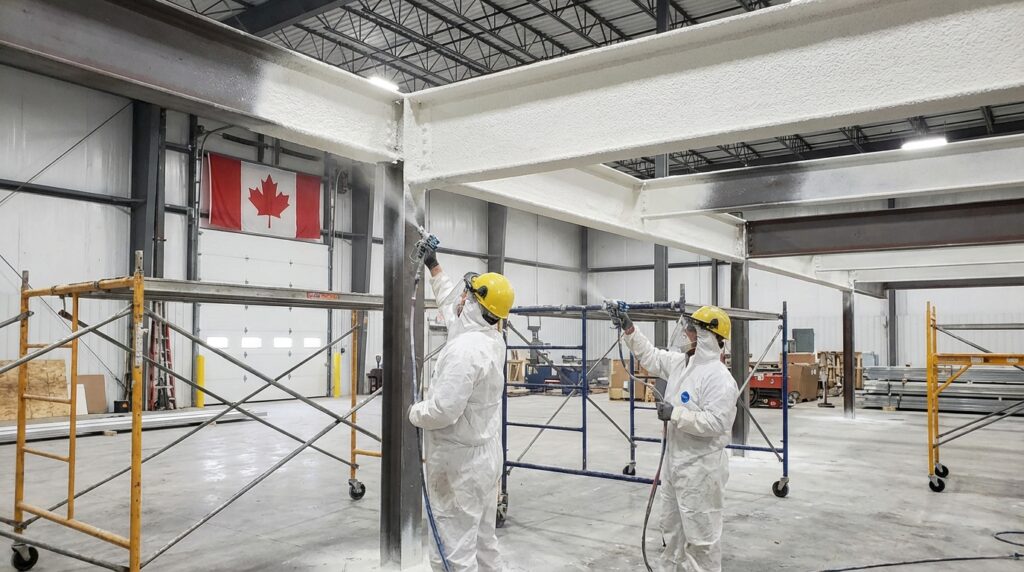
Warehouse fires represent a significant threat to businesses across Ontario, not only causing devastating property damage but also potentially jeopardizing lives. Protecting the structural integrity of your warehouse, particularly its steel beams, is paramount. This article delves into the crucial aspects of fireproofing steel beams in Ontario warehouses, focusing on effective methods, code compliance, and cost considerations. We’ll explore various fireproofing techniques, specifically addressing the Ontario Building Code (OBC) requirements and offering practical advice for safeguarding your investment.
The Short Answer
Protecting steel beams in Ontario warehouses from fire is crucial and mandated by the Ontario Building Code. Spray-applied fire-resistive materials (SFRM) like intumescent coatings and cementitious fireproofing are common solutions, with costs typically ranging from $5 to $15 per square foot, depending on the required fire-resistance rating (FRR) and material. Proper application and third-party inspections are essential to ensure compliance with OBC standards and protect lives and property.
Understanding Fireproofing and Steel Beam Protection
Why Steel Beams Need Fireproofing
Steel, while strong under normal conditions, loses its structural integrity rapidly when exposed to high temperatures. At around 550°C (1022°F), steel’s yield strength can be reduced by as much as 50%, leading to structural collapse. In a warehouse fire, temperatures can quickly exceed this threshold. Fireproofing acts as a thermal barrier, delaying the heat transfer to the steel and extending the time it takes for the steel to reach its critical temperature. This crucial delay provides valuable time for occupants to evacuate and for firefighters to control the blaze.
The Ontario Building Code (OBC) and Fire-Resistance Ratings (FRR)
The Ontario Building Code (OBC) mandates fire-resistance ratings (FRR) for structural elements, including steel beams, based on the building’s occupancy, size, and height. The FRR is expressed in hours (e.g., 1-hour, 2-hour, 3-hour FRR). For example, a large warehouse in Toronto storing flammable materials would likely require a higher FRR for its structural steel than a smaller storage facility on the outskirts of the GTA. The OBC specifies the minimum FRR based on the building’s construction type and its fire separation distance to other buildings. Consulting with a qualified fire protection engineer is essential to determine the specific FRR requirements for your warehouse. You can find relevant sections related to fire resistance in Division B, Section 3.2 of the OBC.
Types of Fireproofing Materials
Several types of fireproofing materials are used to protect steel beams in Ontario warehouses:
- Spray-Applied Fire-Resistive Materials (SFRM): These are the most common and cost-effective options. SFRM are categorized as either cementitious or gypsum-based. Cementitious SFRM is generally more durable and resistant to physical damage, making it suitable for high-traffic areas. Spray foam insulation, while not a fireproofing material itself, can contribute to fire resistance when used in conjunction with other fire-resistant materials.
- Intumescent Coatings: These coatings expand when exposed to heat, forming a char layer that insulates the steel. Intumescent coatings are thinner and more aesthetically pleasing than SFRM, but they can be more expensive. They are often used in exposed steel applications where appearance is important.
- Concrete Encasement: Completely encasing the steel beam in concrete provides excellent fire protection. However, this method is heavy and can be impractical for existing structures.
- Board Systems: Fire-resistant boards can be attached to steel beams to provide fire protection. These systems are relatively easy to install and maintain but may be more expensive than SFRM.
Each material has its own advantages and disadvantages in terms of cost, durability, aesthetics, and fire-resistance performance. The selection of the appropriate fireproofing material depends on the specific requirements of the project and the owner’s preferences.
SFRM: A Closer Look at Spray-Applied Fire-Resistive Materials
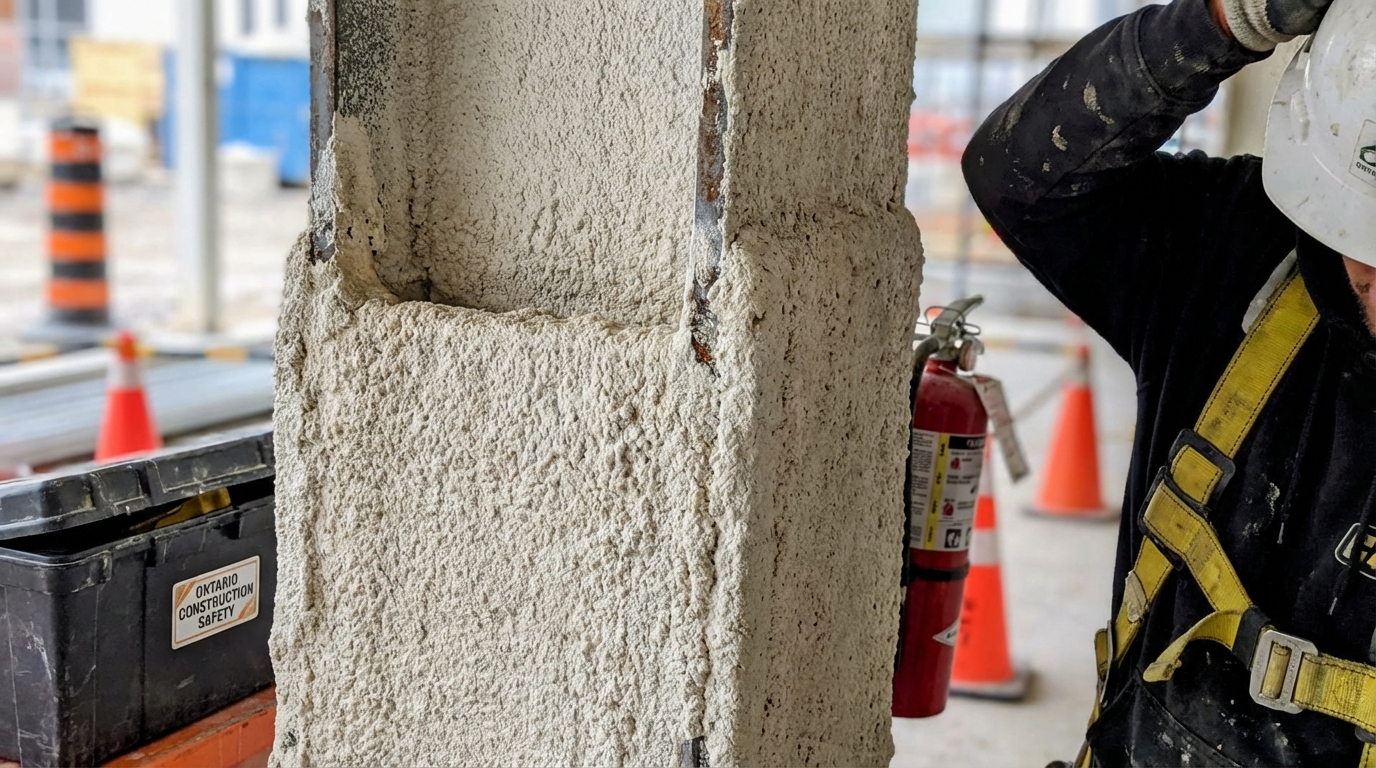
Cementitious SFRM
Cementitious SFRM is a widely used fireproofing material consisting of a mixture of cement, aggregates, and binders. It’s applied by spraying onto the steel beams, creating a thick, durable layer that provides excellent fire protection. Cementitious SFRM is relatively inexpensive and can achieve high fire-resistance ratings. The thickness of the SFRM application is directly proportional to the FRR achieved. For instance, achieving a 2-hour FRR might require a thickness of 1.5 inches, while a 3-hour FRR could necessitate 2 inches. Proper mixing and application are critical to ensure the material’s performance. For example, a cementitious SFRM with a density of 24 lbs/ft³ might achieve an R-value of approximately 1.5 per inch of thickness.
Gypsum-Based SFRM
Gypsum-based SFRM is lighter than cementitious SFRM and offers a smoother finish. It’s often used in applications where aesthetics are a concern. However, gypsum-based SFRM is generally less durable and more susceptible to damage from moisture and impact. Like cementitious SFRM, the thickness of the application determines the fire-resistance rating. Gypsum-based SFRM typically has a lower density than cementitious SFRM, around 15 lbs/ft³, and a slightly lower R-value per inch.
Application Process and Quality Control
The application of SFRM requires specialized equipment and skilled applicators. The steel surfaces must be properly prepared by cleaning and priming to ensure good adhesion. The SFRM is then sprayed onto the steel beams in multiple passes to achieve the desired thickness. After application, the SFRM needs to be inspected to verify the thickness and density. Third-party inspections are often required by the OBC to ensure compliance with the building code. These inspections typically involve ultrasonic thickness testing and density measurements. Proper application is crucial; for example, an improperly mixed batch of SFRM could significantly reduce its fire-resistance performance. Consider Spray Foam Kings for expert application and quality control.
Cost Considerations and Budgeting for Fireproofing
Factors Affecting the Cost of Fireproofing
Several factors influence the cost of fireproofing steel beams in an Ontario warehouse:
- Required Fire-Resistance Rating: Higher FRRs require thicker applications of fireproofing material, increasing the cost.
- Type of Fireproofing Material: Intumescent coatings are generally more expensive than SFRM. Cementitious SFRM is typically the most cost-effective option.
- Size and Complexity of the Project: Larger projects with complex geometries will require more labor and material, increasing the cost.
- Accessibility: Difficult-to-reach areas may require specialized equipment and techniques, adding to the cost.
- Location: Labor costs and material prices can vary depending on the location within Ontario, with Toronto and the GTA generally having higher costs.
Typical Cost Estimates
Here are some approximate cost estimates for fireproofing steel beams in Ontario warehouses:
- Cementitious SFRM: $5 – $10 per square foot for a 2-hour FRR.
- Gypsum-Based SFRM: $7 – $12 per square foot for a 2-hour FRR.
- Intumescent Coatings: $10 – $15 per square foot for a 2-hour FRR.
These are just estimates, and the actual cost may vary depending on the specific project requirements. For example, a warehouse in Mississauga requiring a 3-hour FRR with cementitious SFRM might cost $8-$12 per square foot, while a smaller warehouse in Barrie requiring a 1-hour FRR with the same material could cost $4-$7 per square foot. It’s always best to obtain quotes from multiple qualified contractors before making a decision. Don’t forget to ask about commercial spray foam insulation options that can complement fireproofing efforts.
Budgeting Tips
When budgeting for fireproofing, it’s important to include the cost of materials, labor, equipment rental, and third-party inspections. It’s also wise to add a contingency fund to cover unexpected costs. Getting a detailed quote from a reputable contractor that outlines all the costs involved is crucial. Consider the long-term benefits of fireproofing, including reduced insurance premiums and the protection of your assets and employees.
Ensuring Compliance and Long-Term Performance
Importance of Third-Party Inspections
Third-party inspections are essential to ensure that the fireproofing is installed correctly and meets the requirements of the OBC. These inspections are typically performed by qualified fire protection engineers or testing agencies. The inspector will verify the thickness, density, and adhesion of the fireproofing material. They will also check for any defects or deficiencies in the application. A passing inspection provides assurance that the fireproofing will perform as intended in the event of a fire. Contact us for referrals to qualified inspectors.
Maintenance and Repair
Fireproofing materials can be damaged by impact, abrasion, or moisture. Regular inspections should be conducted to identify any damage and make necessary repairs. Damaged areas should be repaired promptly to maintain the fire-resistance rating of the steel beams. For example, chipped or cracked SFRM should be patched with the same type of material. Intumescent coatings may require reapplication after a certain period of time. Proper maintenance is crucial to ensure the long-term performance of the fireproofing system.
Documentation and Record Keeping
Maintaining accurate documentation of the fireproofing system is important for future reference. This documentation should include the type of fireproofing material used, the thickness of the application, the date of installation, and the results of any inspections. This information can be valuable for future renovations or repairs. It can also be helpful in demonstrating compliance with the OBC to insurance companies and other regulatory agencies.
Frequently Asked Questions (FAQ)
- Q: How often should I inspect the fireproofing on my steel beams?
- A: At least annually, and after any event that could potentially damage the fireproofing, such as renovations or impacts from equipment.
- Q: What happens if the fireproofing is damaged?
- A: Damaged fireproofing should be repaired immediately to maintain the fire-resistance rating of the steel beams. Ignoring damage can compromise the structural integrity of your building in a fire.
- Q: Can I apply fireproofing myself?
- A: While technically possible for some materials, it is highly recommended to hire a qualified contractor. Proper application is critical for the fireproofing to perform as intended, and deficiencies can have serious consequences. Moreover, third-party inspections are often required, and DIY installations may not meet code requirements.
- Q: Does spray foam insulation provide fireproofing?
- A: No, spray foam insulation is not a fireproofing material. While some types of spray foam have fire-retardant properties, they do not provide the same level of protection as SFRM or intumescent coatings. However, spray foam can be used in conjunction with other fire-resistant materials to improve the overall fire safety of a building. Consider our services for a comprehensive approach to building safety.
- Q: How do I determine the required fire-resistance rating for my warehouse?
- A: Consult with a qualified fire protection engineer or your local building department. They can assess your building’s occupancy, size, and height, and determine the appropriate fire-resistance rating based on the Ontario Building Code.
Protect Your Warehouse Today!
Don’t wait until it’s too late. Protecting your warehouse with proper fireproofing is an investment in the safety of your employees, the preservation of your assets, and the continuity of your business. Contact Spray Foam Kings today for a free consultation and quote. We can help you determine the best fireproofing solution for your specific needs and ensure compliance with the Ontario Building Code.
Call us now at 647-641-6881.
Author: Shaun Falls, Owner & Founder