
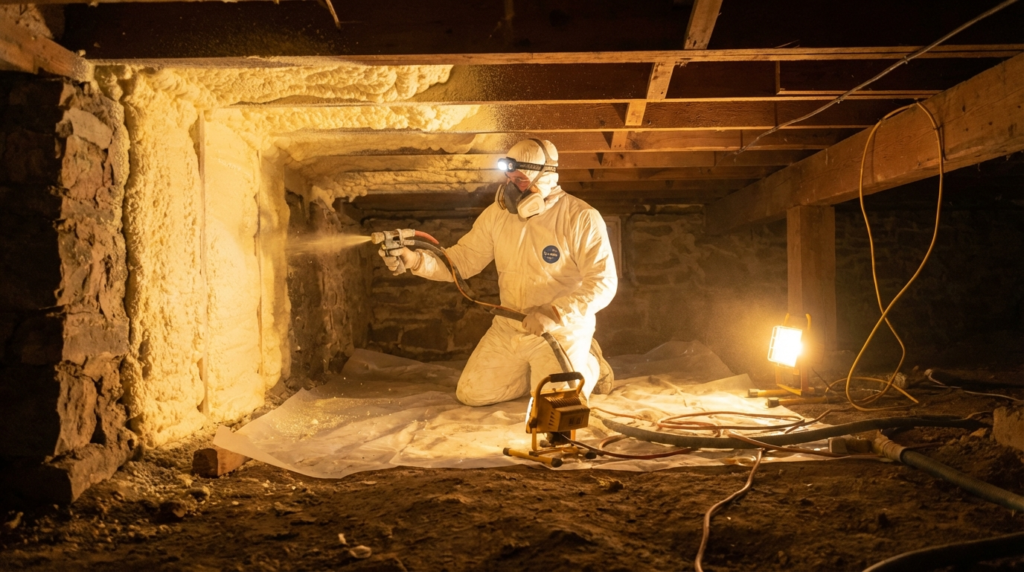
Crawl space insulation often gets overlooked during home renovations, yet it’s one of the most critical areas affecting energy efficiency and structural integrity in Ontario homes. Many Toronto and GTA homeowners discover too late that an uninsulated or poorly insulated crawl space leads to cold floors, high heating bills, and moisture problems that can compromise their entire foundation.
Understanding the unique requirements of crawl space insulation in Ontario’s climate helps homeowners make informed decisions that protect their investment and improve year-round comfort.
What Are the Ontario Building Code Requirements for Crawl Space Insulation?
The Ontario Building Code (OBC) establishes specific requirements for crawl space insulation to ensure homes meet minimum energy efficiency standards and structural safety protocols.
For heated crawl spaces, the OBC mandates that insulation, an air barrier system, and a vapour barrier must be installed in the walls according to Section 9.25. The minimum R-value requirement typically falls between R-10 and R-12 for foundation walls, though this can vary based on the specific application and climate zone within Ontario.
Unheated crawl spaces have different requirements. Foundation walls below the frost line (approximately 4 feet below ground in most of Ontario) do not require insulation if the space remains unheated. However, the floor above the crawl space—essentially the ceiling of the crawl space—should be insulated to prevent heat loss from the living areas above.
Critical code compliance details include keeping insulation materials susceptible to water damage at least 2 inches above the crawl space floor. When insulation is exposed to weather, it must be protected by 6mm thick preservative plywood or 12mm cement parging.
How Does Crawl Space Insulation Affect Energy Bills in Toronto?
Toronto’s climate presents unique challenges for home insulation. Winter temperatures regularly drop to -10°C to -20°C, while summers can reach 30°C or higher. This temperature variation means your heating and cooling systems work overtime to maintain comfortable indoor conditions.
An uninsulated crawl space creates what building scientists call “thermal bridging”—a direct pathway for heat to escape during winter and enter during summer. Cold air in your crawl space rises through floor joists and subfloors, making main-floor rooms uncomfortable and forcing your furnace to run longer cycles.
Studies show that properly insulated crawl spaces can reduce heating costs by 15-20% in Ontario homes. For the average Toronto homeowner spending $1,500-$2,000 annually on heating, this translates to $300-$400 in annual savings. Over the 20-30 year lifespan of quality spray foam insulation, these savings add up to thousands of dollars while significantly improving home comfort.
Spray foam insulation provides superior performance in crawl spaces because it creates both a thermal barrier and an air seal in one application, eliminating drafts and preventing conditioned air from escaping through cracks and gaps.
What Problems Does Poor Crawl Space Insulation Cause?
Beyond energy waste, inadequate crawl space insulation creates several serious problems that can affect your home’s structural integrity and indoor air quality.
Moisture Accumulation and Mold Growth
Ontario’s humidity levels fluctuate dramatically throughout the year. When warm, moist air from your living spaces meets cold surfaces in an uninsulated crawl space, condensation forms. This persistent moisture creates ideal conditions for mold growth on wooden floor joists, subfloors, and support beams. Over time, this biological growth can compromise structural wood and release spores into your home’s air supply.
Frozen Pipes and Water Damage
Crawl spaces often contain plumbing lines and HVAC ductwork. When temperatures drop below freezing, uninsulated crawl spaces expose these systems to extreme cold. Frozen pipes can burst, causing thousands of dollars in water damage. Even pipes that don’t burst can restrict water flow and reduce system efficiency.
Pest Infiltration
Gaps and cracks around uninsulated crawl space foundations provide entry points for rodents and insects. These pests seek warm shelter during Ontario’s harsh winters and can cause significant damage to insulation, wiring, and ductwork while creating health hazards through droppings and contamination.
Poor Indoor Air Quality
The “stack effect” means air from your crawl space eventually makes its way into your living areas. If that crawl space contains mold, mildew, or pest debris, those contaminants circulate through your home’s air, potentially triggering allergies and respiratory issues.
Which Insulation Type Works Best for Ontario Crawl Spaces?
Several insulation materials can be used in crawl spaces, but not all perform equally well in Ontario’s challenging climate conditions.
Closed-Cell Spray Foam
This is widely considered the premium choice for crawl space insulation in Ontario. Closed-cell spray foam provides approximately R-6 to R-7 per inch of thickness, creating an impermeable moisture barrier while simultaneously air-sealing. It adheres directly to foundation walls and floor joists, eliminating thermal bridging and preventing moisture infiltration. The material’s rigid structure also adds minor structural support to foundation walls.
Rigid Foam Boards
Extruded polystyrene (XPS) or polyisocyanurate boards offer decent R-values (R-5 per inch) and moisture resistance. However, they require careful installation with sealed seams and must be cut precisely to fit around irregular foundation features. Any gaps compromise thermal performance and allow air leakage.
Fiberglass Batts
Traditional fiberglass insulation is the least suitable option for crawl spaces. It absorbs moisture readily, loses R-value when wet, and provides no air sealing properties. Building code requires fiberglass to be installed at least 2 inches above the crawl space floor to protect against water damage, but this still leaves significant vulnerability to moisture and mold.
For Toronto-area homes, closed-cell spray foam insulation delivers the best long-term performance, durability, and return on investment for crawl space applications.
Do You Need a Vapour Barrier in Your Crawl Space?
Yes—the Ontario Building Code requires vapour barriers in heated crawl spaces, and they’re highly recommended for unheated spaces as well.
A proper vapour barrier consists of 6-mil polyethylene sheeting installed over the crawl space floor (ground) and sealed at all seams, penetrations, and perimeter edges. This barrier prevents ground moisture from evaporating into the crawl space air, where it can condense on cold surfaces and cause the problems described earlier.
When using spray foam insulation on crawl space walls, closed-cell foam serves as both insulation and vapour barrier (it has a perm rating below 1.0, meeting vapour barrier requirements). However, you still need floor vapour barrier coverage to prevent ground moisture from entering the space.
Many professional installers extend the floor vapour barrier slightly up the foundation walls and seal it to the spray foam insulation, creating a fully encapsulated crawl space. This approach—called crawl space encapsulation—provides maximum protection against moisture, pests, and energy loss.
When Should You Insulate Your Crawl Space?
Several situations indicate it’s time to address crawl space insulation in your Ontario home:
- Cold floors during winter months – If your main floor feels cold despite adequate heating, heat is likely escaping through an uninsulated crawl space
- High heating bills – Unexplained increases in energy costs often point to thermal envelope failures, including crawl space air leakage
- Musty odors – Persistent damp smells indicate moisture problems that proper insulation and vapour barriers can solve
- Visible mold or mildew – Any biological growth in crawl spaces requires immediate attention, including proper insulation as part of remediation
- Frozen pipes – If you’ve experienced frozen or burst pipes in crawl space areas, insulation prevents recurrence
- Home renovation or sale preparation – Many buyers request home energy audits, and crawl space insulation significantly improves energy efficiency ratings
Spring and fall offer ideal conditions for crawl space insulation projects in Ontario. These moderate temperature periods allow materials to cure properly and give homeowners time to address issues before extreme weather arrives.
Get Professional Crawl Space Insulation in the GTA
Proper crawl space insulation requires expertise in building science, Ontario Building Code compliance, and installation techniques specific to below-grade environments. DIY attempts often result in inadequate coverage, moisture problems, and code violations that can complicate future home sales or refinancing.
Spray Foam Kings specializes in crawl space insulation throughout Toronto, Ottawa, Hamilton, and the Greater Toronto Area. Our certified technicians understand Ontario’s unique climate challenges and building code requirements, ensuring your crawl space insulation project delivers maximum energy savings, moisture protection, and long-term durability.
We use premium closed-cell spray foam formulations specifically designed for Ontario’s temperature extremes and moisture conditions. Every project includes thorough moisture assessment, proper vapour barrier installation, and complete air sealing to create a high-performance thermal envelope.
Ready to solve your crawl space problems?
📞 Call us at 647-641-6881
🗺️ Find us on Google Maps
🌐 Learn more about our crawl space insulation services
Don’t let an uninsulated crawl space drain your wallet and compromise your home’s integrity. Contact Spray Foam Kings today for a professional assessment and free quote on crawl space insulation that meets or exceeds Ontario Building Code requirements.