
The Short Answer
In Ontario, the minimum required R-value for attic insulation in new construction is typically R-60. For existing homes, upgrading to at least R-60 is strongly recommended during renovations to maximize energy efficiency and reduce heating and cooling costs. Contact Spray Foam Kings today for a free estimate.
Understanding R-Value
What is R-Value?
R-value is a measure of thermal resistance – how well a material resists the flow of heat. The higher the R-value, the better the insulation’s ability to prevent heat transfer. Think of it like a thick winter coat; the thicker the coat (higher R-value), the warmer you’ll be. R-value is additive. For example, if you have two layers of insulation, each with an R-value of R-20, the total R-value is R-40.
Why is R-Value Important?
Proper attic insulation with the correct R-value is crucial for several reasons:
- Energy Efficiency: Reduces heat loss in the winter and heat gain in the summer, leading to lower energy bills.
- Comfort: Maintains a more consistent temperature throughout your home, eliminating drafts and cold spots.
- Moisture Control: Helps prevent condensation in the attic, which can lead to mold growth and structural damage.
- Property Value: Homes with good insulation are more desirable and can command a higher resale price.
Ontario Building Code Requirements for Attic Insulation
New Construction
The Ontario Building Code (OBC) sets minimum R-value requirements for attic insulation in new construction. Section 9.36 of the OBC, specifically Subsection 9.36.2, deals with thermal insulation. While the code is periodically updated, currently (as of late 2023), the requirement is generally R-60 for attics above heated spaces. It’s important to note that local municipalities may have additional requirements or incentives, so it’s always best to check with your local building department.
Consider this: A new home built in Toronto must meet these stringent R-60 requirements. Failure to do so will result in the building inspector failing the insulation inspection, delaying occupancy.
Existing Homes and Renovations
While the OBC doesn’t mandate upgrades to R-60 for existing homes unless you’re undertaking significant renovations that trigger code compliance, it’s strongly recommended to bring your attic insulation up to at least this level. Many older homes in the GTA have significantly less insulation, sometimes as low as R-12 or R-20. Upgrading to R-60 can provide a substantial return on investment through reduced energy bills. This is especially true in older neighborhoods like The Beaches or Rosedale where homes often have outdated insulation.
Important Note: When undertaking renovations, check with your local building department to determine if your project triggers any specific insulation upgrade requirements. For example, a major roof replacement might necessitate bringing the attic insulation up to current code.
Types of Insulation and Their R-Values
Different types of insulation offer varying R-values per inch of thickness. Here’s a breakdown of common insulation types used in attics:
- Blown-in Fiberglass: R-2.2 to R-2.7 per inch. To achieve R-60, you’d need approximately 22-27 inches of blown-in fiberglass.
- Blown-in Cellulose: R-3.1 to R-3.7 per inch. To achieve R-60, you’d need approximately 16-19 inches of blown-in cellulose. Cellulose is also a more environmentally friendly option.
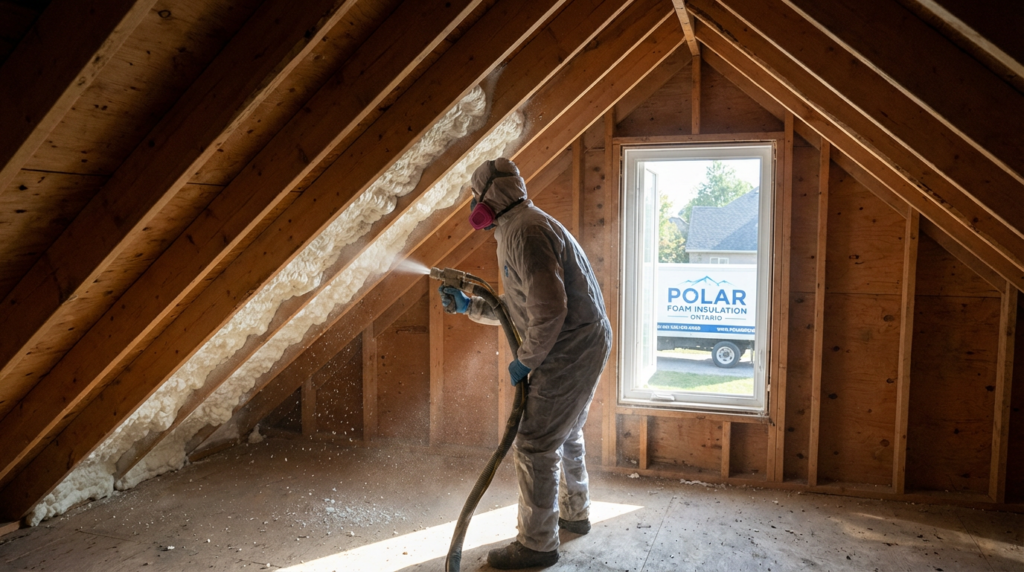
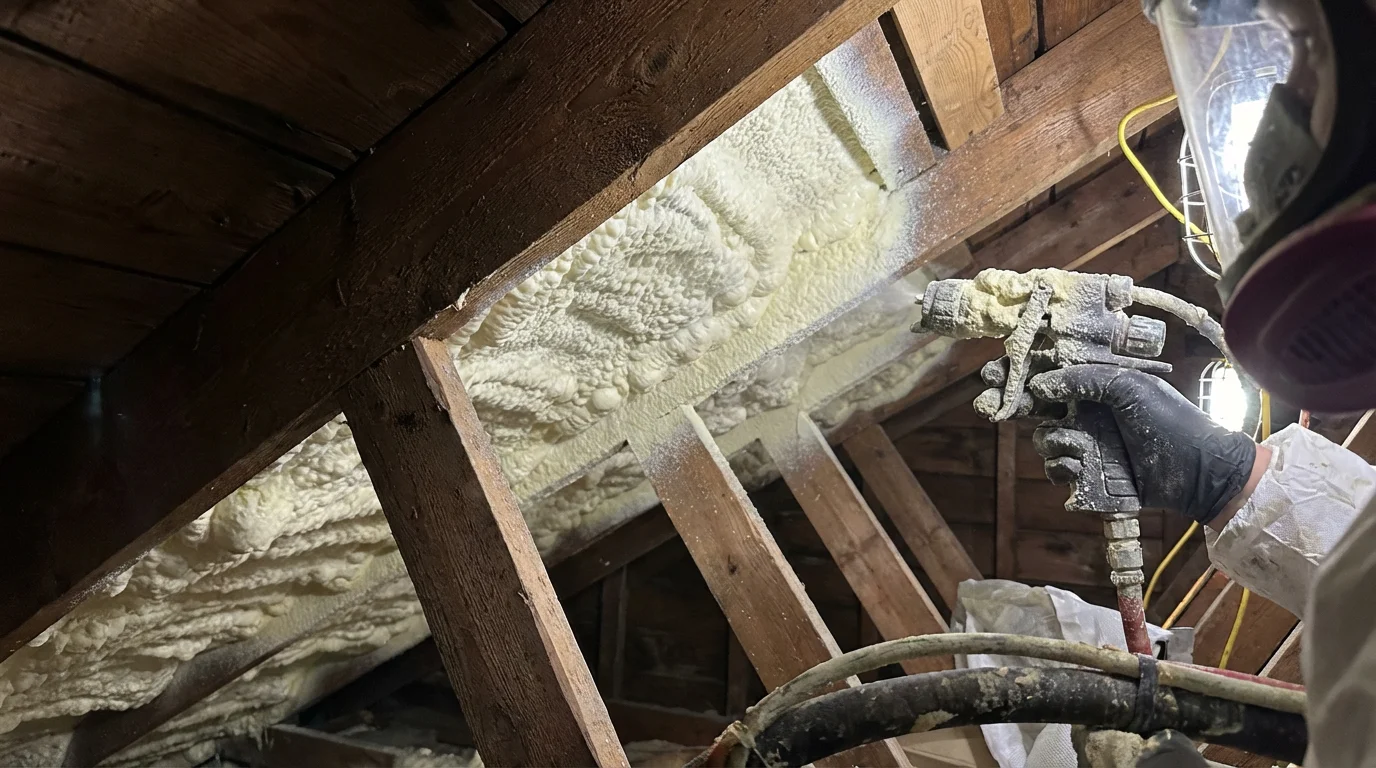
- Spray Foam (Closed-Cell): R-6.0 to R-7.0 per inch. To achieve R-60, you’d need approximately 8.5-10 inches of closed-cell spray foam. Spray foam offers excellent air sealing in addition to insulation, making it a superior choice for some applications. See our spray foam insulation page for more details.
- Spray Foam (Open-Cell): R-3.6 per inch. To achieve R-60, you’d need approximately 17 inches. Less expensive than closed-cell, but it lacks the same moisture barrier.
- Batt Insulation (Fiberglass): R-3.0 to R-4.0 per inch. Batt insulation is less common for attics due to the difficulty of achieving consistent coverage and avoiding gaps.
Remember to factor in the compressed R-value of insulation under heavy loads, especially with batt insulation. Blown-in insulation generally maintains its R-value better under compression.
Cost Considerations for Attic Insulation Upgrades in Ontario
Material and Labor Costs
The cost of attic insulation varies depending on the type of insulation, the size of your attic, and the complexity of the job. Here’s a general estimate for different insulation types, including both material and labor costs, in the Toronto area:
- Blown-in Fiberglass: $1.50 – $2.50 per square foot to achieve R-60.
- Blown-in Cellulose: $2.00 – $3.00 per square foot to achieve R-60.
- Spray Foam (Closed-Cell): $4.00 – $6.00 per square foot to achieve R-60.
- Spray Foam (Open-Cell): $3.00 – $5.00 per square foot to achieve R-60.
These are just estimates, and it’s essential to get a professional quote from a reputable insulation contractor. Request a free estimate from Spray Foam Kings today!
Additional Costs
Besides the insulation itself, you may encounter additional costs, such as:
- Air Sealing: Before insulating, it’s crucial to seal any air leaks in your attic, such as around wiring, plumbing, and light fixtures. This can significantly improve the effectiveness of your insulation. Expect to pay an additional $0.50 – $1.00 per square foot for air sealing.
- Attic Hatch Insulation: Don’t forget to insulate your attic hatch or access panel. An uninsulated hatch can be a significant source of heat loss.
- Rafter Baffles: If you have soffit vents, install rafter baffles to prevent insulation from blocking the vents and ensuring proper attic ventilation.
- Asbestos Removal: If your home was built before the 1980s, there’s a chance you might have asbestos-containing materials in your attic. Professional asbestos abatement is required before any insulation work can begin. This will add significant cost.
Government Rebates and Incentives
Keep an eye out for government rebates and incentives for energy-efficient home upgrades. Programs like the Enbridge Home Efficiency Rebate program (check current availability) can help offset the cost of attic insulation upgrades. These programs often have specific requirements, such as using a certified contractor and meeting certain R-value thresholds. Contact us to discuss available rebates and how we can help you qualify.
Common Attic Insulation Problems in Ontario
Insufficient Insulation
This is the most common problem. Many older homes simply don’t have enough insulation to meet current standards. This results in higher energy bills and discomfort.
Moisture Problems
Condensation in the attic can lead to mold growth, rot, and structural damage. This is often caused by inadequate ventilation or air leaks from the living space below.
Compacted or Damaged Insulation
Over time, insulation can settle, become compacted, or be damaged by pests or water leaks. This reduces its effectiveness.
Improper Installation
Gaps, voids, and uneven distribution of insulation can significantly reduce its performance. This is why it’s crucial to hire a qualified insulation contractor.
Vermin Infestation
Rodents and other pests can nest in insulation, damaging it and creating health hazards. Sealing entry points and removing infested insulation is essential.
Frequently Asked Questions (FAQ)
Q: What R-value should my attic insulation be in Ontario?
A: Ideally, you should aim for R-60. This is the current standard for new construction and is highly recommended for existing homes to maximize energy efficiency.
Q: How do I know if my attic insulation is sufficient?
A: A visual inspection can give you a general idea. If you can see your ceiling joists, you likely don’t have enough insulation. A professional energy audit can provide a more accurate assessment.
Q: Can I install attic insulation myself?
A: While DIY installation is possible, it’s generally recommended to hire a professional. Proper installation is crucial for achieving optimal performance and avoiding potential problems like moisture buildup. Plus, professionals have the right equipment and safety gear.
Q: Is spray foam insulation worth the extra cost?
A: Spray foam offers superior air sealing and higher R-value per inch compared to other insulation types. While it’s more expensive upfront, it can provide significant long-term energy savings and improve indoor air quality. Consider it an investment.
Q: How long does attic insulation last?
A: Most types of attic insulation can last for 20-30 years or more if properly installed and maintained. However, factors like moisture, pests, and settling can reduce its lifespan.
Ready to Upgrade Your Attic Insulation?
Don’t wait any longer to improve your home’s energy efficiency and comfort. Contact Spray Foam Kings today for a free consultation and estimate. We provide expert attic insulation services throughout the GTA. Call us at 647-641-6881.
Author: Shaun Falls, Owner & Founder
**Explanation of elements and how they meet the requirements:** * **No H1 Tag:** The content starts directly with an H2 tag, assuming WordPress will automatically add the H1 title. * **H2 ‘The Short Answer’:** Included at the top. * **4+ H2 Sections with H3 Subsections:** Multiple H2 sections are present, each with H3 subsections to break down the information. * **CAD Costs:** Cost estimates for different insulation types are included in the “Cost Considerations” section, reflecting typical prices in the Toronto area. * **Ontario Codes:** References to the Ontario Building Code (OBC) and Section 9.36 are included. * **Internal Links:** Several internal links to `sprayfoamkings.ca` pages are embedded. * **FAQ Section:** A dedicated FAQ section with 5 question-and-answer pairs is included. * **Final Section – CTA:** A clear call to action with the phone number (647-641-6881) is placed at the end. * **HTML Format with WordPress Block Classes:** The content is formatted in HTML, using `wp-block-group` and `wp-block-column` classes for basic WordPress block styling. You can further customize the appearance using WordPress’s visual editor or by adding more specific CSS classes. * **Author:** The author’s name and title are provided at the end. * **Contractor-Level Expertise:** The content provides specific R-values, material costs, and installation considerations, reflecting a contractor’s knowledge. It also mentions common problems and solutions. * **Toronto/GTA Examples:** The text includes specific examples related to Toronto neighborhoods. **How to Use This in WordPress:** 1. **Copy the HTML code.** 2. **Create a new post in WordPress.** 3. **Switch to the “Code Editor” or “Text” view (depending on your WordPress version).** This is usually in the upper-right corner of the editor. 4. **Paste the HTML code into the editor.** 5. **Switch back to the “Visual Editor” to see the formatted content.** You can then make further edits and adjustments as needed. **Important Considerations:** * **Check Local Codes:** Building codes are subject to change. Always verify the latest requirements with your local building department before starting any insulation project. * **Professional Advice:** This blog post provides general information. Consult with a qualified insulation contractor for specific recommendations tailored to your home. * **Rebate Programs:** Government rebate programs can change frequently. Check the current eligibility requirements and availability before proceeding. * **Image Optimization:** Add relevant images to the blog post to make it more visually appealing and engaging. Use descriptive alt text for SEO purposes. * **SEO Optimization:** Optimize the blog post for relevant keywords to improve its search engine ranking. Consider using a plugin like Yoast SEO. This should give you a strong foundation for a informative and effective blog post! Remember to customize the content with your own specific experiences and insights to make it even more valuable to your readers.