
Spray Foam Insulation for Pole Barns and Workshops in Ontario: A Comprehensive Guide
By Shaun Falls, Owner & Founder, Spray Foam Kings
The Short Answer
Spray foam insulation is an excellent choice for pole barns and workshops in Ontario due to its high R-value, air sealing capabilities, and moisture resistance, vital for our climate. Expect to pay between $4.00 and $8.00 per board foot installed, depending on the type of foam and project complexity. The Ontario Building Code (OBC) dictates minimum insulation levels, so ensuring compliance is crucial for passing inspections and maximizing energy efficiency.
Why Choose Spray Foam for Your Pole Barn or Workshop?
Superior Insulation and Air Sealing
Pole barns and workshops often present unique insulation challenges due to their construction methods and large, open spaces. Traditional insulation methods like fiberglass batts can be prone to air leakage, moisture absorption, and settling, leading to reduced efficiency and potential mold growth. Spray foam insulation, on the other hand, provides a superior air barrier and exceptional thermal performance.
Spray foam expands to fill cracks and crevices, creating a seamless, airtight seal that prevents drafts and minimizes heat loss in the winter and heat gain in the summer. This airtight seal dramatically reduces energy consumption, leading to significant cost savings on heating and cooling bills. Unlike fiberglass, spray foam doesn’t sag or settle over time, maintaining its insulating properties for the life of the building.
Moisture Resistance and Mold Prevention
Moisture is a major concern in Ontario’s climate, particularly in unconditioned or poorly ventilated spaces like pole barns and workshops. Condensation can form on cold surfaces, leading to mold growth and structural damage. Spray foam insulation helps to prevent moisture problems by creating a barrier that reduces condensation and inhibits mold growth.
Closed-cell spray foam, in particular, is highly resistant to moisture absorption and acts as a vapor retarder. This is particularly important in workshops where activities like woodworking or welding can generate moisture. By controlling moisture levels, spray foam helps to protect your investment and maintain a healthy indoor environment.
Increased Structural Integrity
In addition to its insulation and moisture resistance benefits, spray foam can also enhance the structural integrity of your pole barn or workshop. The rigid nature of closed-cell spray foam adds strength and rigidity to the walls and roof, making the building more resistant to wind and snow loads. This is especially important in Ontario, where we experience harsh winters and strong winds.
The added structural support provided by spray foam can also help to prevent the pole barn from racking or shifting over time, extending its lifespan and reducing the need for costly repairs.
Understanding Spray Foam Options and Costs in Ontario
Open-Cell vs. Closed-Cell Spray Foam
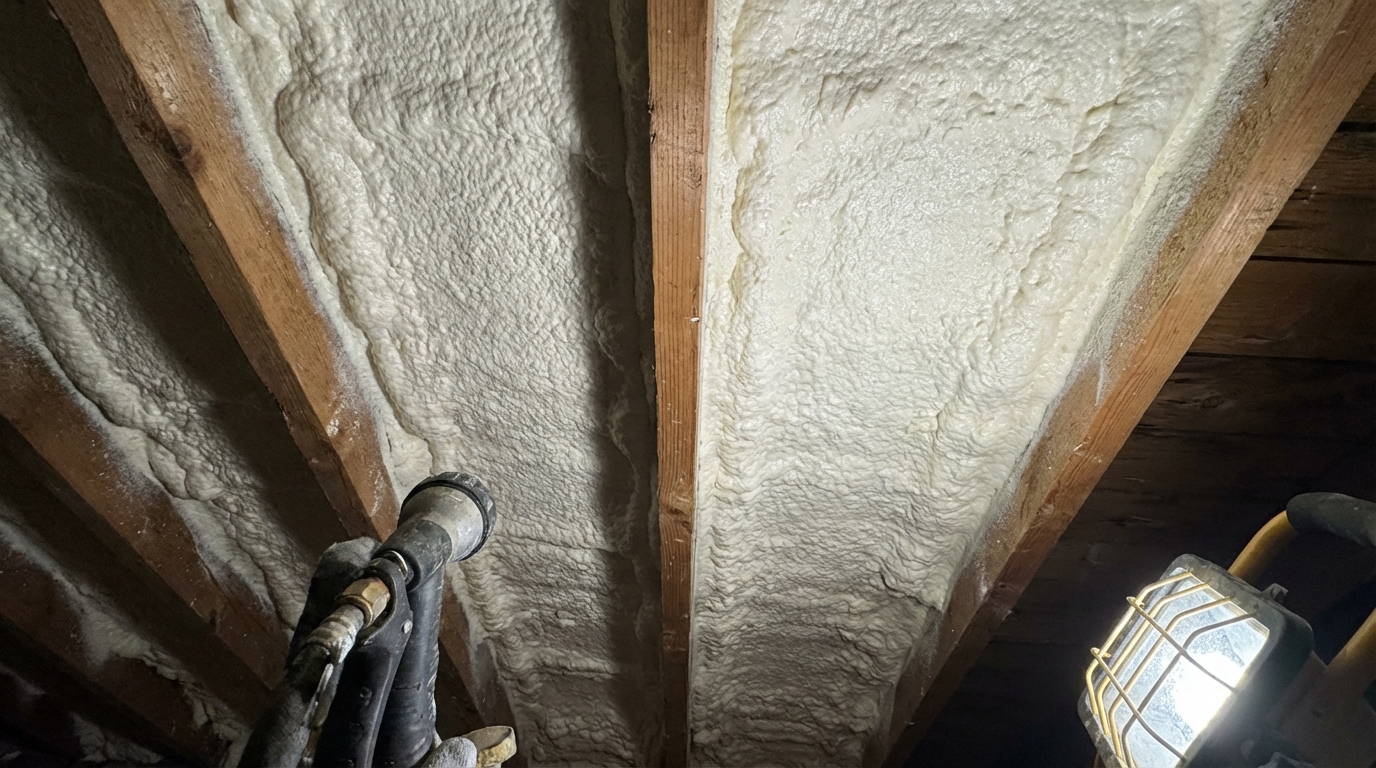
There are two main types of spray foam insulation: open-cell and closed-cell. Each type has its own unique properties and is suited for different applications.
- Open-Cell Spray Foam: This type of spray foam has a lower density and a more porous structure. It offers excellent sound absorption properties and is typically less expensive than closed-cell foam. Open-cell foam has an R-value of around R-3.5 to R-3.7 per inch. Because it is vapor permeable, it is generally used in interior applications where a vapor barrier is not required.
- Closed-Cell Spray Foam: Closed-cell spray foam is denser and more rigid than open-cell foam. It has a higher R-value (around R-6 to R-7 per inch) and acts as both an insulation and a vapor retarder. Closed-cell foam is also more resistant to moisture absorption and provides greater structural support. It’s a great choice for both interior and exterior applications.
Cost Considerations in Ontario (CAD)
The cost of spray foam insulation in Ontario can vary depending on several factors, including the type of foam, the thickness of the application, the size of the area to be insulated, and the complexity of the project. As mentioned earlier, you can generally expect to pay between $4.00 and $8.00 per board foot installed.
Here’s a breakdown of the cost factors:
- Material Costs: Closed-cell foam is typically more expensive than open-cell foam.
- Labor Costs: Labor costs will vary depending on the contractor and the complexity of the project. Projects with difficult access or intricate details will typically incur higher labor costs.
- Preparation Costs: Preparing the surface for spray foam application may involve cleaning, sealing, and installing any necessary backing materials. These preparation costs should be factored into the overall budget.
- Additional Costs: Be sure to account for potential additional costs such as travel fees (especially for rural areas), permits, and disposal fees.
Example: Insulating a 1,000 square foot pole barn with 3 inches of closed-cell spray foam could cost between $12,000 and $24,000, depending on the specific factors mentioned above. It is ALWAYS best to get a quote. Contact Spray Foam Kings for a free estimate!
Ontario Building Code Requirements
The Ontario Building Code (OBC) sets minimum insulation requirements for various types of buildings, including pole barns and workshops. These requirements are designed to ensure energy efficiency and reduce greenhouse gas emissions. It’s important to be aware of these requirements and ensure that your insulation project complies with the code.
The specific insulation requirements for your pole barn or workshop will depend on its location, size, and intended use. In general, the OBC requires higher R-values for walls and roofs in colder climate zones. For example, the OBC Table 9.36.2.9 specifies minimum effective thermal resistance for various building elements. For example, in Climate Zone 6 (which includes much of Southern Ontario and the GTA), the minimum effective thermal resistance for above-grade walls in a non-residential building is typically around R-20.
It is crucial to consult with a qualified building inspector or energy advisor to determine the specific insulation requirements for your project. Failing to comply with the OBC can result in fines and delays in obtaining building permits.
Preparing Your Pole Barn or Workshop for Spray Foam Insulation
Surface Preparation
Proper surface preparation is essential for ensuring a successful spray foam insulation project. The surface to be insulated must be clean, dry, and free of any loose debris, dirt, or oil. Any existing insulation should be removed, and any cracks or holes should be sealed.
For metal surfaces, it’s important to ensure that the metal is properly primed to prevent corrosion. A primer specifically designed for use with spray foam should be used to ensure proper adhesion.
Ventilation and Safety Precautions
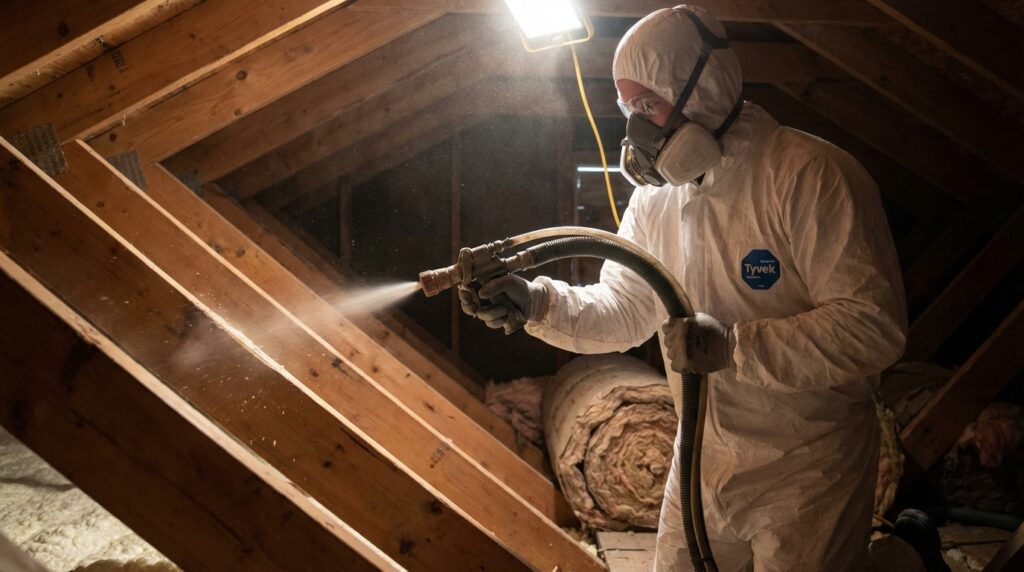
Spray foam insulation should only be installed by trained professionals who have the proper equipment and safety gear. The application process can release fumes that can be harmful if inhaled, so proper ventilation is essential. Workers should wear respirators, protective clothing, and eye protection to minimize exposure.
The area being insulated should be well-ventilated during and after the application process. Occupants should avoid entering the area until the fumes have dissipated.
Choosing the Right Contractor
Selecting a reputable and experienced spray foam insulation contractor is crucial for ensuring a high-quality installation. Look for a contractor who is licensed, insured, and has a proven track record of successful projects. Ask for references and check online reviews to get a sense of the contractor’s reputation.
A good contractor will be able to assess your specific needs and recommend the best type of spray foam for your project. They will also be able to provide a detailed quote and explain the installation process in detail. Spray Foam Kings has years of experience in insulating pole barns and workshops across Ontario.
Spray Foam Installation Process
Assessment and Planning
The first step in the spray foam installation process is a thorough assessment of the area to be insulated. The contractor will inspect the walls, roof, and any other areas where insulation is needed. They will also take measurements and assess any potential challenges, such as difficult access or unusual building features.
Based on the assessment, the contractor will develop a detailed plan for the insulation project. This plan will include the type of spray foam to be used, the thickness of the application, and any necessary preparation work.
Application
The spray foam is applied using specialized equipment that mixes the two components of the foam and sprays them onto the surface. The foam expands rapidly, filling any cracks and crevices and creating a seamless, airtight seal.
The contractor will carefully monitor the application process to ensure that the foam is applied evenly and at the correct thickness. They will also take steps to prevent overspray and protect any surrounding areas.
Curing and Inspection
After the spray foam is applied, it needs to cure for a certain period of time before the area can be occupied. The curing time will vary depending on the type of foam and the environmental conditions.
Once the foam has cured, the contractor will inspect the installation to ensure that it meets the required standards. They will also clean up any debris and dispose of any waste materials. Spray Foam Kings offers complete insulation services.
Frequently Asked Questions (FAQ)
Q: Is spray foam insulation worth the cost for a pole barn?
A: Yes, especially in Ontario’s climate. The superior insulation and air sealing properties of spray foam can significantly reduce energy costs and prevent moisture problems, making it a worthwhile investment in the long run. The added structural integrity is a bonus.
Q: Can I install spray foam insulation myself?
A: While DIY spray foam kits are available, it’s generally not recommended, especially for large projects like pole barns. Professional installation ensures proper application, safety, and compliance with building codes. Improper installation can lead to reduced performance and potential health hazards.
Q: Does spray foam insulation attract pests?
A: No, spray foam insulation does not attract pests. In fact, its airtight seal can help to prevent pests from entering your pole barn or workshop.
Q: How long does spray foam insulation last?
A: Spray foam insulation can last for the lifetime of the building if properly installed and maintained. Unlike fiberglass batts, it doesn’t sag or settle over time.
Q: Does spray foam insulation add value to my property?
A: Yes, spray foam insulation can increase the value of your property by improving its energy efficiency and comfort. It can also make your pole barn or workshop more attractive to potential buyers.
Ready to Insulate Your Pole Barn or Workshop?
Contact Spray Foam Kings today for a free estimate!
Call us at 647-641-6881