
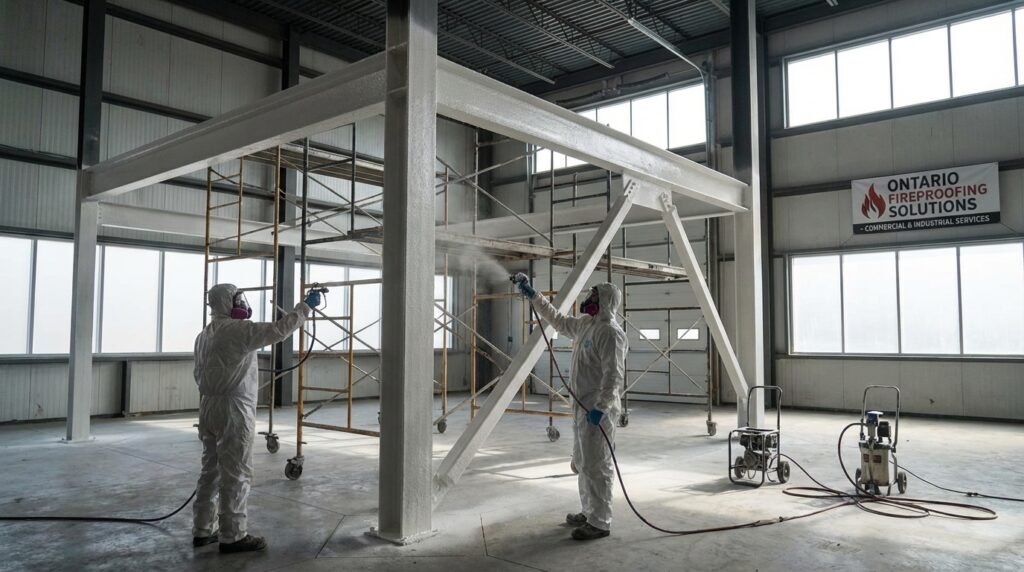
As Owner & Founder of Spray Foam Kings, I often get asked about fire safety in buildings, specifically about fire dampers and fire barriers. Understanding the difference between these two crucial fire protection systems is essential for building owners, contractors, and anyone concerned with safety. They both play vital roles in containing fires, but they function in distinct ways and are used in different applications. This guide will break down the key differences, code requirements in Ontario, and what you need to know to ensure your building is safe and compliant.
The Short Answer
Fire dampers are passive fire protection devices installed in ducts and air transfer openings to prevent the spread of fire inside the ductwork. Fire barriers, on the other hand, are continuous fire-resistant rated walls or floors that restrict the spread of fire and smoke within a building; think of them as fireproof walls. In Ontario, installing a fire damper can cost anywhere from $200 to $1,000 CAD depending on the size and complexity, while fire-rated wall construction can range from $15 to $50 CAD per square foot.
Fire Dampers: Containing Fire in HVAC Systems
What are Fire Dampers?
Fire dampers are specifically designed to prevent fire from spreading through ductwork and other air transfer openings in a building’s HVAC (Heating, Ventilation, and Air Conditioning) system. They are typically installed where ducts penetrate fire-rated walls or floors. In normal conditions, a fire damper remains open, allowing air to flow freely through the duct. However, in the event of a fire, the damper automatically closes, creating a barrier that prevents flames and hot gases from spreading to other areas of the building.
Types of Fire Dampers
There are two main types of fire dampers:
- Static Fire Dampers: These dampers are designed to close and remain closed during a fire. They are typically used in systems that shut down automatically in the event of a fire.
- Dynamic Fire Dampers: These dampers are designed to close even when the HVAC system is still operating. They are more complex and are used in systems that need to continue running during a fire, such as smoke control systems.
Ontario Building Code Requirements for Fire Dampers
The Ontario Building Code (OBC) outlines specific requirements for fire dampers. Section 3.2.8 of the OBC addresses fire separations and requires fire dampers in ductwork that penetrates fire separations. The specific requirements depend on the fire-resistance rating of the separation and the type of occupancy. For example, if a duct penetrates a 1-hour fire-rated wall, a fire damper with a minimum 1-hour fire-resistance rating is typically required. Always consult the most recent version of the OBC and your local building officials for the most accurate and up-to-date requirements. You can also explore potential insulation rebates that might apply to your project when upgrading fire safety measures.
Installation and Maintenance of Fire Dampers
Proper installation of fire dampers is critical to their effectiveness. Installation should be performed by qualified professionals who are familiar with the manufacturer’s instructions and the requirements of the Ontario Building Code. Regular maintenance is also essential to ensure that fire dampers function correctly. This includes inspecting the dampers for damage, ensuring that they are free of obstructions, and testing their closing mechanism. Neglecting maintenance can compromise the effectiveness of the fire damper and put lives at risk.
Fire Barriers: Creating Compartments to Stop Fire Spread
What are Fire Barriers?
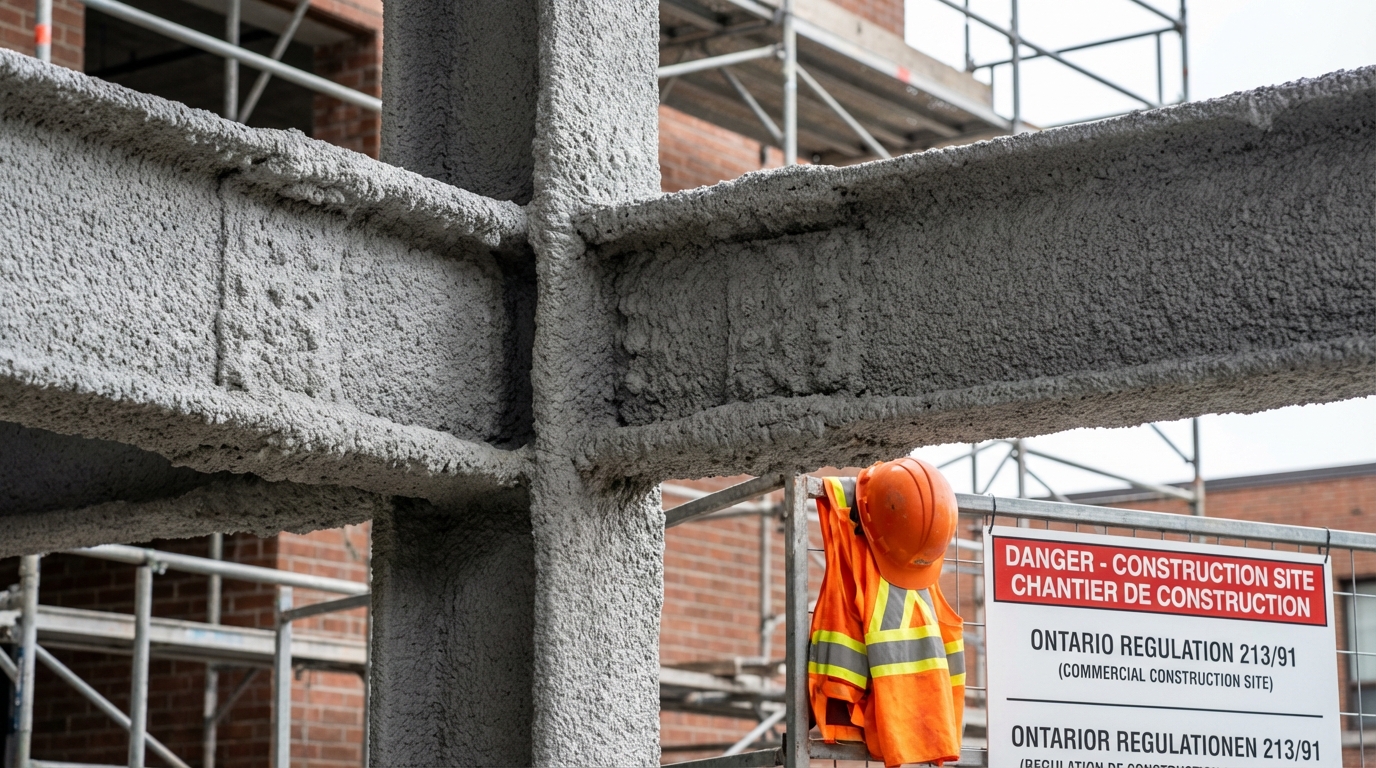
Fire barriers are continuous fire-resistant-rated walls or floors that are designed to restrict the spread of fire and smoke within a building. They create fire-resistant compartments that can contain a fire for a specified period, allowing occupants time to evacuate and firefighters time to respond. Unlike fire dampers which protect openings, fire barriers are the building’s structural defense against fire spread.
Types of Fire Barriers and Materials
Fire barriers can be constructed from a variety of materials, including:
- Concrete: Concrete offers excellent fire resistance and is commonly used for fire walls and floors.
- Masonry: Brick and concrete block walls are also effective fire barriers.
- Gypsum Board: Multiple layers of gypsum board (drywall) can provide a fire-resistance rating when properly installed.
- Fire-Rated Spray Foam Insulation: Certain spray foam products, like those we install at Spray Foam Kings, are specifically formulated to provide fire resistance. These can be used within wall assemblies to enhance their fire-resistance rating and contribute to overall building safety. Consider fireproofing your commercial or residential space for enhanced protection.
Ontario Building Code Requirements for Fire Barriers
The Ontario Building Code (OBC) specifies the fire-resistance ratings required for fire barriers based on the occupancy, building height, and other factors. For example, a fire separation between dwelling units in an apartment building might require a 1-hour or 2-hour fire-resistance rating. Section 3.1.9 of the OBC details these requirements. The fire-resistance rating is determined by testing the wall or floor assembly according to standardized methods, such as CAN/ULC-S101. The R-value of insulation within the fire barrier assembly also plays a crucial role in maintaining the integrity of the fire barrier during a fire. While R-value primarily relates to thermal resistance, it indirectly affects fire performance by influencing the rate at which heat can penetrate the assembly. Properly installed and fire-rated insulation, like residential spray foam insulation or commercial spray foam insulation, can significantly improve the overall fire performance of a fire barrier.
Penetrations and Protection of Fire Barriers
Any penetrations through a fire barrier, such as pipes, conduits, or ducts, must be protected to maintain the fire-resistance rating of the barrier. This can be achieved by using fire-stopping materials and devices that are tested and listed for use in fire-rated assemblies. The OBC specifies the requirements for fire-stopping in Section 3.1.9.10. Proper fire-stopping prevents fire and smoke from spreading through these penetrations and compromising the integrity of the fire barrier. Neglecting this crucial detail can render the entire fire barrier ineffective.
Key Differences Summarized
Here’s a table summarizing the key differences between fire dampers and fire barriers:
| Feature | Fire Dampers | Fire Barriers |
|---|---|---|
| Purpose | Prevent fire spread through ducts and air transfer openings | Restrict fire and smoke spread within a building |
| Location | Installed in ductwork where it penetrates fire-rated walls or floors | Continuous walls or floors creating fire-resistant compartments |
| Mechanism | Closes automatically in response to heat or smoke | Passive resistance provided by fire-resistant materials |
| Materials | Metal blades, fusible links, and other mechanical components | Concrete, masonry, gypsum board, fire-rated spray foam |
Cost Considerations in Ontario
The cost of installing fire dampers and fire barriers can vary significantly depending on the size and complexity of the project. As mentioned earlier, fire damper installation can range from $200 to $1,000 CAD per damper. Fire-rated wall construction can range from $15 to $50 CAD per square foot. These costs include materials, labor, and any necessary permits. When budgeting for fire protection measures, it’s essential to obtain quotes from multiple qualified contractors and consider the long-term benefits of enhanced safety and code compliance. You can use our spray foam cost calculator to get a better understanding of the insulation costs involved in creating effective fire barriers.
Frequently Asked Questions
Do I need both fire dampers and fire barriers in my building?
In many cases, yes. Fire dampers and fire barriers serve different but complementary functions. Fire barriers create fire-resistant compartments, while fire dampers prevent fire from spreading through ductwork that may penetrate those compartments. The specific requirements will depend on the Ontario Building Code and the occupancy of your building.
How often should fire dampers be inspected?
Fire dampers should be inspected at least annually, and more frequently in high-risk environments. The National Fire Protection Association (NFPA) provides guidelines for fire damper inspection and maintenance in NFPA 80 and NFPA 90A.
Can I install fire dampers or fire barriers myself?
It’s strongly recommended to hire qualified professionals for the installation of both fire dampers and fire barriers. Proper installation is critical to their effectiveness, and incorrect installation can compromise the safety of your building and violate the Ontario Building Code.
What is a fire-resistance rating?
A fire-resistance rating is a measure of how long a building element, such as a wall, floor, or door, can withstand exposure to fire. It is typically expressed in hours (e.g., 1-hour fire-resistance rating, 2-hour fire-resistance rating). The rating is determined by standardized fire testing methods.
Where can I find more information about fire safety requirements in Ontario?
The Ontario Building Code (OBC) is the primary source of information about fire safety requirements in Ontario. You can also consult with your local building officials and qualified fire protection professionals for guidance.
Get a Free Spray Foam Insulation Quote in Ontario
Ready to upgrade your insulation? Spray Foam Kings serves Toronto, the GTA, and all of Ontario with licensed, bonded, and insured spray foam insulation and fireproofing services.
📞 Call or text us: (647) 641-6881
📍 Find us on Google Maps: Spray Foam Kings on Google
💻 Or use our free spray foam cost calculator for an instant estimate.
We offer free quotes with no obligation. Most projects in the GTA are booked within 5–7 business days.