
What’s the difference?
In 2026, Greater Toronto Area homeowners face a critical choice when planning spray foam insulation: install it during new construction or retrofit an existing home. The decision shapes your budget, timeline, building code compliance, and long-term energy savings. New construction spray foam is applied to framing before drywall, creating a seamless thermal and air barrier at the source. Retrofit spray foam is injected or sprayed into existing walls, attics, and rim joists after the building envelope is sealed. Both deliver superior R-values compared to fibreglass or cellulose, but the execution, costs, and risks diverge significantly. GTA homeowners navigating post-pandemic inflation, tighter energy codes, and aging housing stock need clarity on which approach serves their situation. This guide compares real costs in Canadian dollars, timelines, permit requirements, and neighbourhood-specific factors to help you make an informed decision before your contractor breaks ground or begins demolition.
Side-by-side comparison
| Factor | New Construction Spray Foam | Retrofit Spray Foam |
|---|---|---|
| Cost per square foot (CAD) | $1.50–$2.50 (foundation + walls + roof) | $2.00–$4.50 (invasive, labour-intensive) |
| Total project cost (typical GTA home) | $8,000–$18,000 | $12,000–$30,000 |
| Installation timeline | 3–7 days (single mobilization) | 1–3 weeks (staged, disruptive) |
| Building permit required | Yes (part of new home permit) | Yes in most GTA municipalities; some require energy audit first |
| When to choose | New builds, additions, major renovations with framing exposed | Existing homes, specific zones (attics, basements), energy retrofits |
| Risk if wrong choice | Overspending on full encapsulation; moisture trapping if improper ventilation | Incomplete coverage; settling voids; structural damage during removal of old insulation |
New construction spray foam — when it’s the right call
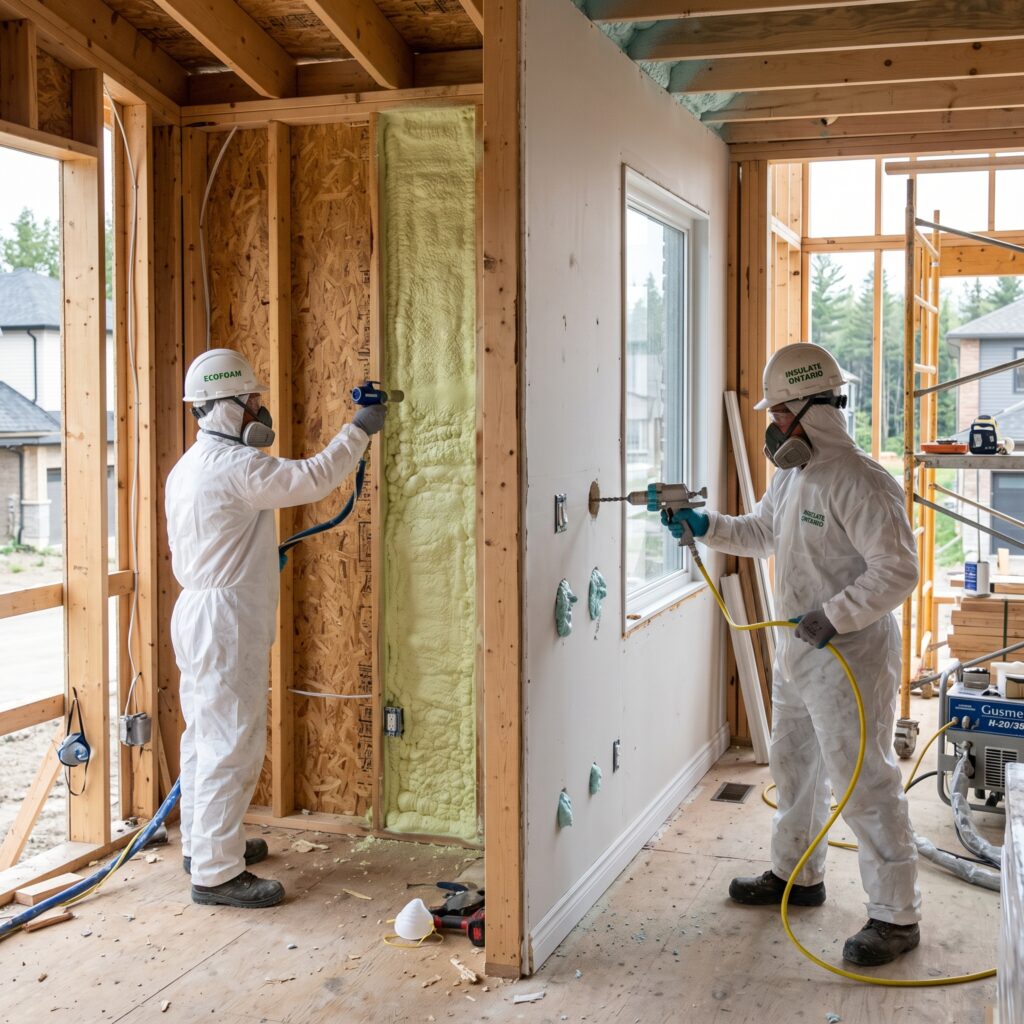
New construction spray foam is the optimal choice when you control the framing stage. During new builds, home additions, or major renovations where walls and rooflines are open, spray foam provides continuous air sealing and insulation in one pass. You avoid the labour cost of removing old insulation, patching, and working around existing electrical and plumbing. Contractors apply closed-cell or open-cell foam directly to rim joists, band boards, roof decking, and stud cavities before drywall installation, eliminating gaps that plague retrofit work. GTA builders favour this approach because it simplifies compliance with updated provincial energy codes and reduces punch-list callbacks for air leakage. The per-square-foot cost is lower ($1.50–$2.50 CAD) because the project is linear and uninterrupted. You also gain better humidity control and structural rigidity in cold-weather regions like the GTA, where freeze-thaw cycles stress building envelopes. New construction foam is backed by full warranty and third-party inspection, giving lenders and insurers confidence. If you’re building or undergoing major renovation with open framing, this is the standard-of-care choice. Visit our new construction spray foam service page to understand how we integrate with your builder’s schedule.
Retrofit spray foam — when it’s the right call
Retrofit spray foam addresses energy gaps in homes already built and occupied. If your 1980s or 1990s GTA home has uninsulated rim joists, a cold attic, or drafty basement walls, retrofit foam closes those voids without tearing down drywall. This approach is essential for existing homeowners who cannot wait for construction phases or prefer targeted, lower-disruption improvements. Retrofit work shines in attic encapsulation, where spray foam seals around ductwork, electrical boxes, and roof penetrations that fibreglass cannot reach. It’s also ideal for basement insulation, where moisture control is critical—closed-cell foam resists water better than porous alternatives. The higher per-square-foot cost ($2.00–$4.50 CAD) reflects the labour-intensive nature: crews remove existing insulation, navigate live utilities, contain debris, and stage work room-by-room. GTA homeowners pursuing energy rebates (through Enbridge or municipal programs) often use retrofit foam to demonstrate measurable efficiency gains on post-installation blower door tests. Retrofit is also the pathway for homes where asbestos-laden insulation must be professionally abated before new foam is applied. If you own an existing home and want to address specific thermal weak points without major construction, retrofit foam is your practical option. Explore attic spray foam and basement insulation services for targeted retrofit solutions.
Edge cases and GTA-specific factors
Municipal bylaws and permits: Toronto, Vaughan, Mississauga, and Brampton each enforce spray foam installation standards. Toronto’s Building Code Supplementary Standard requires open-cell foam to be covered with a 15-minute fire-rated barrier (typically drywall or intumescent paint). Closed-cell foam has higher flame-spread ratings and often needs less protection. Retrofit projects in older GTA neighbourhoods—particularly heritage-designated areas in Toronto or Oakville—may face additional scrutiny; some municipalities require energy audits before retrofit approval. Always pull a permit; unlicensed foam work voids insurance and resale disclosures.
Insurance and liability: New construction foam is covered under builder’s risk policies from day one. Retrofit foam must be installed by licensed contractors to satisfy homeowner insurance; an uninsured retrofit can be grounds for claim denial if water damage occurs later. Many GTA insurers offer 5–10% premium reductions for homes with spray foam retrofits, as the air sealing reduces moisture intrusion claims.
Neighbourhood considerations: In Etobicoke or North York, where post-WWII bungalows dominate, retrofit foam addresses settling insulation in attics—a common complaint. Newer subdivisions (2015+) in the 905 belt already have builder-grade spray foam; retrofit is unnecessary unless upgrading specific zones. Waterfront properties in the GTA—Toronto Islands, Burlington, Port Credit—often need retrofit foam for moisture control due to humidity and lake effect.
Frequently asked questions
1. Does spray foam affect my home’s resale value in the GTA?
Yes, positively. New construction spray foam is expected and adds no premium. Retrofit spray foam in attics and basements demonstrates energy efficiency to buyers and appraisers, typically recovering 50–70% of the retrofit cost at resale in the GTA market. Document the work with permits and inspection reports.
2. Will spray foam cause moisture problems in my GTA home’s climate?
Not if installed correctly. Closed-cell foam resists water; open-cell foam requires proper ventilation to manage humidity. GTA’s humid summers and freeze-thaw winters demand proper air barriers. Always ensure a licensed contractor performs a moisture assessment before retrofit application.
3. How long does spray foam last in Ontario weather?
Both new construction and retrofit foam last 50+ years in GTA conditions. The material is inert and resists UV degradation (especially if covered). Warranty periods from licensed installers typically cover 10–25 years, with product warranties often extending to the life of the home.
4. Can I do a partial retrofit (just attic or just basement) and upgrade later?
Yes. Phased retrofit is common in the GTA, especially for cash-conscious homeowners. Start with attic encapsulation (quickest payback) or basement rim joists (highest air-leakage impact), then add walls or other zones within 2–3 years. Costs do not increase if staged properly.
5. What permits do I need for retrofit spray foam in Toronto?
You need a permit from Toronto’s Building Department (Form PC1) for attic or basement spray foam. Retrofit work that touches electrical systems, ductwork, or load-bearing elements requires structural review. Costs run $200–$500 CAD per permit. New construction permits bundle spray foam into the main building permit.
6. How much energy savings should I expect in the GTA?
New construction spray foam reduces heating/cooling energy by 15–25% compared to fibreglass. Retrofit foam targeting air leaks (rim joists, attic bypasses) saves 10–20%. GTA heating seasons are long, so payback periods range 8–15 years depending on foam type and existing insulation. Blower-door testing before and after retrofit quantifies improvements.
Bottom line
Choose new construction spray foam if: You are building a new home, adding a wing, or undertaking a major renovation with exposed framing. You want predictable costs, faster installation, and seamless integration with your builder’s timeline. You prioritize warranty coverage and energy code compliance without surprises.
Choose retrofit spray foam if: You own an existing GTA home and want to target specific cold zones (attic, basement, rim joists) without construction delays. You are pursuing energy efficiency rebates or preparing to sell and need documented upgrades. You can tolerate 1–3 weeks of staged, disruptive work.
The GTA context: Older housing stock (pre-2000) almost always benefits from retrofit foam. New subdivisions in Brampton, Markham, and Ajax typically include new construction foam already. Mixed neighbourhoods in Toronto and Vaughan see both approaches—builders prefer new construction; existing owners pursue retrofit. Municipal permit timelines in the GTA average 2–4 weeks, so plan accordingly.
Next step: Contact Spray Foam Kings for a free, no-obligation energy assessment and quote. Whether you are framing a new addition or sealing a 30-year-old basement, our team will identify the right foam type and application method for your GTA home’s specific needs. We handle all permitting and coordinate with your builder or contractor. Request your free quote at sprayfoamkings.ca today.