
What’s the difference?
For Toronto homeowners in 2026, the spray foam insulation decision often boils down to one question: should you chase an Enbridge rebate, or go a different route? The short answer is that rebate-eligible spray foam insulation follows strict material and installation specifications set by Enbridge (a major utility provider in Ontario), while non-rebate insulation gives you flexibility but no financial incentive. Rebate-eligible products typically cost 15–25% more upfront but can recover $500–$2,000 depending on application size and your home’s baseline efficiency. Non-rebate spray foam costs less initially and works just as well thermally, but you’re funding 100% of the project yourself. The real tension emerges when you factor in Toronto’s aging housing stock, evolving building codes, permit timelines, and the risk of choosing the wrong path. A poorly timed rebate application can delay your project by weeks, while jumping into non-rebate work might lock you out of future utility incentives. This guide walks you through the trade-offs so you make a decision aligned with your budget, timeline, and home’s actual needs—not just the rebate.
Side-by-side comparison
| Metric | Enbridge-Rebate-Eligible | Non-Rebate Spray Foam |
|---|---|---|
| Upfront Cost (500 sq ft attic) | $3,200–$4,100 CAD | $2,600–$3,400 CAD |
| Rebate Amount | $750–$2,000 CAD (subject to approval) | $0 |
| Net Cost After Rebate | $1,400–$3,350 CAD | $2,600–$3,400 CAD |
| Typical Timeline | 6–12 weeks (including pre-approval + inspection + rebate processing) | 2–4 weeks (install + invoice) |
| Permit Required (Toronto) | Usually yes (energy retrofit); Enbridge pre-approval common | Depends on scope; minor attic work often no |
| When to Choose | Patient, timeline-flexible, want offset cost, planning long-term stay | Tight deadline, selling within 2 years, want simplicity, flexible budget |
| Risk If Wrong | Rebate denial (wrong product spec, scope mismatch); months lost; project stalled | Miss rebate window; can’t retrofit into rebate later; full cost out-of-pocket |
Enbridge-rebate-eligible insulation — when it’s the right call
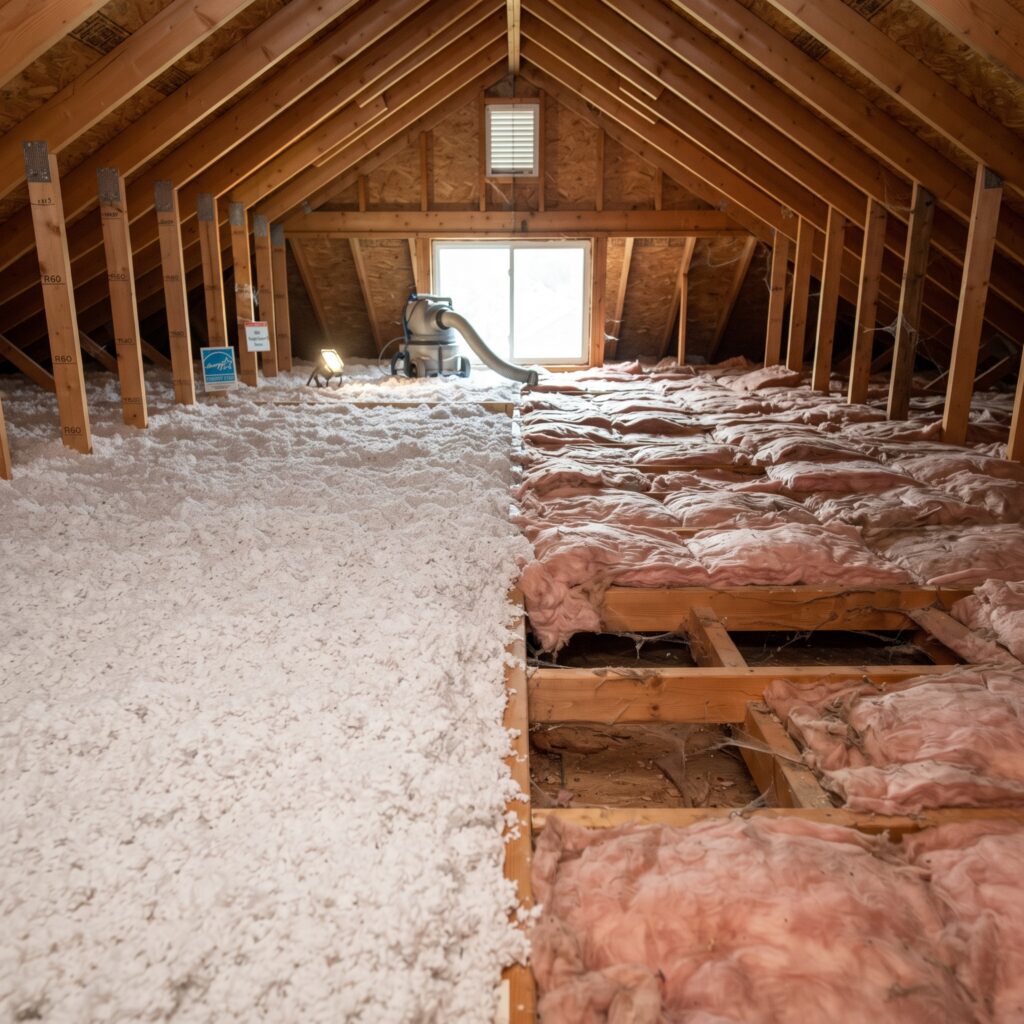
If you’re a Toronto homeowner planning to stay put for 5+ years and you’re not on a hard deadline, rebate-eligible spray foam makes financial sense. Enbridge’s retrofit programs (and provincial incentives that often stack alongside them) can shave $1,000–$2,000 off your total spend, which translates to a 3–5 year payback window versus non-rebate work. The process requires more legwork: you’ll need a pre-approved installer, an energy audit (often included), and adherence to specified R-values and materials. For attic work in older Toronto homes—where drafts and poor insulation drive heating bills up—this discipline pays off. Rebate programs also tend to be well-documented, meaning your investment is future-proofed if you ever sell; an energy audit report strengthens your home’s market position. The trade-off is patience. Approval timelines stretch to 6–12 weeks, and any deviation from specs can trigger a rebate denial. You’ll also likely need a permit, which adds 2–3 weeks to municipal processing in Toronto. If your roof or attic access is complicated, an inspector might flag cost overruns. The key is starting early, vetting your contractor’s rebate track record, and confirming eligibility before the first estimate. Attic insulation is the most common rebate-eligible application, so prioritize it if your attic R-value is below R-40.
Non-rebate insulation — when it’s the right call
Non-rebate spray foam is your path when speed matters or red tape isn’t worth the savings. If you’re renovating before a home sale, dealing with time-sensitive structural issues (basement moisture, crawl space air leaks), or simply want to avoid 12 weeks of back-and-forth, the simpler route wins. Non-rebate work is installed the same way and performs identically; the difference is purely administrative. Your contractor doesn’t need pre-approval, permit timelines are shorter (sometimes waived for minor work), and your invoice is final—no rebate denial risk. For basement or foundation basement insulation applications, rebate eligibility is murkier, making non-rebate the pragmatic choice. Similarly, if you’re combining spray foam with other upgrades (windows, HVAC), bundling all work under a single non-rebate project simplifies coordination. The financial logic is also sound if you plan to move within 2–3 years; the rebate payback doesn’t materialize fast enough. And if you have an older home with difficult access or unusual geometry (Victorian-era eaves, cathedral ceilings), a contractor might quote higher for rebate-eligible work due to inspection liability—non-rebate sidesteps that premium. Just ensure your installer holds proper licensing and insurance, and grab a warranty certificate for future-proofing your HVAC or resale claims.
Edge cases and Toronto-specific factors
Toronto’s 2026 building bylaws and neighborhood rules add wrinkles. Heritage home designations (common in neighbourhoods like the Annex, Rosedale, or Leslieville) may require permits even for internal insulation work; rebate-eligible projects often coordinate with city staff earlier, reducing surprise delays. Older homes with knob-and-tube wiring in attics pose electrical safety concerns; electricians may need to clear the space before spray foam, inflating timelines regardless of rebate status. Strata or condo boards sometimes prohibit spray foam (odor concerns, off-gassing liability) or demand pre-approval—always check your declaration before committing. Insurance implications matter: some providers require rebate-program documentation to honor thermal-efficiency discounts, while others don’t differentiate. Property tax reassessment is another hidden factor; energy retrofits can trigger reassessment in rare cases, though rebate-eligible work is less likely to trigger it in practice. Permit costs in Toronto range $300–$600 depending on scope; factor this into the rebate math. Lastly, if you’re combining spray foam with crawl space insulation or moisture control, rebate eligibility may apply only to certain components. Non-rebate flexibility often wins here. Always request a pre-job walkthrough and written scope to avoid mid-project disputes.
Frequently asked questions
Can I apply for a rebate after I’ve already started non-rebate work?
No. Enbridge and most utility rebate programs require pre-approval before any work begins; work completed outside that framework is ineligible. If you’re unsure, delay the project and consult your utility provider first—it costs nothing and clarifies eligibility before you’re locked in.
What happens if the rebate application is denied?
Denial typically stems from spec mismatches (wrong foam density, incorrect R-value, incompatible materials) or scope creep (more area than pre-approved). You’ll be out the difference between the rebate estimate and your actual spend, which can be $500–$1,500. Always ask your contractor for a written pre-approval letter before signing the contract.
Is Toronto’s new green standard (2026+) pushing rebate-eligible work?
Marginally. Toronto’s evolving energy code encourages higher R-values, which favour rebate-eligible programs, but non-rebate spray foam meets code just as well. The rebate advantage is financial incentive, not compliance—you can legally choose either path.
Do I need a permit for attic spray foam in Toronto?
Likely yes, especially for rebate-eligible work (permits are almost always required then). For non-rebate projects under 100 square feet or minor touchups, some contractors get verbal clearance from the city, but you’re safer filing formally. Cost is ~$400–$500 and adds 2–3 weeks.
How long does a rebate cheque take to arrive after completion?
8–16 weeks post-inspection in most cases. Enbridge and provincial programs have backlogs, particularly in Q1 and Q4. Budget for that delay in your cash flow; don’t count on rebate funds to cover contractor invoicing.
Can spray foam be removed or “un-done” if I need to access attic wiring later?
Partially. Spray foam can be chipped out, but it’s labour-intensive and expensive ($30–$50/hour). If future access is likely (HVAC upgrades, roof work), discuss removal zones with your contractor upfront; both rebate and non-rebate installations can accommodate this, but it affects the initial spec and rebate eligibility.
Bottom line
Choose rebate-eligible spray foam if: You’re staying 5+ years, have a 3–4 month flexible timeline, want utility incentives to offset 20–30% of cost, and your home qualifies (usually attics and basement rim joists in older Toronto properties). Rebate-eligible work also future-proofs resale and sometimes attracts energy-focused buyers or lenders.
Choose non-rebate spray foam if: You’re on a tight timeline (renovation before sale, seasonal urgency), working in edge-case areas (crawl spaces, rim joists with moisture issues), or tired of bureaucracy. Non-rebate is faster, simpler, and still delivers identical thermal performance at a lower upfront cost.
In either case, hire an installer with Toronto experience, insurance, and warranty backing. If you’re still torn, request a free quote from both angles—a reputable contractor will present the rebate math transparently and flag risks. Visit rim joist insulation, wall insulation, and air sealing pages for project-specific guidance, and reach out for a free consultation at sprayfoamkings.ca to confirm your path forward.